
Title
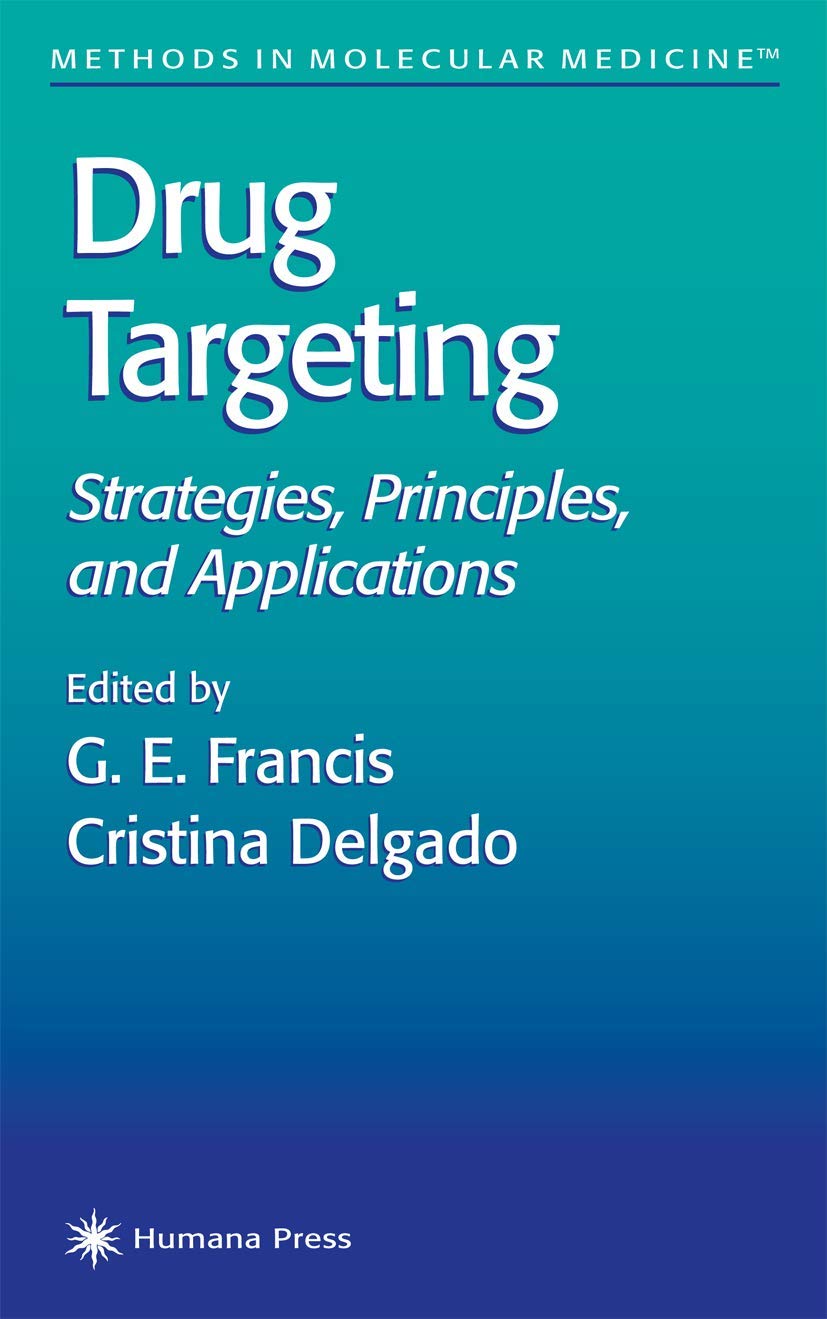
Drug Targeting: Strategies, Principles, and Applications (Methods in Molecular Medicine, 25),Used
Sold by Ergodebooks, an authorized reseller.
Returns accepted within 30 days | support@ergodebooks.com
Shipping Information
- Free Standard Shipping — United States only
- Processing Time: 3–5 business days
- Estimated Delivery: 6–10 business days after dispatch
- Double-boxed, fully insured & discreetly packaged
- Tracking number sent via email once dispatched
Returns & Refund
Returns accepted within 30 days of delivery.
Damaged or Defective Item
Free return shipping + replacement or full refund
Wrong Item Received
Free return shipping + replacement or full refund
Change of Mind
Return shipping at customer's expense · 25% restocking fee applies
Payment Option

Advances in understanding the molecular mechanisms of disease together with the advent of recombinant DNA and other technologies have opened opportunities for a vast array of novel therapeutic biopharmaceuticals and diagnostic agents. However, even natural biomolecules present a myriad of problems that limit their potential as pharmaceutical agents. Rapid degra tion and elimination, immunological reactions, and toxicity are often asso ated with new biopharmaceuticals, much as with conventional agents. Targeted delivery systems have the potential to increase the efficacy of existing diagnostic and therapeutic agents and also create an opportunity for the use of new pharmaceuticals, substances that themselves can be harmful to normal tissues. Both passive and active targeting have been exploited. Most active targ ing strategies have focused on antibody conjugates since preparation of highly specific monoclonal antibodies is well established. However, a new wave of c jugates exploiting other ligands is underway. Access to the target tissue remains an obstacle and is an area where passive targeting can be useful. In Drug Targeting: Strategies, Principles, and Applications we have tried to compile a stateoftheart volume on current targeting approaches. The first section focuses on certain key strategies applied to date, and how to build the antibody ligand constructs. This is followed by a section on theoretical considerations for t geting, focusing on approaches relevant to solid tumors. The last section deals with some experimental and clinical applications of targeted drug delivery systems.
⚠️ WARNING (California Proposition 65):
This product may contain chemicals known to the State of California to cause cancer, birth defects, or other reproductive harm.
For more information, please visit www.P65Warnings.ca.gov.