
Title
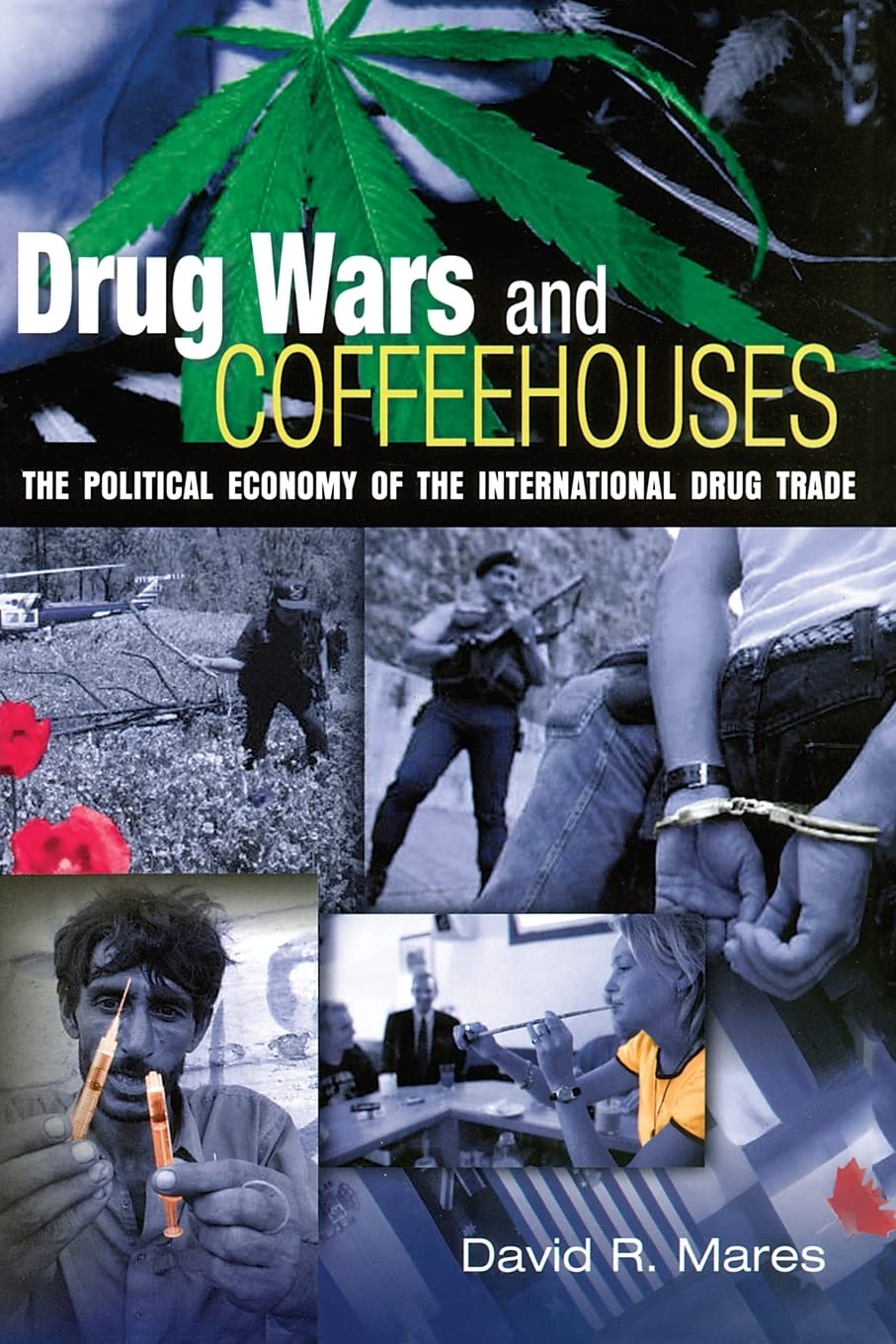
Drug Wars and Coffeehouses: The Political Economy of the International Drug Trade,Used
Sold by Ergodebooks, an authorized reseller.
Returns accepted within 30 days | support@ergodebooks.com
Shipping Information
- Free Standard Shipping — United States only
- Processing Time: 3–5 business days
- Estimated Delivery: 6–10 business days after dispatch
- Double-boxed, fully insured & discreetly packaged
- Tracking number sent via email once dispatched
Returns & Refund
Returns accepted within 30 days of delivery.
Damaged or Defective Item
Free return shipping + replacement or full refund
Wrong Item Received
Free return shipping + replacement or full refund
Change of Mind
Return shipping at customer's expense · 25% restocking fee applies
Payment Option

An international policy issue awash in myths, moral inconsistencies, social prejudices, and political rhetoric, its no wonder students find the international drug trade an alluring topic to study and discuss. With his brief and engaging new book, David Mares explores the reasons why there is so much disagreement among nations about which policies are most appropriate to address drug production, distribution, and trade. From the more tolerant 'coffee house' style policies of the Netherlands which focus on public health concerns, to the United States justsayno 'drug war' approach, nations frame and seek to resolve these issues in very different ways and with different levels of success. This variation creates a host of global cooperation and policy coordination problems, making Drug Wars and Coffee Houses an ideal supplement for giving students an opportunity to apply the larger themes of any political economy course to a substantive policy area.A compelling frameworkfocusing on political economic ideas and analysisshows students how leaders and policymakers need to understand the drug trade as a fullblown commodity system if they are to impact its different segments. As he discusses drug production, consumption, distribution, and money laundering, Mares carefully shows what insights micro political economic, realist, constructivist, and social deviant perspectives each bring to bear on the problem. And, through the books use of extended case studies, this text offers students an inside look at a complex and fascinating policy area, from Swedens attempts to enforce drugwar style policies, to the UKs movement towards decriminalization, to the responses of such international organizations as the United Nations and the European Union.A comprehensive bibliography of websites, articles, and book length studies point to further research on the topic, while classtested research and study questions for each chapter will jumpstart class discussions and projects.
⚠️ WARNING (California Proposition 65):
This product may contain chemicals known to the State of California to cause cancer, birth defects, or other reproductive harm.
For more information, please visit www.P65Warnings.ca.gov.
- Q: How many pages does this book have? A: This book contains one hundred fifty-seven pages. It provides a comprehensive exploration of the international drug trade.
- Q: What is the binding type of this book? A: The binding type is paperback. This makes it lightweight and easy to carry for reading or studying.
- Q: Who is the author of this book? A: The author is David R. Mares. He delves into the political economy surrounding the international drug trade.
- Q: What is the main theme of the book? A: The main theme explores the political economy of the international drug trade. It examines various national policies and their implications.
- Q: Is this book suitable for college students? A: Yes, this book is suitable for college students. It provides insights into political economy, making it a valuable resource for academic discussions.
- Q: Does this book include case studies? A: Yes, it includes extended case studies. These case studies provide real-world examples of drug policy implementations in various countries.
- Q: What kind of questions does this book include for class discussions? A: The book includes class-tested research and study questions. These questions are designed to stimulate discussion and analysis in a classroom setting.
- Q: How should I store this book? A: Store this book in a cool, dry place. This will help preserve its condition and longevity for future reading.
- Q: Can this book be used as a reference for research? A: Yes, this book can serve as a reference for research. It includes a comprehensive bibliography for further investigation into the topic.
- Q: Is this book appropriate for high school students? A: Yes, this book can be appropriate for advanced high school students. It addresses complex themes that may interest mature readers.
- Q: What are the key perspectives discussed in the book? A: The book discusses micro political economic, realist, constructivist, and social deviant perspectives. Each perspective offers unique insights into the drug trade.
- Q: Does this book cover international organizations' responses to drug trade? A: Yes, it covers responses from organizations like the United Nations and the European Union. This adds an international dimension to the analysis.
- Q: What are the dimensions of this book? A: The book measures six inches in length, zero point four seven inches in width, and nine point zero two inches in height. These dimensions make it portable.
- Q: Is the book available in other formats? A: The primary format available is paperback. There may be digital versions, but confirmation is needed from the publisher.
- Q: What is the publisher of this book? A: The book is published by CQ Press. This publisher specializes in academic and professional literature.