
Title
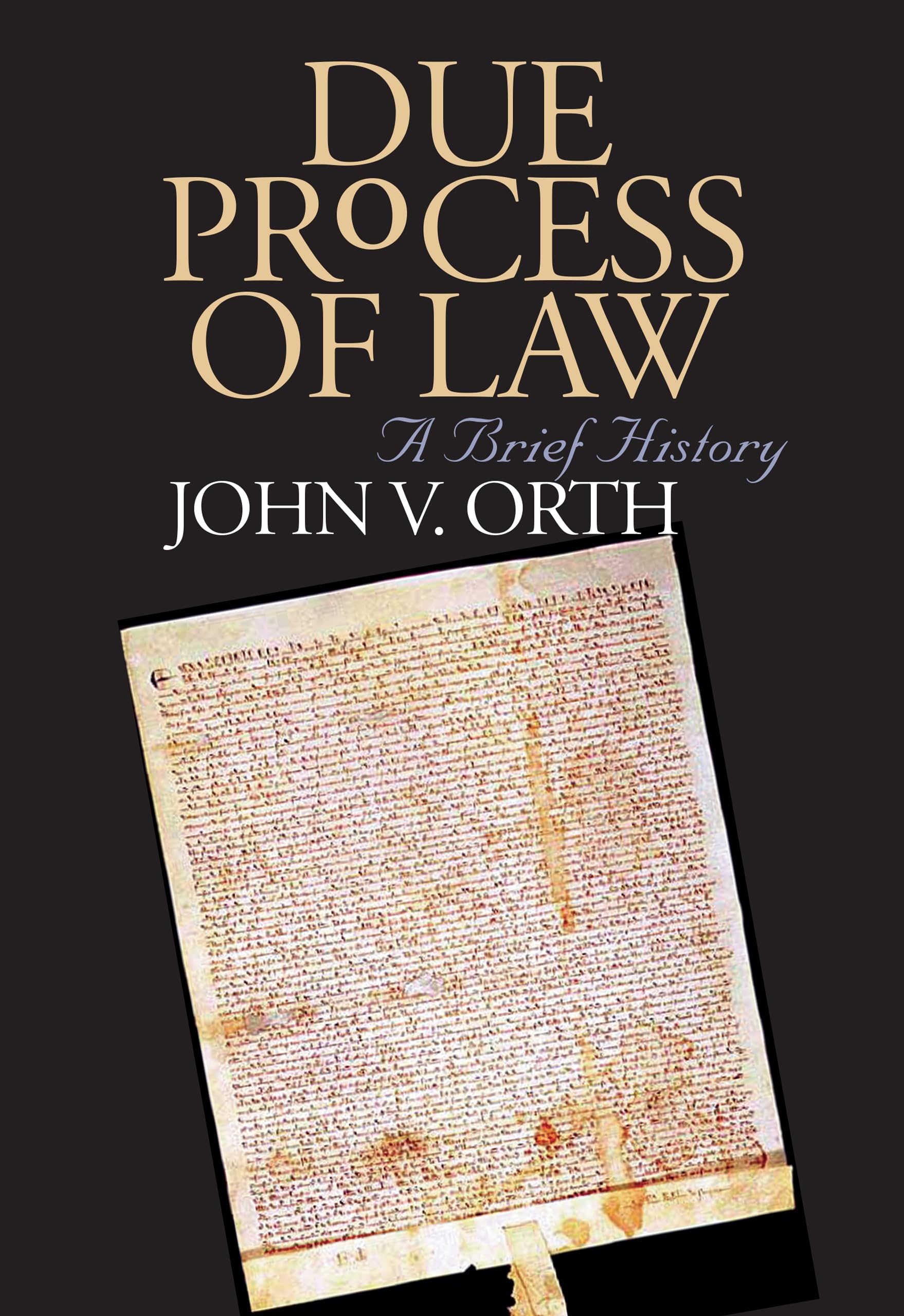
Due Process of Law: A Brief History,New
Sold by Ergodebooks, an authorized reseller.
Returns accepted within 30 days | support@ergodebooks.com
Shipping Information
- Free Standard Shipping — United States only
- Processing Time: 3–5 business days
- Estimated Delivery: 6–10 business days after dispatch
- Double-boxed, fully insured & discreetly packaged
- Tracking number sent via email once dispatched
Returns & Refund
Returns accepted within 30 days of delivery.
Damaged or Defective Item
Free return shipping + replacement or full refund
Wrong Item Received
Free return shipping + replacement or full refund
Change of Mind
Return shipping at customer's expense · 25% restocking fee applies
Payment Option

Many rights that Americans cherish today go unmentioned in the U.S. Constitution. Where do these freedoms come from? John V. Orth answers that question in this unique and gemlike history of due process.No person's life, liberty, or property may be taken without 'due process of law.' What exactly that means has been one of the most frequently asked questions in American constitutional history. Today, the answer is usually given in two parts: what procedures the government must follow andin exceptional caseswhat the government cannot do even if it follows the proper procedures. The procedural aspect of this answer has been far less controversial than 'substantive due process,' which at one time limited government regulation of business and today forbids the states from outlawing abortions.'Due process of law,' as a phrase and as a concept, was already old at the time it was adopted by American constitutionwriters, both state and federal. Mindful of the English background and of constitutional developments in the several states, Orth in a succinct and readable narrative traces the history of due process, from its origins in medieval England to its applications in the latest cases.Departing from the usual approach to American constitutional law, Orth places the history of due process in the larger context of the common law. To a degree not always appreciated today, constitutional law advances in the same casebycase manner as other legal rules. In that light, Orth concentrates on the general maxims or paradigms that guided the judges in their decisions of specific cases. Uncovering the links between one case and another, Orth describes how a commitment to fair procedures made way for an emphasis on the protection of property rights, which in turn led to a heightened sensitivity to individual rights in general.This unconventional history of the concept of due process heightens the reader's understanding of an important and vexed question of AngloAmerican law and constitutionalism. Tracing the evolution of substantive due process through paradigmatic and exemplary cases, Orth explains in understandable terms the sources of controversial judicial rulings like Roe v. Wade.
⚠️ WARNING (California Proposition 65):
This product may contain chemicals known to the State of California to cause cancer, birth defects, or other reproductive harm.
For more information, please visit www.P65Warnings.ca.gov.
- Q: What is the main focus of 'Due Process of Law: A Brief History'? A: The book primarily focuses on the historical development of the concept of due process in American law, exploring its origins, evolution, and implications in constitutional law.
- Q: Who is the author of the book? A: 'Due Process of Law: A Brief History' is authored by John V. Orth, who provides insights into the history and significance of due process in a concise narrative.
- Q: What are some key themes discussed in the book? A: Key themes include the procedural and substantive aspects of due process, the historical context of its adoption, and the relationship between common law and constitutional law.
- Q: How does this book differ from other legal texts? A: Unlike many legal texts that focus solely on case law, Orth's book provides a historical narrative that connects various legal principles and highlights the evolution of due process over time.
- Q: What is the significance of due process according to the author? A: According to Orth, due process is significant as it ensures that no person's life, liberty, or property can be taken without fair procedures, thereby protecting individual rights and freedoms.
- Q: Is this book suitable for those without a legal background? A: Yes, the book is written in a succinct and readable style, making it accessible to readers without a legal background while still providing valuable insights into the concept of due process.
- Q: What is the length of the book? A: 'Due Process of Law: A Brief History' contains 128 pages, providing a concise overview of its subject matter.
- Q: When was the book published? A: The book was published on March 4, 2003, making it a well-established resource on the topic of due process.
- Q: What type of binding does the book have? A: The book is available in paperback binding, making it easy to handle and read.
- Q: Can this book help in understanding contemporary legal issues? A: Yes, Orth's exploration of the historical context of due process provides a foundation for understanding contemporary legal issues related to individual rights and government regulations.