
Title
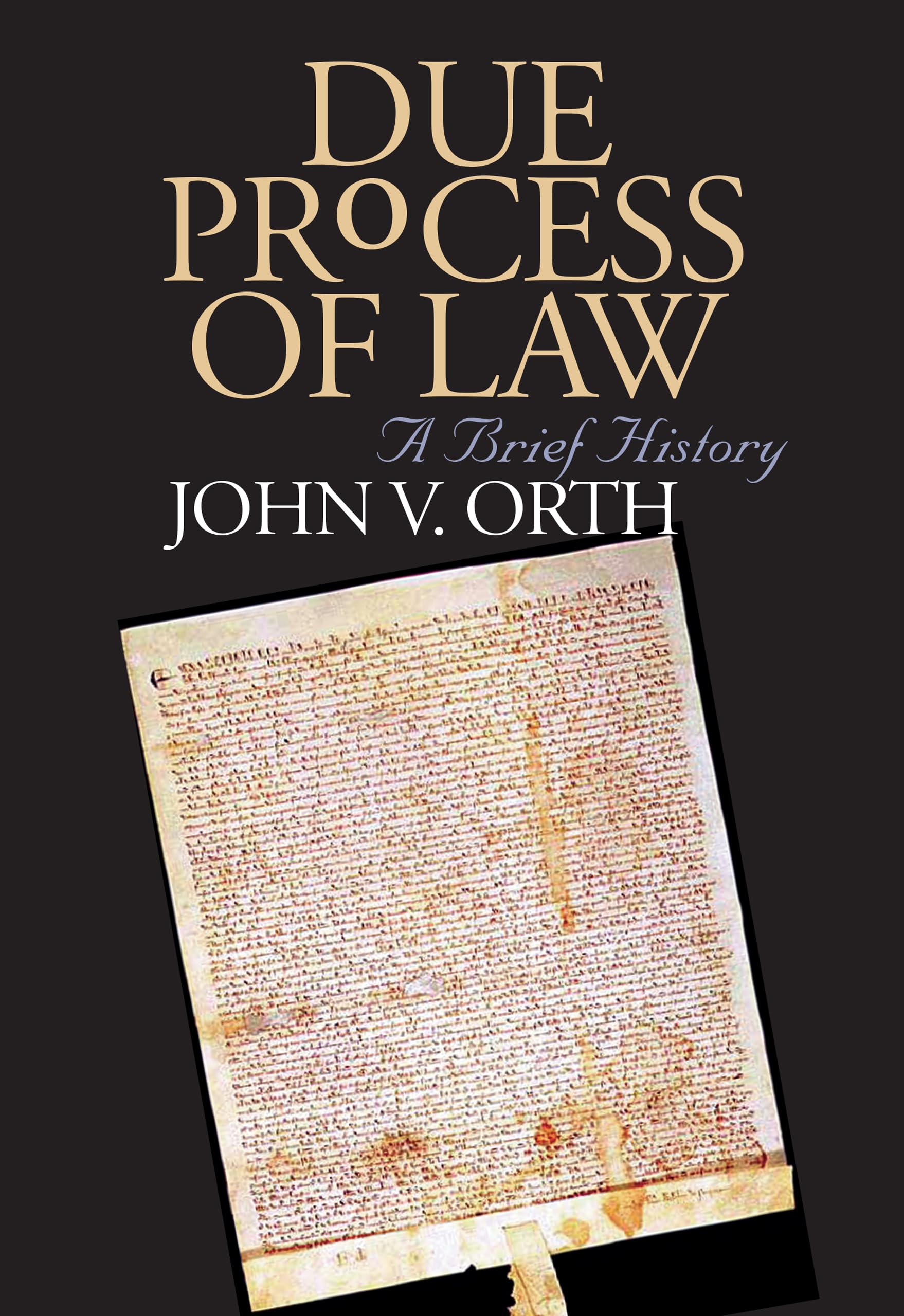
Due Process Of Law: A Brief History,Used
Sold by Ergodebooks, an authorized reseller.
Returns accepted within 30 days | support@ergodebooks.com
Shipping Information
- Free Standard Shipping — United States only
- Processing Time: 3–5 business days
- Estimated Delivery: 6–10 business days after dispatch
- Double-boxed, fully insured & discreetly packaged
- Tracking number sent via email once dispatched
Returns & Refund
Returns accepted within 30 days of delivery.
Damaged or Defective Item
Free return shipping + replacement or full refund
Wrong Item Received
Free return shipping + replacement or full refund
Change of Mind
Return shipping at customer's expense · 25% restocking fee applies
Payment Option

Many Rights That Americans Cherish Today Go Unmentioned In The U.S. Constitution. Where Do These Freedoms Come From? John V. Orth Answers That Question In This Unique And Gemlike History Of Due Process.No Person'S Life, Liberty, Or Property May Be Taken Without 'Due Process Of Law.' What Exactly That Means Has Been One Of The Most Frequently Asked Questions In American Constitutional History. Today, The Answer Is Usually Given In Two Parts: What Procedures The Government Must Follow Andin Exceptional Caseswhat The Government Cannot Do Even If It Follows The Proper Procedures. The Procedural Aspect Of This Answer Has Been Far Less Controversial Than 'Substantive Due Process,' Which At One Time Limited Government Regulation Of Business And Today Forbids The States From Outlawing Abortions.'Due Process Of Law,' As A Phrase And As A Concept, Was Already Old At The Time It Was Adopted By American Constitutionwriters, Both State And Federal. Mindful Of The English Background And Of Constitutional Developments In The Several States, Orth In A Succinct And Readable Narrative Traces The History Of Due Process, From Its Origins In Medieval England To Its Applications In The Latest Cases.Departing From The Usual Approach To American Constitutional Law, Orth Places The History Of Due Process In The Larger Context Of The Common Law. To A Degree Not Always Appreciated Today, Constitutional Law Advances In The Same Casebycase Manner As Other Legal Rules. In That Light, Orth Concentrates On The General Maxims Or Paradigms That Guided The Judges In Their Decisions Of Specific Cases. Uncovering The Links Between One Case And Another, Orth Describes How A Commitment To Fair Procedures Made Way For An Emphasis On The Protection Of Property Rights, Which In Turn Led To A Heightened Sensitivity To Individual Rights In General.This Unconventional History Of The Concept Of Due Process Heightens The Reader'S Understanding Of An Important And Vexed Question Of Angloamerican Law And Constitutionalism. Tracing The Evolution Of Substantive Due Process Through Paradigmatic And Exemplary Cases, Orth Explains In Understandable Terms The Sources Of Controversial Judicial Rulings Like Roe V. Wade.
⚠️ WARNING (California Proposition 65):
This product may contain chemicals known to the State of California to cause cancer, birth defects, or other reproductive harm.
For more information, please visit www.P65Warnings.ca.gov.
- Q: What is the size of the book 'Due Process of Law: A Brief History'? A: The book measures five point five one inches in length, zero point five one inches in width, and eight inches in height.
- Q: How many pages does 'Due Process of Law: A Brief History' have? A: The book contains one hundred twenty-eight pages, providing a concise yet informative overview of its subject.
- Q: What type of binding does this book use? A: The book is available in paperback binding, making it lightweight and easy to handle.
- Q: Who is the author of 'Due Process of Law: A Brief History'? A: The author is John V. Orth, who offers a unique perspective on the history of due process.
- Q: What is the main theme of 'Due Process of Law: A Brief History'? A: The main theme revolves around the evolution of due process in American law and its historical context.
- Q: Is 'Due Process of Law: A Brief History' suitable for beginners? A: Yes, the book is suitable for beginners, providing clear explanations of complex legal concepts.
- Q: Can I use this book for academic purposes? A: Yes, this book is well-suited for academic purposes, especially for those studying American constitutional law.
- Q: What audience is 'Due Process of Law: A Brief History' intended for? A: The book targets a general audience, including students and anyone interested in constitutional history.
- Q: How should I care for this paperback book? A: To care for the book, keep it away from moisture and direct sunlight to prevent damage.
- Q: What is the recommended way to store 'Due Process of Law: A Brief History'? A: Store the book upright on a shelf or in a bookcase to maintain its shape and condition.
- Q: Is there a warranty for 'Due Process of Law: A Brief History'? A: Warranties typically do not apply to books; check with the seller for their return policy.
- Q: What if my copy of 'Due Process of Law: A Brief History' arrives damaged? A: If the book arrives damaged, contact the seller for return or replacement options.
- Q: Can I return 'Due Process of Law: A Brief History' if I don't like it? A: Return policies vary by seller; please review their specific return guidelines.
- Q: Does 'Due Process of Law: A Brief History' include case studies? A: Yes, the book includes discussions of important cases that illustrate the evolution of due process.
- Q: Is there an index or glossary in 'Due Process of Law: A Brief History'? A: The book may not include a formal index or glossary, but it provides accessible explanations throughout.