If you have any questions, you are always welcome to contact us. We'll get back to you as soon as possible, withing 24 hours on weekdays.
Customer service
All questions about your order, return and delivery must be sent to our customer service team by e-mail at yourstore@yourdomain.com
Sale & Press
If you are interested in selling our products, need more information about our brand or wish to make a collaboration, please contact us at press@yourdomain.com
Help
If you have any questions, you are always welcome to contact us. We'll get back to you as soon as possible, withing 24 hours on weekdays.
Customer service
All questions about your order, return and delivery must be sent to our customer service team by e-mail at yourstore@yourdomain.com
Sale & Press
If you are interested in selling our products, need more information about our brand or wish to make a collaboration, please contact us at press@yourdomain.com
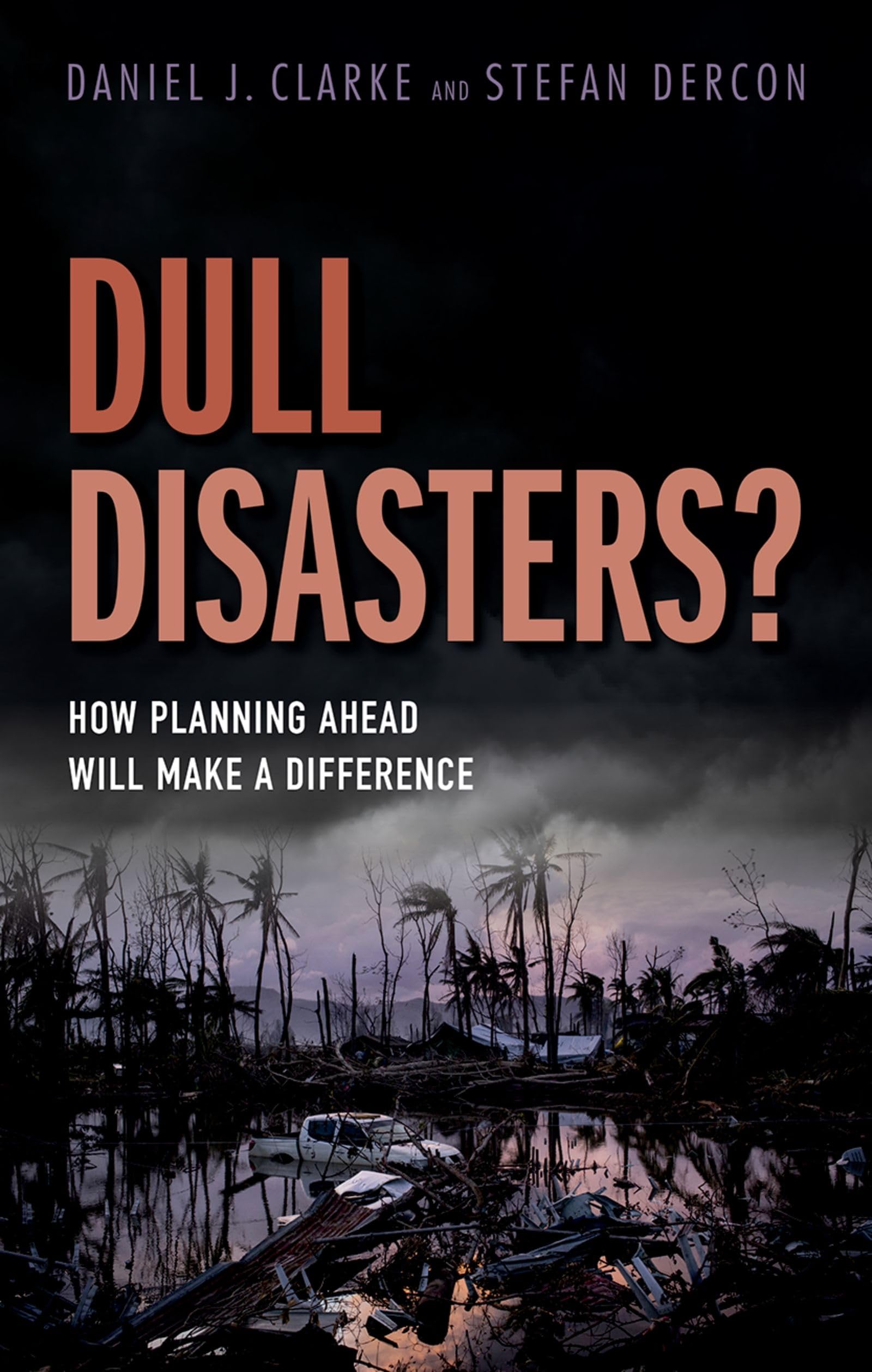
In recent years, typhoons have struck the Philippines and Vanuatu; earthquakes have rocked Haiti, Pakistan, and Nepal; floods have swept through Pakistan and Mozambique; droughts have hit Ethiopia, Kenya, and Somalia; and more. All led to loss of life and loss of livelihoods, and recovery will take years. One of the likely effects of climate change is to increase the likelihood of the type of extreme weather events that seems to cause these disasters. But do extreme events have to turn into disasters with huge loss of life and suffering?Dull Disasters? harnesses lessons from finance, political science, economics, psychology, and the natural sciences to show how countries and their partners can be far better prepared to deal with disasters. The insights can lead to practical ways in which governments, civil society, private firms, and international organizations can work together to reduce the risks to people and economies when a disaster looms. Responses to disasters then become less emotional, less political, less headlinegrabbing, and more business as usual and effective.The book takes the reader through a range of solutions that have been implemented around the world to respond to disasters. It gives an overview of the evidence on what works and what doesn't and it examines the crucial issue of disaster risk financing. Building on the latest evidence, it presents a set of lessons and principles to guide future thinking, research, and practice in this area.
⚠️ WARNING (California Proposition 65):
This product may contain chemicals known to the State of California to cause cancer,
birth defects, or other reproductive harm.
For MAP (Minimum Advertised Price) violations and Intellectual Property (IP) or Trademark concerns, please contact:
support@ergodebooks.com
⚠️ California Proposition 65 Warning: Some products sold on this website may expose you to chemicals known to the State of California to cause cancer, birth defects, or other reproductive harm. For more information, visit www.P65Warnings.ca.gov.