If you have any questions, you are always welcome to contact us. We'll get back to you as soon as possible, withing 24 hours on weekdays.
Customer service
All questions about your order, return and delivery must be sent to our customer service team by e-mail at yourstore@yourdomain.com
Sale & Press
If you are interested in selling our products, need more information about our brand or wish to make a collaboration, please contact us at press@yourdomain.com
Help
If you have any questions, you are always welcome to contact us. We'll get back to you as soon as possible, withing 24 hours on weekdays.
Customer service
All questions about your order, return and delivery must be sent to our customer service team by e-mail at yourstore@yourdomain.com
Sale & Press
If you are interested in selling our products, need more information about our brand or wish to make a collaboration, please contact us at press@yourdomain.com
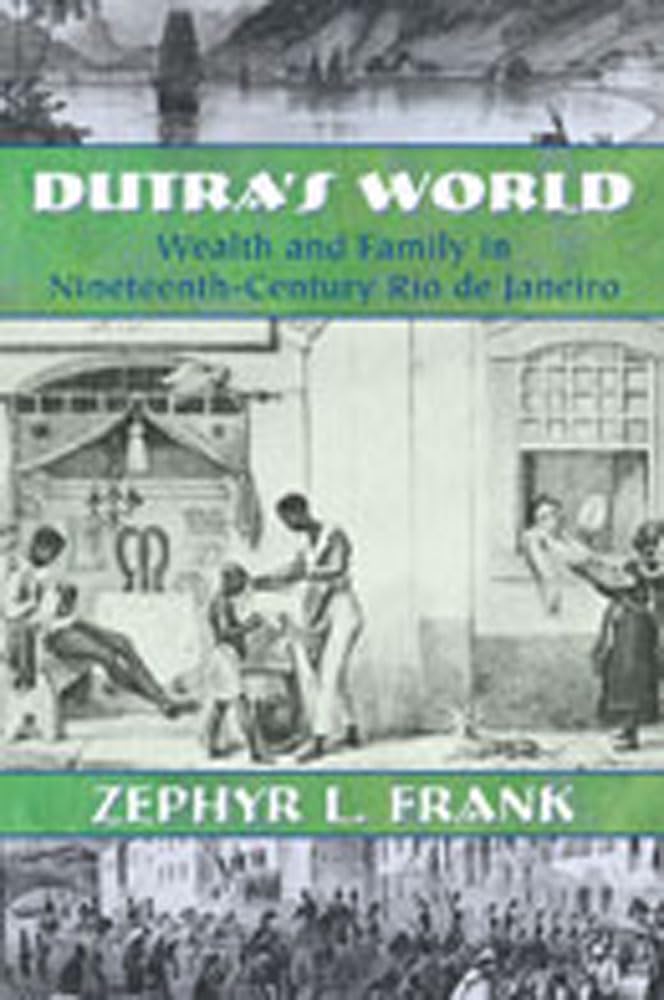
The relation of slavery to Brazil's economic and social history has long fascinated researchers. Zephyr Frank focuses on nineteenthcentury Rio de Janeiro, where almost half of the city's residents labored as slaves of diverse owners in a complex urban setting. Slavery persisted in the Brazilian city, in part, because it was entrenched among upwardly mobile entrepreneurs who hired their slaves out for wages, employed them in family businesses, and bought and sold them for profit. Changes in the institution of slavery and the economy of the city gradually limited access to slaves, constricting avenues of social mobility for slaveholders and transforming the lives of the slaves themselves.Frank uses the experiences of one person, Antonio Jos Dutra, as an example of a middling urban slaveholder. Dutra, a former slave himself, owned thirteen slaves whom he employed in his barbering business and musical band. Dutra's story is part of the larger picture Frank paints of those who owned slaves, how they fit into the social and economic development of Brazil, and what slaves and their owners did as slavery rose and then gradually declined in Rio de Janeiro.Frank traces social mobility, race, class, and slaveholding patterns, basing his analysis on inheritance records. Rich in detail, these records reveal layers of historical meaning regarding the accumulation of wealth, social mobility, family ties, and the social and cultural practices surrounding death.
⚠️ WARNING (California Proposition 65):
This product may contain chemicals known to the State of California to cause cancer,
birth defects, or other reproductive harm.
For MAP (Minimum Advertised Price) violations and Intellectual Property (IP) or Trademark concerns, please contact:
support@ergodebooks.com
⚠️ California Proposition 65 Warning: Some products sold on this website may expose you to chemicals known to the State of California to cause cancer, birth defects, or other reproductive harm. For more information, visit www.P65Warnings.ca.gov.