
Title
Dye Degrading Potential Of Rhizobacteria And Enzyme Responsible,Used
Sold by Ergodebooks, an authorized reseller.
Returns accepted within 30 days | support@ergodebooks.com
Shipping Information
- Free Standard Shipping — United States only
- Processing Time: 3–5 business days
- Estimated Delivery: 6–10 business days after dispatch
- Double-boxed, fully insured & discreetly packaged
- Tracking number sent via email once dispatched
Returns & Refund
Returns accepted within 30 days of delivery.
Damaged or Defective Item
Free return shipping + replacement or full refund
Wrong Item Received
Free return shipping + replacement or full refund
Change of Mind
Return shipping at customer's expense · 25% restocking fee applies
Payment Option

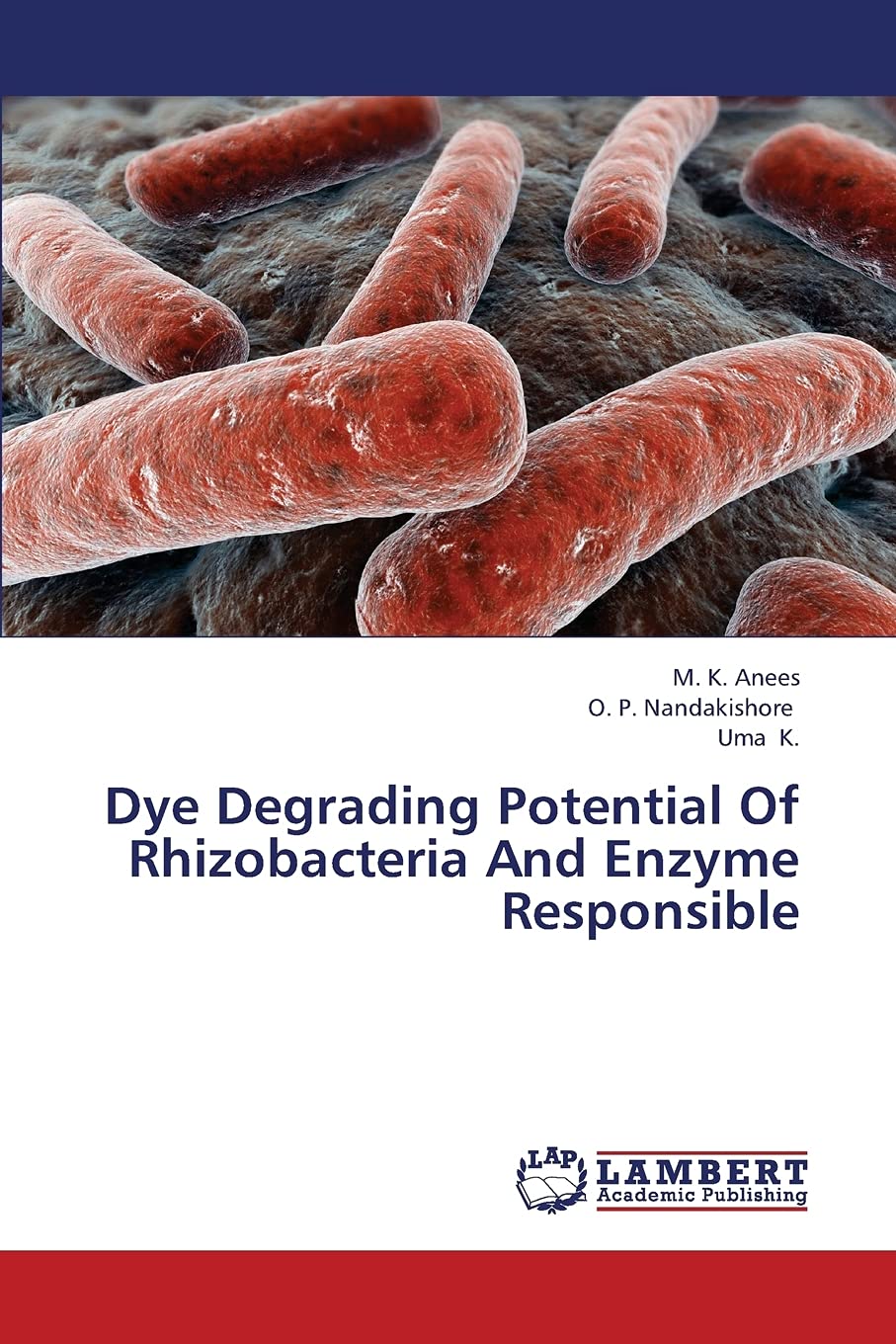
The quality of life on the Earth is linked inextricably to the overall quality of the environment. It is unfortunate, as the progress in science, technology and industry causing discarding of a large amount pollutants ranging from raw sewage to nuclear wastes into the ecosystem, thereby posing a serious threat on survival of life depending on it, which include humans. Improved knowledge in the functioning of plants and microbes has lead to new method of pollution treatment namely Bioremediation. Bioremediation employs the use of microbes mainly bacteria and fungi to scavenge the pollutants in effective manner; which is cheap and ecofriendly. Textile and paper industries contribute to one of the major part of a countrys, which requires dyeing and coloring units. Effluents of dyeing and coloring process upon dumping in an unsystematic way are causing severe threat to the ecosystem. With the application of bioremediation tech. The present work deals with the isolation and identification of azodye degrading rhizobacterium from effluent tolerant plants and the purification, the kinetic studies on the enzyme responsible of the selected rhizobacterium.
⚠️ WARNING (California Proposition 65):
This product may contain chemicals known to the State of California to cause cancer, birth defects, or other reproductive harm.
For more information, please visit www.P65Warnings.ca.gov.