
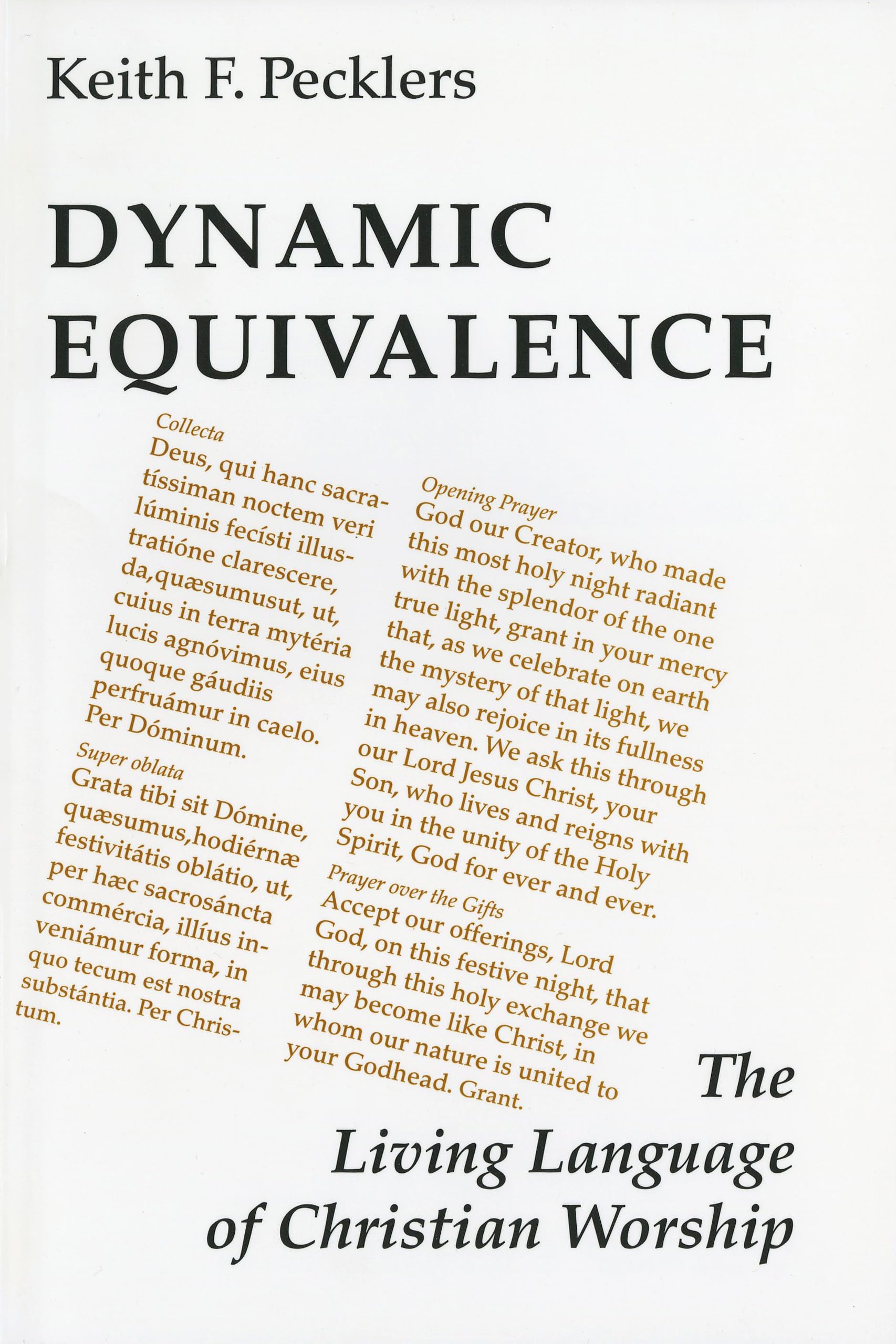
Title
Dynamic Equivalence: The Living Language Of Christian Worship (Pueblo Books),Used
Sold by Ergodebooks, an authorized reseller.
Returns accepted within 30 days | support@ergodebooks.com
Shipping Information
- Free Standard Shipping — United States only
- Processing Time: 3–5 business days
- Estimated Delivery: 6–10 business days after dispatch
- Double-boxed, fully insured & discreetly packaged
- Tracking number sent via email once dispatched
Returns & Refund
Returns accepted within 30 days of delivery.
Damaged or Defective Item
Free return shipping + replacement or full refund
Wrong Item Received
Free return shipping + replacement or full refund
Change of Mind
Return shipping at customer's expense · 25% restocking fee applies
Payment Option

In studying the history of the vernacular in worship beginning with the Christian Scriptures, Dynamic Equivalence uncovers the power of a living language to transform communities of faith.How we pray when we come together for common worship has always been significant, but the issue of liturgical language received unprecedented attention in the twentieth century when Latin Rite Roman Catholic worship was opened to the vernacular at Vatican II. Worshiping in one's native tongue continues to be of issue as the churches debate over what type of vernacular should be employed.Dynamic Equivalence traces the history of liturgical language in the Western Christian tradition as a dynamic and living reality. Particular attention is paid to the twentieth century Vernacular Society within the United States and how the vernacular issue was treated at Vatican II, especially within an ecumenical context.The first chapter offers a short history of the vernacular from the first century through the twentieth. The second and third chapters contain a significant amount of archival material, much of which has never been published before. These chapters tell the story of a mixed group of Catholic laity and clergy dedicated to promoting the vernacular during the first half of the twentieth century. Chapter Four begins with a survey of vernacular promotion in the Reformation itself, explores the issue of vernacular worship as an instrument of ecumenical hospitality and concludes with some examples of ecumenical liturgical cooperation in the years immediately preceding the Council. The final chapter treats the vernacular debate at the Council with attention to the Vernacular Society's role in helping with theimplementation of the vernacular.Chapters are 'A Brief History of the Vernacular,' 'The Origins of the Vernacular Society: 19461956,' 'Pressure for the Vernacular Mounts: 19561962,' 'Vernacular Worship and Ecumenical Exchange,' 'Vatican II and the Vindication of the Vernacular: 19621965'Keith F. Pecklers, SJ, SLD, is professor of liturgy at the Pontifical Gregorian University in Rome and professor of liturgical history at the Pontifical Liturgical Institute of Sant Anselmo. He is the author of The Unread Vision: The Liturgical Movement in the United States of America 19261955, and coeditor of Liturgy for the New Millennium: A Commentary on the Revised Sacramentary, published by The Liturgical Press.
⚠️ WARNING (California Proposition 65):
This product may contain chemicals known to the State of California to cause cancer, birth defects, or other reproductive harm.
For more information, please visit www.P65Warnings.ca.gov.