If you have any questions, you are always welcome to contact us. We'll get back to you as soon as possible, withing 24 hours on weekdays.
Customer service
All questions about your order, return and delivery must be sent to our customer service team by e-mail at yourstore@yourdomain.com
Sale & Press
If you are interested in selling our products, need more information about our brand or wish to make a collaboration, please contact us at press@yourdomain.com
Help
If you have any questions, you are always welcome to contact us. We'll get back to you as soon as possible, withing 24 hours on weekdays.
Customer service
All questions about your order, return and delivery must be sent to our customer service team by e-mail at yourstore@yourdomain.com
Sale & Press
If you are interested in selling our products, need more information about our brand or wish to make a collaboration, please contact us at press@yourdomain.com
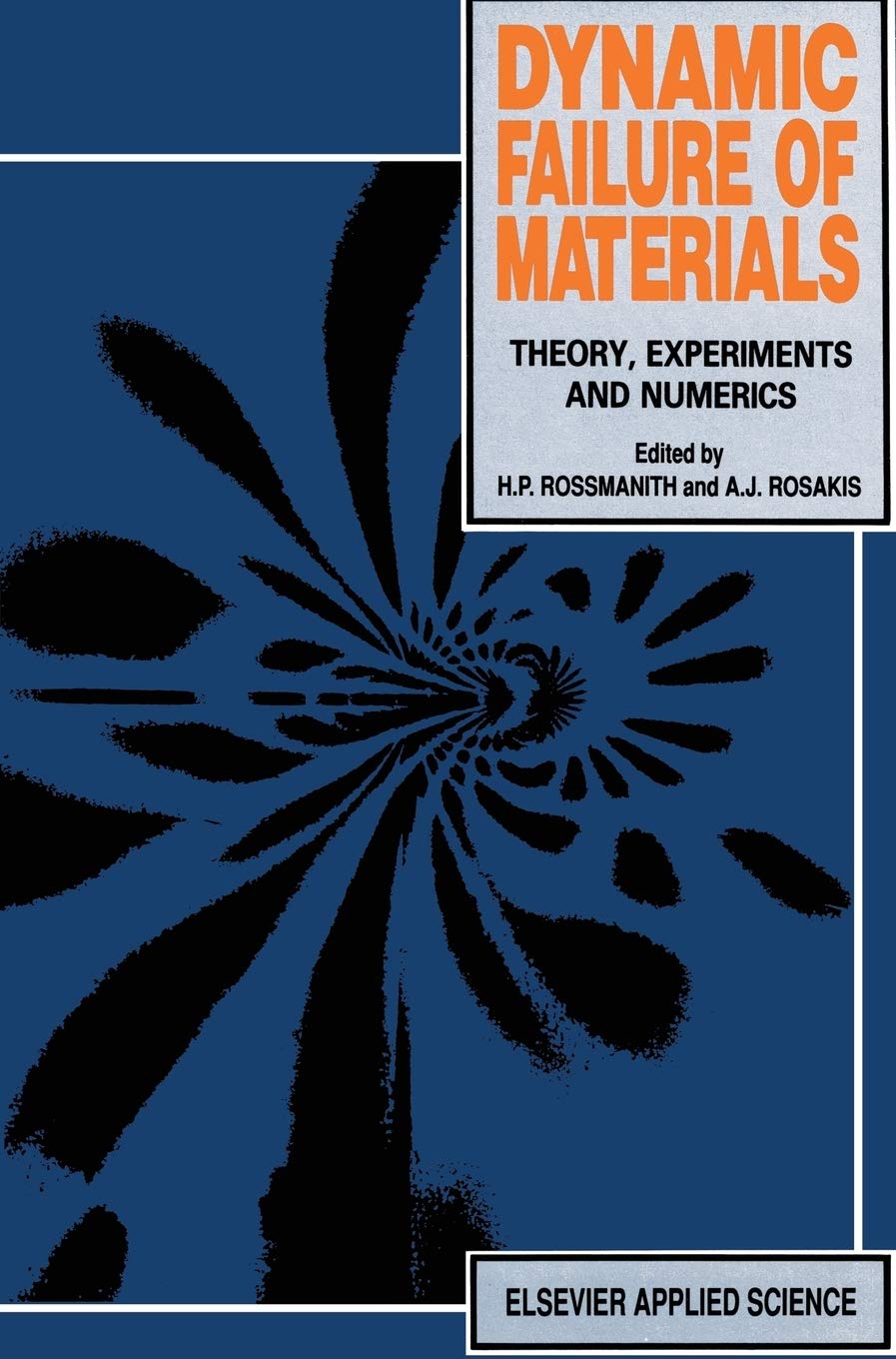
The rapid pace of current developments in the theoretical, analytical, numerical and experimental fields of dynamic failure of materials called for an international seminar of workshop style aimed at improving the finding and understanding of solutions to the basic physical processes involved in dynamic failure. The Vienna Seminar DFMl was held at the Technical University Vienna in the historic administration building in the city center under the auspices of the university. More than 30 international experts from all over the world followed the invitation to participate at this seminar. High in the list of priorities was the common desire for ample time for discussions after each technical presenta tion, a fact and a chance frequently made overextensive use of during the seminar. Thus, opportunity was given to the seminar participants to present and expose ideas and results of their original research work, either terminated, ongoing, proposed or conceived and intended, to an international forum of experts for critical discussions, evaluation and appraisal. The technical program included dynamic failure of polymers and steel, numerical modelling of fracture processes, experimental techniques and analytical/numerical investigation of crack/wave interaction problems. The scope of the contributions stretched from implementation of advanced mathematical techniques in the theoretical developments to most direct applications in various fields of engineering practice. Papers published in this volume represent revised, updated and expanded versions of the seminar contributions.
⚠️ WARNING (California Proposition 65):
This product may contain chemicals known to the State of California to cause cancer,
birth defects, or other reproductive harm.
For MAP (Minimum Advertised Price) violations and Intellectual Property (IP) or Trademark concerns, please contact:
support@ergodebooks.com
⚠️ California Proposition 65 Warning: Some products sold on this website may expose you to chemicals known to the State of California to cause cancer, birth defects, or other reproductive harm. For more information, visit www.P65Warnings.ca.gov.