
Title
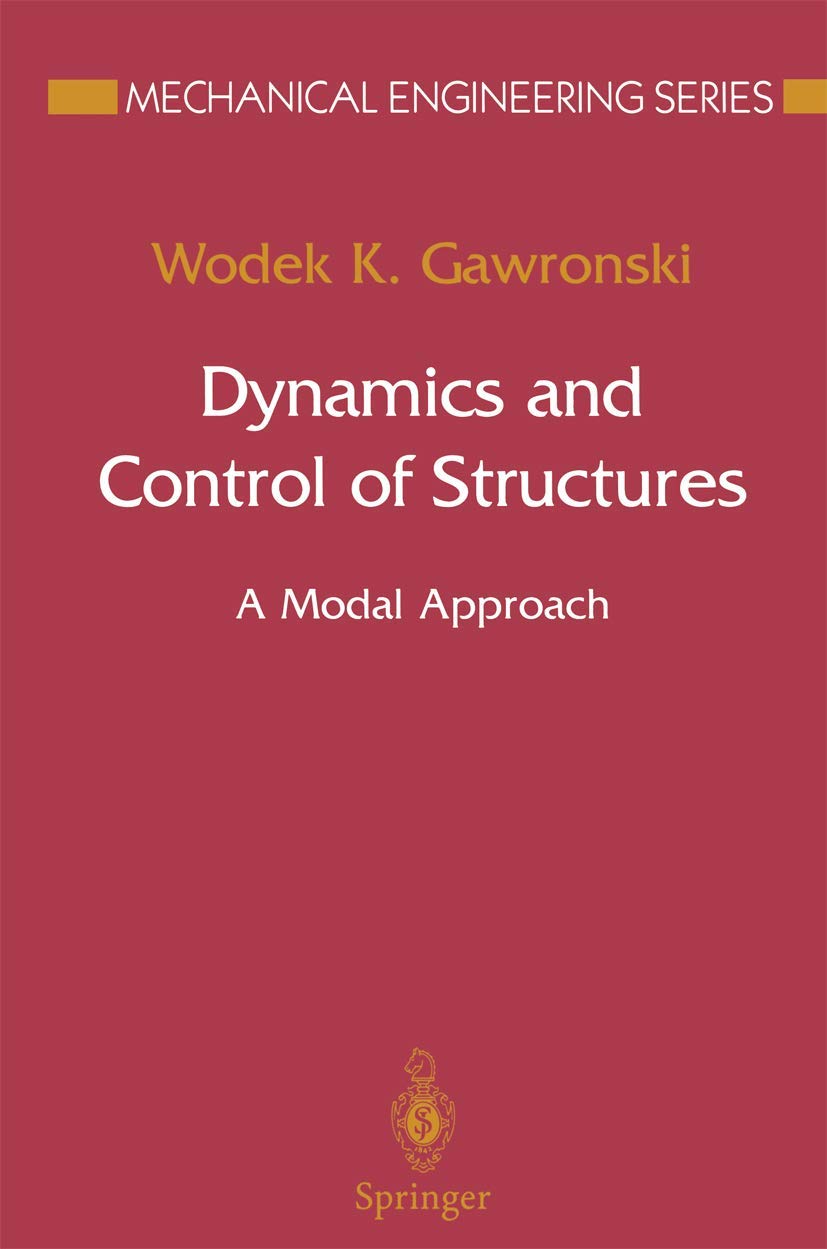
Dynamics and Control of Structures: A Modal Approach (Mechanical Engineering Series),Used
Sold by Ergodebooks, an authorized reseller.
Returns accepted within 30 days | support@ergodebooks.com
Shipping Information
- Free Standard Shipping — United States only
- Processing Time: 3–5 business days
- Estimated Delivery: 6–10 business days after dispatch
- Double-boxed, fully insured & discreetly packaged
- Tracking number sent via email once dispatched
Returns & Refund
Returns accepted within 30 days of delivery.
Damaged or Defective Item
Free return shipping + replacement or full refund
Wrong Item Received
Free return shipping + replacement or full refund
Change of Mind
Return shipping at customer's expense · 25% restocking fee applies
Payment Option

Robots, aerospace structures, active earthquakedamping devices of tall buildings, and active sound suppression are examples of the application of structural dynamics and control methods. This book addresses the structural dynamics and control problems encountered by mechanical, civil, and control engineers. Many problems presented in this book originated in recent applications in the aerospace industry, and have been solved using the approach presented here. Dynamics analysis and controller design for flexible structures require a special approach due to the large size of structural models, and because flexible structure testing and control typically requires massive instrumentation (sensors and actuators). But the rapid development of new technologies and the increased power of computers allows for the formulation and solution of engineering problems that seemed to be unapproachable not so very long ago. The modal approach was chosen in this book. It has a long tradition in structural engineering (see, e.g., [84], [87], and [26]) and is also used in control system analysis, e.g., [93]. Its usefulness, thoroughly tested, does not need extensive justification. Both structural testing and analysis give priority to the modal representation, due to its compactness, simplicity, and explicit physical interpretation. Also, many useful structural properties are properly exposed only in modal coordinates. In this book the modal approach, preferred by structural engineers, is extended into control engineering, giving new analytical results, and narrowing the gap between structural and control analysis.
⚠️ WARNING (California Proposition 65):
This product may contain chemicals known to the State of California to cause cancer, birth defects, or other reproductive harm.
For more information, please visit www.P65Warnings.ca.gov.