
Title
Dynamics Of The Party System: Alignment And Realignment Of Political Parties In The United States,New
Sold by Ergodebooks, an authorized reseller.
Returns accepted within 30 days | support@ergodebooks.com
Shipping Information
- Free Standard Shipping — United States only
- Processing Time: 3–5 business days
- Estimated Delivery: 6–10 business days after dispatch
- Double-boxed, fully insured & discreetly packaged
- Tracking number sent via email once dispatched
Returns & Refund
Returns accepted within 30 days of delivery.
Damaged or Defective Item
Free return shipping + replacement or full refund
Wrong Item Received
Free return shipping + replacement or full refund
Change of Mind
Return shipping at customer's expense · 25% restocking fee applies
Payment Option

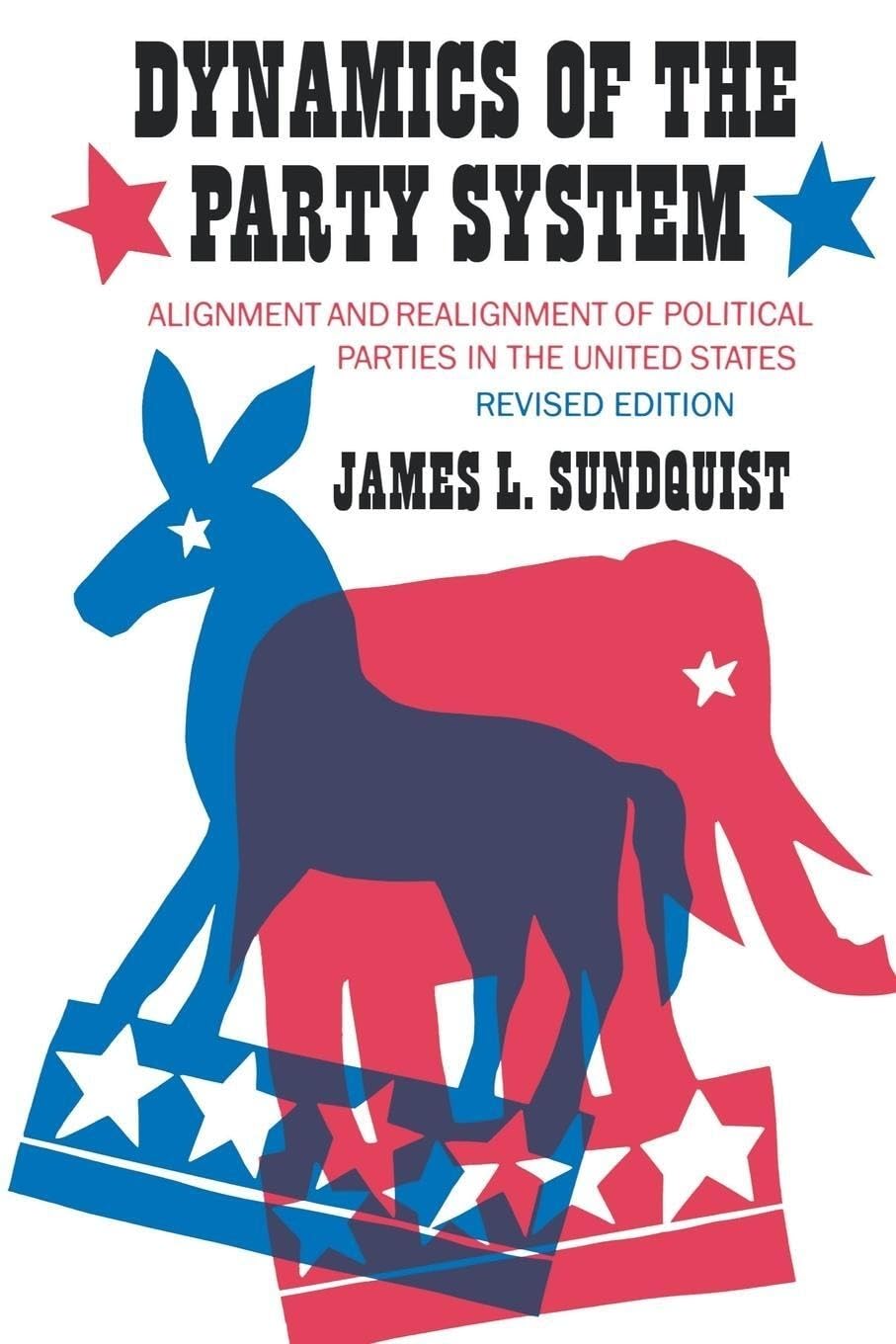
Since the original edition of Dynamics of the Party System was published in 1973, American politics have continued on a tumultuous course. In the vacuum left by the decline of the Democratic and Republican parties, singleinterest groups have risen and flourished. Protest movements on the left and the New Right at the opposite pole have challenged and divided the major parties, and the Reagan Revolutionin reversing a fiftyyear trend toward governmental expansionmay turn out to have revolutionized the party system too.In this edition, as in the first, current political trends and events are placed in a historical and theoretical context. Focusing upon three major realignments of the pastthose of the 1850s, the 1890s, and the 1930sSundquist traces the processes by which basic transformations of the country's twoparty system occur. From the historical case studies, he fashions a theory as to the why and how of party realignment, then applies it to current and recent developments, through the first two years of the Reagan presidency and the midterm election of 1982.The theoretical sections of the first edition are refined in this one, the historical sections are revised to take account of recent scholarship, and the chapters dealing with the postwar period are almost wholly rewritten. The conclusion of the original work is, in general, confirmed: the existing party system is likely to be strengthened as public attention is again riveted on domestic economic issues, and the headlong trend of recent decades toward political independence and party disintegration reversed, at least for a time.'
⚠️ WARNING (California Proposition 65):
This product may contain chemicals known to the State of California to cause cancer, birth defects, or other reproductive harm.
For more information, please visit www.P65Warnings.ca.gov.