
Title
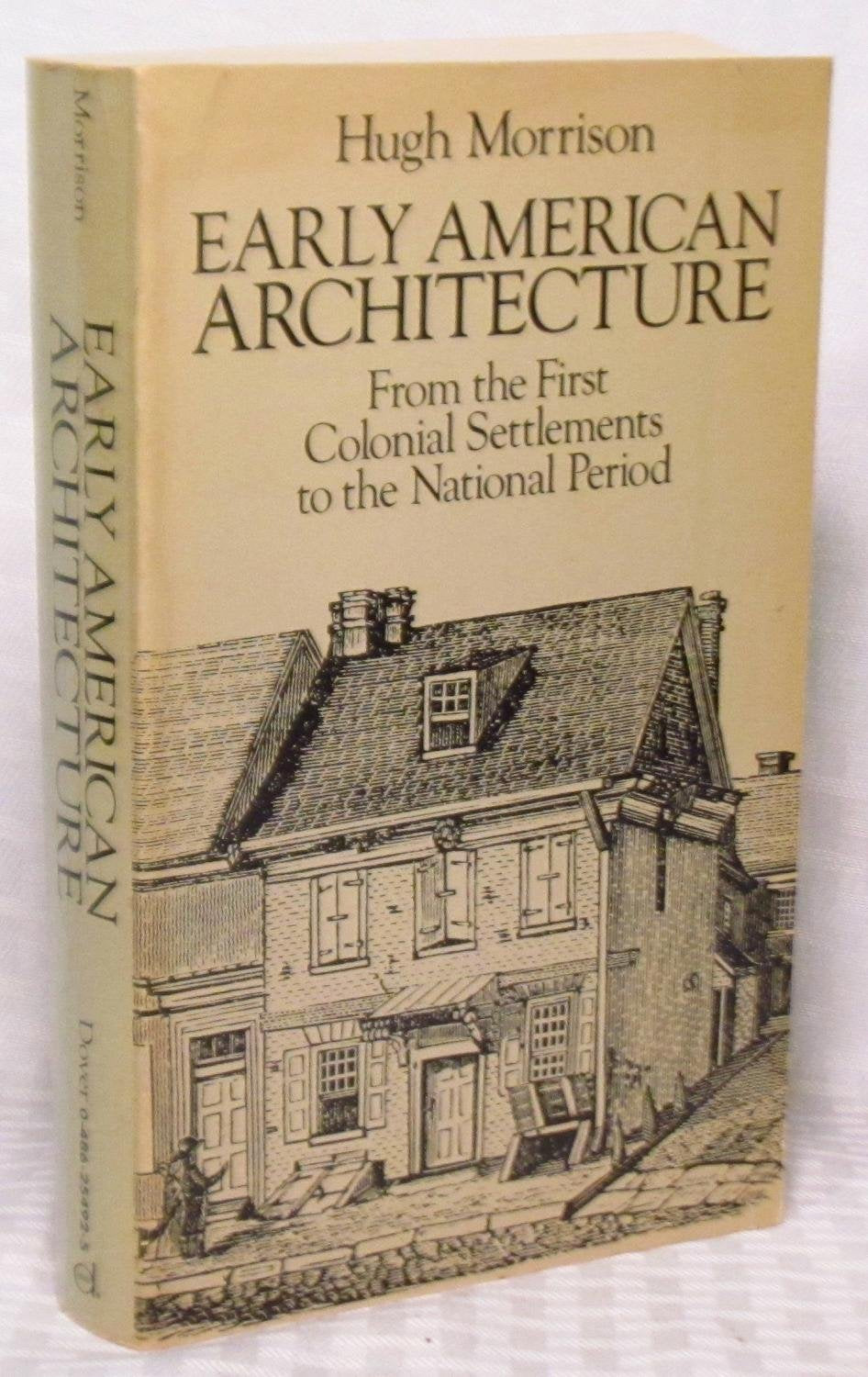
Early American Architecture: From the First Colonial Settlements to the National Period (Dover Architecture),New
Sold by Ergodebooks, an authorized reseller.
Returns accepted within 30 days | support@ergodebooks.com
Shipping Information
- Free Standard Shipping — United States only
- Processing Time: 3–5 business days
- Estimated Delivery: 6–10 business days after dispatch
- Double-boxed, fully insured & discreetly packaged
- Tracking number sent via email once dispatched
Returns & Refund
Returns accepted within 30 days of delivery.
Damaged or Defective Item
Free return shipping + replacement or full refund
Wrong Item Received
Free return shipping + replacement or full refund
Change of Mind
Return shipping at customer's expense · 25% restocking fee applies
Payment Option

In this comprehensive, highly praised reconstruction of the nation's architectural past, a distinguished teacher and critic of architecture describes and evaluates a wide variety of building styles from the primitive dugouts and cabins of the first settlers to the Greek Revival mansions of the early nineteenth century. Moreover, this volume was the first to offer thorough coverage of early architecture throughout the United States, including homes, schools, meeting houses, and commercial buildings in the Northeast; Georgian structures in Maryland, Virginia, the Carolinas, the Middle Colonies, and New England; the French Colonial style in the Mississippi Valley; the baroque architecture of mission churches and ranch homes in the Southwest and California, and the nationwide growth of Neoclassic and Romantic styles.Nearly 500 line drawings and photographs enhance the text, including reconstruction drawings of buildings long demolished or seriously altered, making this a valuable pictorial repository of the nation's early architectural heritage. In addition to carefully chosen and wellintegrated illustrations, the book also contains a number of historical documents, contemporary letters, and travelers' comments that enrich the discussion, as well as account of plans, materials, and methods of construction.For the general reader or nonspecialist, Early American Architecture provides an informative and entertaining survey, written with a minimum of technical jargon, and abundantly supplied with clarifying comments, notes, and diagrams. For the scholar, it brings together in one concise volume the research of leading specialists in the regional period architecture. Students, architects, historians, restorers anyone interested in American architecture will delight in this thoughtful and expertly written book, described by Lewis Mumford as 'a milestone in American architectural history.'
⚠️ WARNING (California Proposition 65):
This product may contain chemicals known to the State of California to cause cancer, birth defects, or other reproductive harm.
For more information, please visit www.P65Warnings.ca.gov.
- Q: How many pages does this book have? A: This book has six hundred nineteen pages. It provides a comprehensive exploration of early American architecture.
- Q: What is the binding type of this book? A: This book is paperback bound. The paperback format offers flexibility and is lightweight for easy handling.
- Q: What are the dimensions of this book? A: The book measures five point four four inches in length, one point two two inches in width, and eight point five inches in height. These dimensions make it easy to store or carry.
- Q: Who is the author of this book? A: The author is Hugh Morrison. He is a distinguished teacher and critic known for his insights into architecture.
- Q: What is the main subject of this book? A: The main subject is early American architecture. It covers a wide range of building styles from colonial times to the national period.
- Q: Is this book suitable for casual readers? A: Yes, this book is suitable for casual readers. It is written with minimal technical jargon, making it accessible to a general audience.
- Q: Can this book be used as a textbook? A: Yes, this book can serve as a textbook. It gathers research from leading specialists and is useful for students and scholars.
- Q: Is there any technical jargon in the book? A: No, the book uses minimal technical jargon. It provides clarifying comments and diagrams to enhance understanding.
- Q: Who would benefit from reading this book? A: Students, architects, historians, and restorers will benefit from reading this book. It offers valuable insights into American architectural history.
- Q: What types of illustrations are included? A: The book includes nearly five hundred line drawings and photographs. These illustrate various architectural styles and historical documents.
- Q: Are there any historical documents in the book? A: Yes, the book contains historical documents and contemporary letters. These enrich the discussion of architectural styles.
- Q: What is the overall tone of the book? A: The overall tone is informative and entertaining. It engages the reader with a narrative style while presenting historical facts.
- Q: Is this book a good resource for architecture restoration? A: Yes, this book is a valuable resource for architecture restoration. It discusses plans, materials, and methods of construction used historically.
- Q: Does this book cover only northeastern architecture? A: No, it covers architecture from across the United States. It includes styles from the Northeast, South, and West.
- Q: Is this book well-reviewed? A: Yes, the book has received high praise from critics and readers alike. It is considered a milestone in American architectural history.
- Q: Can this book be a gift for architecture enthusiasts? A: Yes, this book makes an excellent gift for architecture enthusiasts. Its thorough coverage and illustrations appeal to those interested in history.