
Title
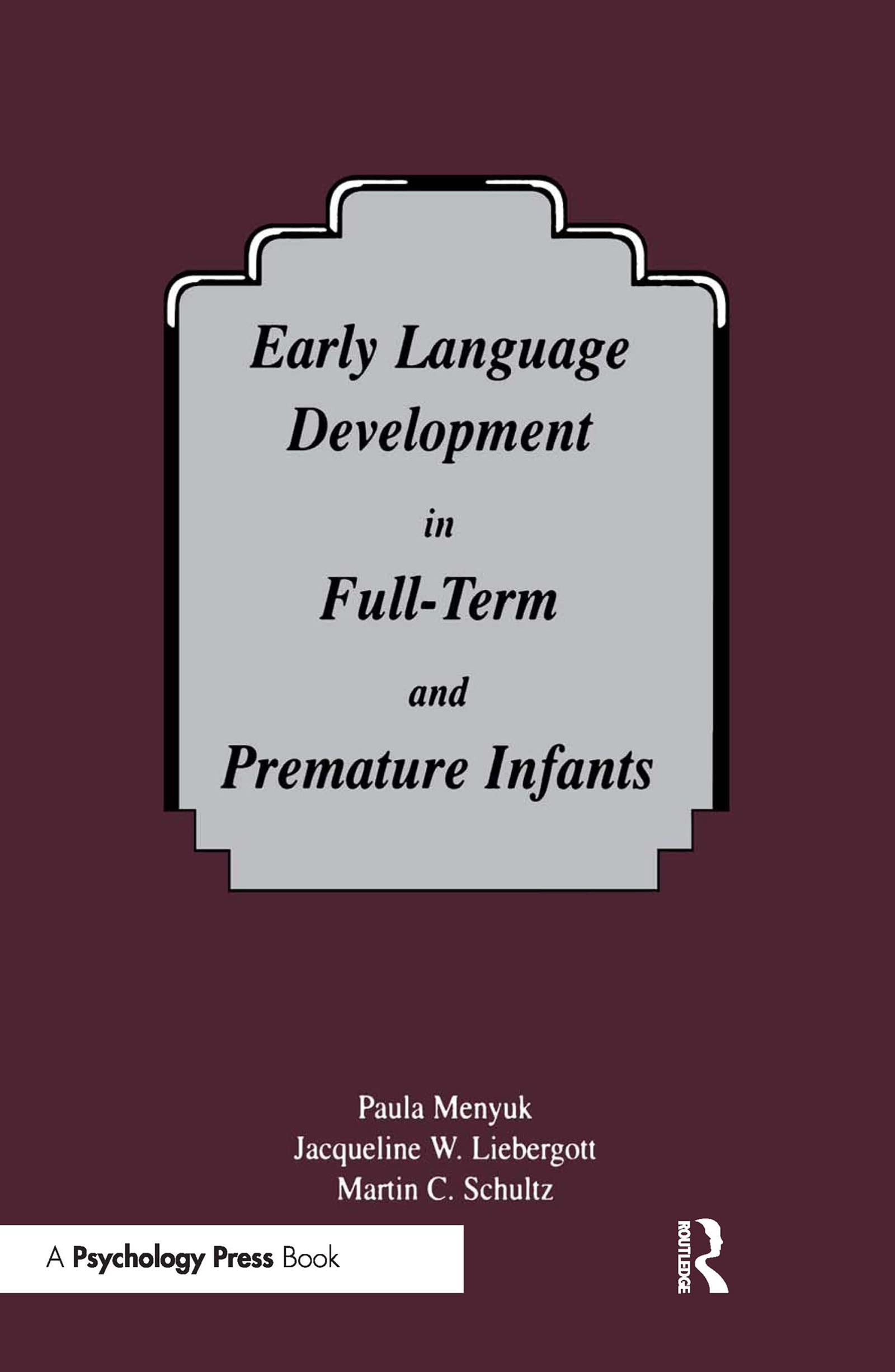
Early Language Development In Fullterm And Premature Infants,Used
Sold by Ergodebooks, an authorized reseller.
Returns accepted within 30 days | support@ergodebooks.com
Shipping Information
- Free Standard Shipping — United States only
- Processing Time: 1–3 business days
- Estimated Delivery: 3–5 business days after dispatch
- Double-boxed, fully insured & discreetly packaged
- Tracking number sent via email once dispatched
- Orders over $250 require signature upon delivery. Taxes calculated at checkout.
Returns & Refund
Returns accepted within 30 days of delivery.
Damaged or Defective Item
Free return shipping + replacement or full refund
Wrong Item Received
Free return shipping + replacement or full refund
Change of Mind
Return shipping at customer's expense · 25% restocking fee applies
Payment Option

Designed to provide practical information to those who are concerned with the development of young children, this book has three goals. First, the authors offer details about patterns of language development over the first three years of life. Although intensive studies have been carried out by examining from one to 20 children in the age range of zero to three years, there has been no longitudinal study of a sample as large as this53 childrennor have as many measures of language development been obtained from the same children. Examining language development from a broad perspective in this size population allows us to see what generalizations can be made about patterns of language development.This volume's second goal is to examine the impact of such factors as biology, cognition, and communication inputand the interaction of these factorswhich traditionally have been held to play an important role in the course of language development. The comparative influence of eachand the interaction of all threewere examined statistically using children's scores on standard language tests at age three.The volume's third goal is to provide information to beginning investigators, early childhood educators, and clinicians that can help them in their practice. This includes information about what appear to be good early predictors of language development at three years; language assessment procedures that can be used with children below age three, how these procedures can be used, what they tell us about the language development of young children; and what warning signs should probably be attended to, and which can most likely be ignored. In addition, suggestions are made about what patterns of communicative interaction during the different periods of development seem to be most successful in terms of language development outcomes at three years, and what overall indications the study offers regarding appropriate intervention.
⚠️ WARNING (California Proposition 65):
This product may contain chemicals known to the State of California to cause cancer, birth defects, or other reproductive harm.
For more information, please visit www.P65Warnings.ca.gov.