If you have any questions, you are always welcome to contact us. We'll get back to you as soon as possible, withing 24 hours on weekdays.
Customer service
All questions about your order, return and delivery must be sent to our customer service team by e-mail at yourstore@yourdomain.com
Sale & Press
If you are interested in selling our products, need more information about our brand or wish to make a collaboration, please contact us at press@yourdomain.com
Help
If you have any questions, you are always welcome to contact us. We'll get back to you as soon as possible, withing 24 hours on weekdays.
Customer service
All questions about your order, return and delivery must be sent to our customer service team by e-mail at yourstore@yourdomain.com
Sale & Press
If you are interested in selling our products, need more information about our brand or wish to make a collaboration, please contact us at press@yourdomain.com
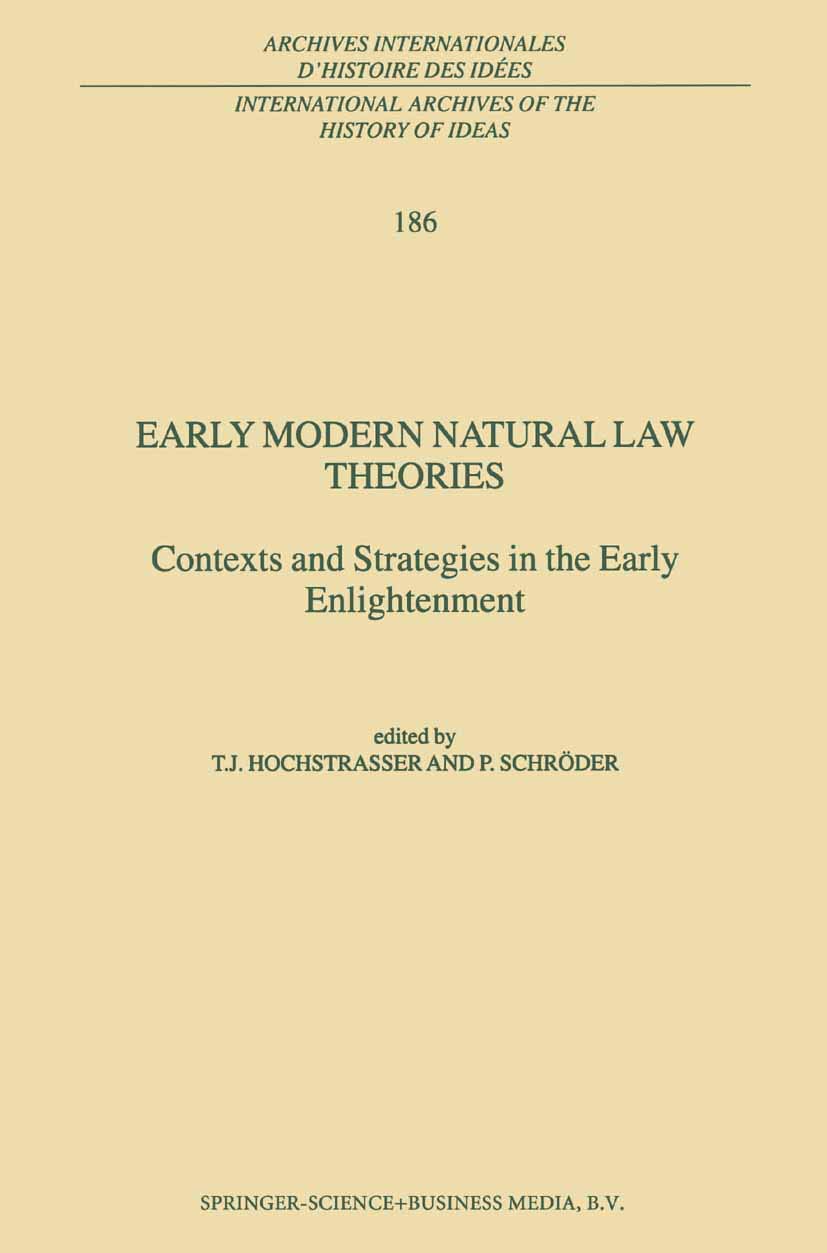
The study of natural law theories in the early Enlightenment continues to be one of the most fruitful areas of research in early modern intellectual history. In recent years there have been substantial reassessments of Grotius, Pufendorf, Thomasius 1 and the whole universitybased tradition associated with the Frhaujklrung. The appeal of the discourse of natural jurisprudence to groups and individuals operating outside conventional educational and political structures such as the Huguenot diaspora has also been highlighted? Moreover the contextual understanding of the work of unambiguously major philosophers such as Hobbes and Kant and its reception has been greatly enhanced by studies that have sought to view them as 3 participants in rather than bystanders alongside the discourse of natural law. Thus thinkers previously not considered central to this discourse have been incorporated into it afresh. However, there is no danger of natural jurisprudence going unchallenged as the metadiscourse of political theory in this period, for recently new studies of the role of libertine and jansenist thought in shaping the priorities of the early Republic of Letters have challenged its position among the intellectual 4 achievements of the social and political theory of the early Enlightenment. This volume therefore offers a timely opportunity to reassess both the coherence of the concept of 'early Enlightenment' and the specific contribution of natural law theories to it.
⚠️ WARNING (California Proposition 65):
This product may contain chemicals known to the State of California to cause cancer,
birth defects, or other reproductive harm.
For MAP (Minimum Advertised Price) violations and Intellectual Property (IP) or Trademark concerns, please contact:
support@ergodebooks.com
⚠️ California Proposition 65 Warning: Some products sold on this website may expose you to chemicals known to the State of California to cause cancer, birth defects, or other reproductive harm. For more information, visit www.P65Warnings.ca.gov.