If you have any questions, you are always welcome to contact us. We'll get back to you as soon as possible, withing 24 hours on weekdays.
Customer service
All questions about your order, return and delivery must be sent to our customer service team by e-mail at yourstore@yourdomain.com
Sale & Press
If you are interested in selling our products, need more information about our brand or wish to make a collaboration, please contact us at press@yourdomain.com
Help
If you have any questions, you are always welcome to contact us. We'll get back to you as soon as possible, withing 24 hours on weekdays.
Customer service
All questions about your order, return and delivery must be sent to our customer service team by e-mail at yourstore@yourdomain.com
Sale & Press
If you are interested in selling our products, need more information about our brand or wish to make a collaboration, please contact us at press@yourdomain.com
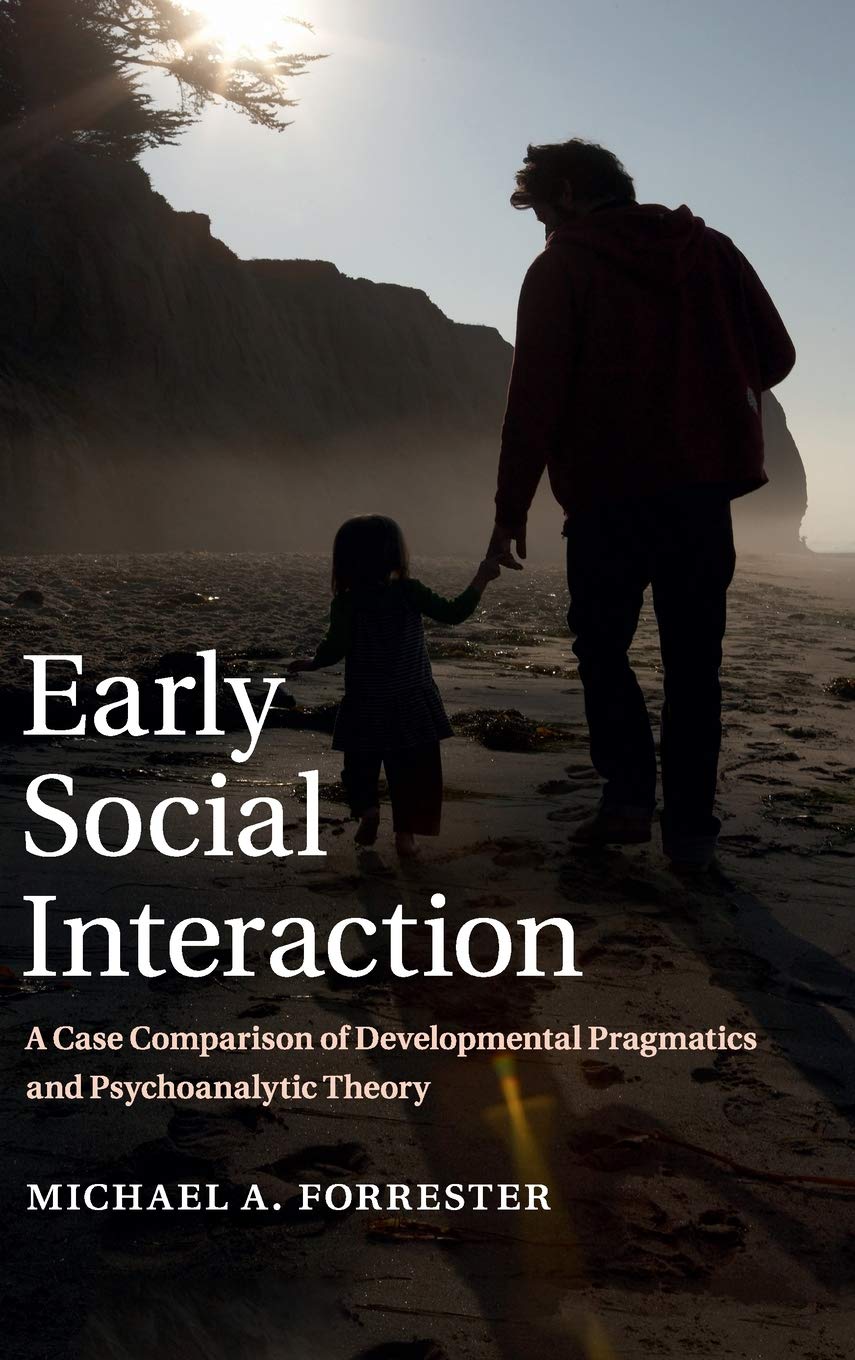
When a young child begins to engage in everyday interaction, she has to acquire competencies that allow her to be oriented to the conventions that inform talkininteraction and, at the same time, deal with emotional or affective dimensions of experience. The theoretical positions associated with these domains socialaction and emotion provide very different accounts of human development and this book examines why this is the case. Through a longitudinal videorecorded study of one child learning how to talk, Michael A. Forrester develops proposals that rest upon a comparison of two perspectives on everyday parentchild interaction taken from the same data corpus one informed by conversation analysis and ethnomethodology, the other by psychoanalytic developmental psychology. Ultimately, what is significant for attaining membership within any culture is gradually being able to display an orientation towards both domains doing and feeling, or socialaction and affect.
⚠️ WARNING (California Proposition 65):
This product may contain chemicals known to the State of California to cause cancer,
birth defects, or other reproductive harm.
For MAP (Minimum Advertised Price) violations and Intellectual Property (IP) or Trademark concerns, please contact:
support@ergodebooks.com
⚠️ California Proposition 65 Warning: Some products sold on this website may expose you to chemicals known to the State of California to cause cancer, birth defects, or other reproductive harm. For more information, visit www.P65Warnings.ca.gov.