If you have any questions, you are always welcome to contact us. We'll get back to you as soon as possible, withing 24 hours on weekdays.
Customer service
All questions about your order, return and delivery must be sent to our customer service team by e-mail at yourstore@yourdomain.com
Sale & Press
If you are interested in selling our products, need more information about our brand or wish to make a collaboration, please contact us at press@yourdomain.com
Help
If you have any questions, you are always welcome to contact us. We'll get back to you as soon as possible, withing 24 hours on weekdays.
Customer service
All questions about your order, return and delivery must be sent to our customer service team by e-mail at yourstore@yourdomain.com
Sale & Press
If you are interested in selling our products, need more information about our brand or wish to make a collaboration, please contact us at press@yourdomain.com
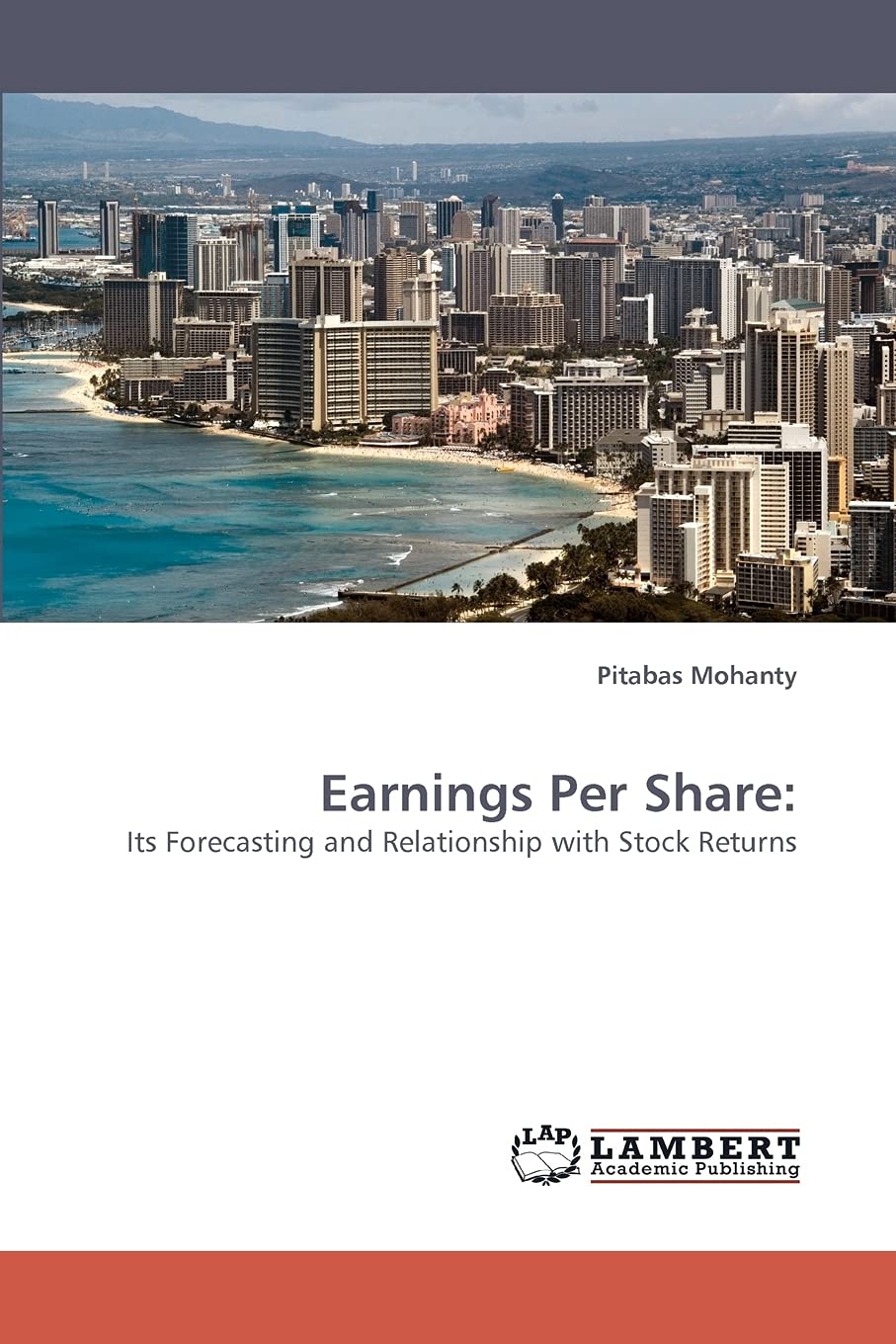
A survey of the way equity research is being done in India revealed that analysts mainly use the P/E approach to value the stock. The most difficult part of equity research is also found to be the largely unpredictable nature of P/E ratio. This book attempts to answer the question of whether excess return can be earned by forecasting EPS alone. Using a Logitbased forecasting model, Ou and Penman (1989) have shown that excess return can be obtained by forecasting the direction of movement of EPS in the US capital market. A similar study done here for the Indian stock market shows that one can obtain excess return by forecasting the direction of movement of the EPS. In the second part of the book, an attempt has been made to empirically test APT in India. However, it is found out that none of the factors seem to be priced in India. This may either mean that the sample size is too small to do any meaningful test of APT. It may also mean that the APT does not work in the Indian context.
⚠️ WARNING (California Proposition 65):
This product may contain chemicals known to the State of California to cause cancer,
birth defects, or other reproductive harm.
For MAP (Minimum Advertised Price) violations and Intellectual Property (IP) or Trademark concerns, please contact:
support@ergodebooks.com
⚠️ California Proposition 65 Warning: Some products sold on this website may expose you to chemicals known to the State of California to cause cancer, birth defects, or other reproductive harm. For more information, visit www.P65Warnings.ca.gov.