
Title
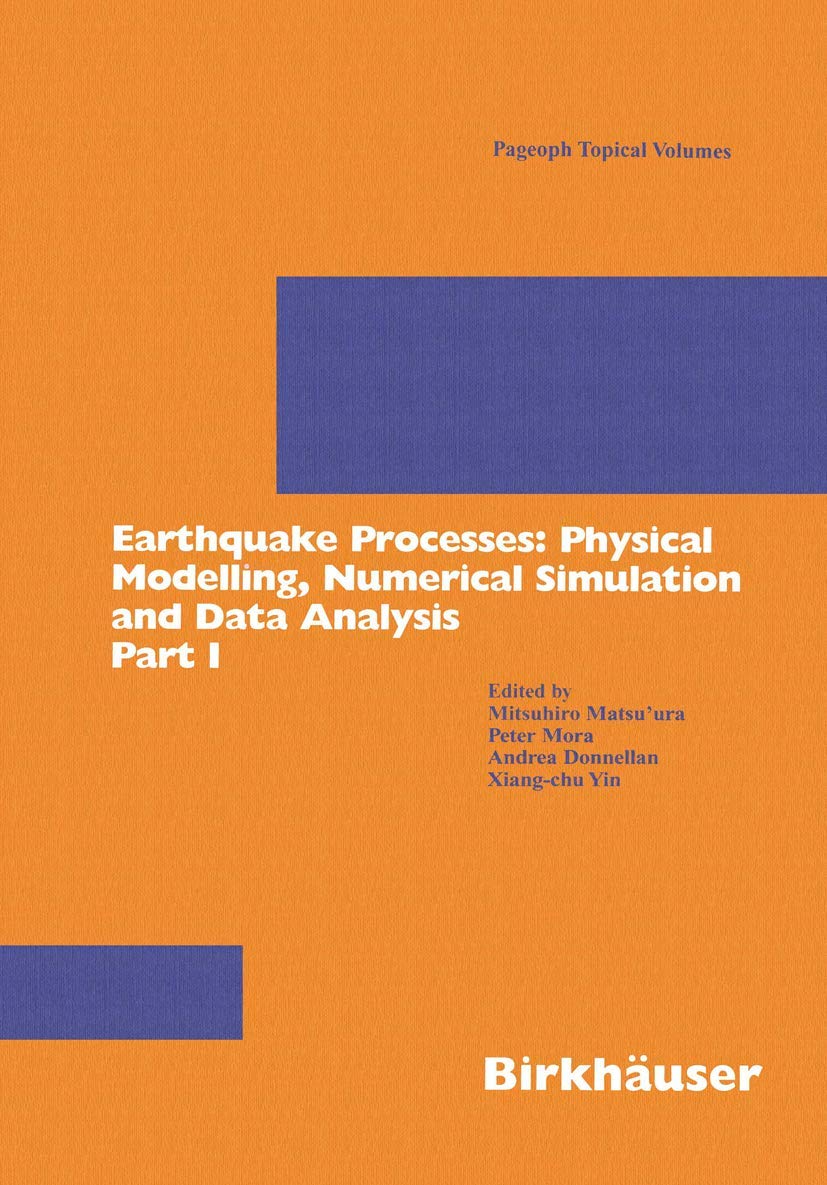
Earthquake Processes: Physical Modelling, Numerical Simulation and Data Analysis Part I (Pageoph Topical Volumes),Used
Sold by Ergodebooks, an authorized reseller.
Returns accepted within 30 days | support@ergodebooks.com
Shipping Information
- Free Standard Shipping — United States only
- Processing Time: 3–5 business days
- Estimated Delivery: 6–10 business days after dispatch
- Double-boxed, fully insured & discreetly packaged
- Tracking number sent via email once dispatched
Returns & Refund
Returns accepted within 30 days of delivery.
Damaged or Defective Item
Free return shipping + replacement or full refund
Wrong Item Received
Free return shipping + replacement or full refund
Change of Mind
Return shipping at customer's expense · 25% restocking fee applies
Payment Option

In the last decade of the 20th century, there has been great progress in the physics of earthquake generation; that is, the introduction of laboratorybased fault constitutive laws as a basic equation governing earthquake rupture, quantitative description of tectonic loading driven by plate motion, and a microscopic approach to study fault zone processes. The fault constitutive law plays the role of an interface between microscopic processes in fault zones and macroscopic processes of a fault system, and the plate motion connects diverse crustal activities with mantle dynamics. An ambitious challenge for us is to develop realistic computer simulation models for the complete earthquake process on the basis of microphysics in fault zones and macrodynamics in the crustmantle system. Recent advances in high performance computer technology and numerical simulation methodology are bringing this vision within reach. The book consists of two parts and presents a crosssection of cuttingedge research in the field of computational earthquake physics. Part I includes works on microphysics of rupture and fault constitutive laws, and dynamic rupture, wave propagation and strong ground motion. Part II covers earthquake cycles, crustal deformation, plate dynamics, and seismicity change and its physical interpretation. Topics covered in Part I range from the microscopic simulation and laboratory studies of rock fracture and the underlying mechanism for nucleation and catastrophic failure to the development of theoretical models of frictional behaviors of faults; as well as the simulation studies of dynamic rupture processes and seismic wave propagation in a 3D heterogeneous medium, to the case studies of strong ground motions from the 1999 ChiChi earthquake and seismic hazard estimation for Cascadian subduction zone earthquakes.
⚠️ WARNING (California Proposition 65):
This product may contain chemicals known to the State of California to cause cancer, birth defects, or other reproductive harm.
For more information, please visit www.P65Warnings.ca.gov.