If you have any questions, you are always welcome to contact us. We'll get back to you as soon as possible, withing 24 hours on weekdays.
Customer service
All questions about your order, return and delivery must be sent to our customer service team by e-mail at yourstore@yourdomain.com
Sale & Press
If you are interested in selling our products, need more information about our brand or wish to make a collaboration, please contact us at press@yourdomain.com
Help
If you have any questions, you are always welcome to contact us. We'll get back to you as soon as possible, withing 24 hours on weekdays.
Customer service
All questions about your order, return and delivery must be sent to our customer service team by e-mail at yourstore@yourdomain.com
Sale & Press
If you are interested in selling our products, need more information about our brand or wish to make a collaboration, please contact us at press@yourdomain.com
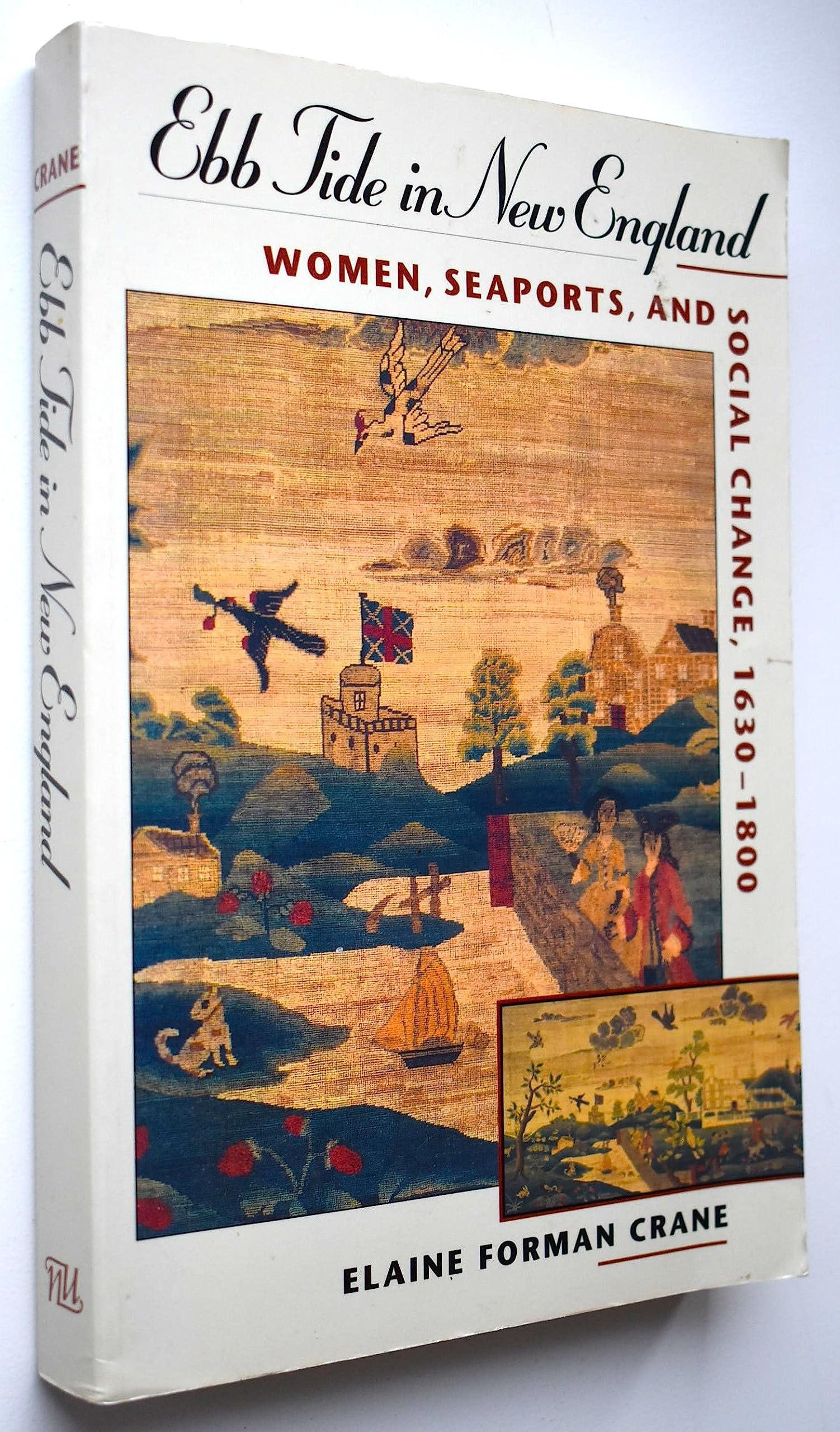
The status of women in four New England seaports (Boston, Salem, Newport, and Portsmouth) during the seventeenth and eighteenth centuries is thoroughly documented in this illuminating work. Although the female population was preponderant in these urban towns, Elaine Forman Crane finds that women of this period gradually became less autonomous and more dependent on men than they had been in the early years of English settlement.Challenging the prevailing notion that women's lives improved during the revolutionary era, the author convincingly argues that women's voices grew weaker and their presence dimmer as the market economy and government expanded. Drawing from census lists, church records, merchants' ledgers, newspapers, town records, and family papers, Crane traces the evolution of religious, commercial, and legal institutions to show how women suffered a deterioration in economic standing, a growing public invisibility, and a heightened reliance on male decision making. She frames her narrative within the context of European women's experiences, revealing a parallel decline in status as the patriarchal structures of church, state, and market became more elaborate and interconnected.Ebb Tide in New England offers a fresh perspective on ordinary women's lives in the colonial and revolutionary periods, and it makes a strong case for viewing the feminization of poverty in contemporary America as a product of these historical origins.
⚠️ WARNING (California Proposition 65):
This product may contain chemicals known to the State of California to cause cancer,
birth defects, or other reproductive harm.
For MAP (Minimum Advertised Price) violations and Intellectual Property (IP) or Trademark concerns, please contact:
support@ergodebooks.com
⚠️ California Proposition 65 Warning: Some products sold on this website may expose you to chemicals known to the State of California to cause cancer, birth defects, or other reproductive harm. For more information, visit www.P65Warnings.ca.gov.