If you have any questions, you are always welcome to contact us. We'll get back to you as soon as possible, withing 24 hours on weekdays.
Customer service
All questions about your order, return and delivery must be sent to our customer service team by e-mail at yourstore@yourdomain.com
Sale & Press
If you are interested in selling our products, need more information about our brand or wish to make a collaboration, please contact us at press@yourdomain.com
Help
If you have any questions, you are always welcome to contact us. We'll get back to you as soon as possible, withing 24 hours on weekdays.
Customer service
All questions about your order, return and delivery must be sent to our customer service team by e-mail at yourstore@yourdomain.com
Sale & Press
If you are interested in selling our products, need more information about our brand or wish to make a collaboration, please contact us at press@yourdomain.com
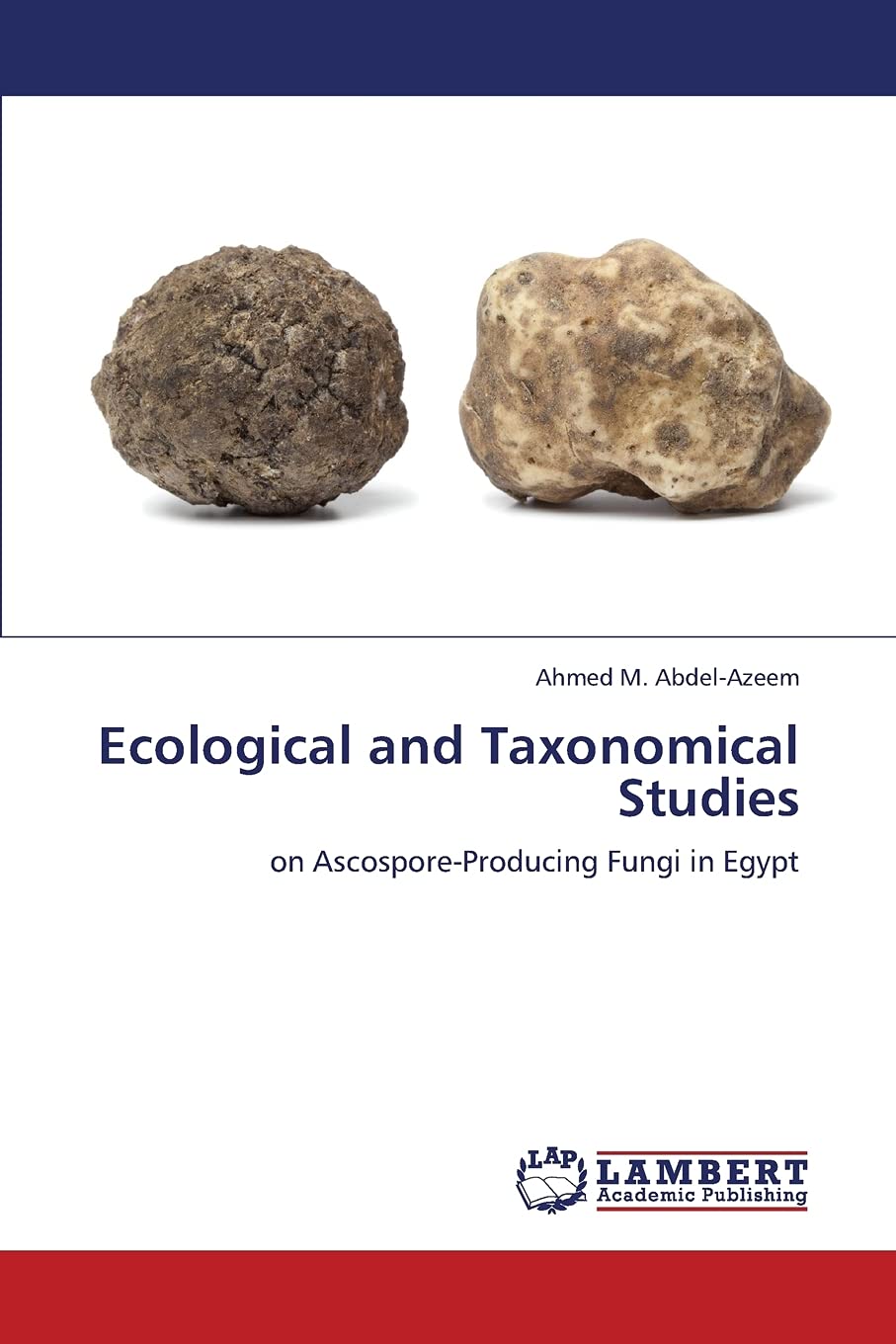
Information about Egyptian ascosporic fungi are very rare and limited because members of the group were either overlooked during investigations or never been the sole target of any investigation before. In this study I conducted a survey study focusing mainly on the ascosporic forms.To give a picture of the ascosporic mycobiota of Egypt, various substrates including different soils, dung of herbivore animals, composts, phylloplane, stored seeds and grains were investigated adopting appropriate isolation techniques. Fiftyeight taxa were reported and their frequency of occurrence and substrate preference were determined. Species richness at the substrate level revealed that herbivore dung is the richest by housing 38 taxa, followed by cultivated soil (22) and salt marsh soils (15). At the taxonomic level, order Sordariales came first by accommodating 23 taxa followed by Eurotiales (11). Multivariate analyses using Canonical Correspondence Analysis (CCA) and Two Way Indictor Species Analysis (TWINSPAN) were used to characterize community structure and to find out possible relationships among substrates and also between some taxa and certain substrates.
⚠️ WARNING (California Proposition 65):
This product may contain chemicals known to the State of California to cause cancer,
birth defects, or other reproductive harm.
For MAP (Minimum Advertised Price) violations and Intellectual Property (IP) or Trademark concerns, please contact:
support@ergodebooks.com
⚠️ California Proposition 65 Warning: Some products sold on this website may expose you to chemicals known to the State of California to cause cancer, birth defects, or other reproductive harm. For more information, visit www.P65Warnings.ca.gov.