
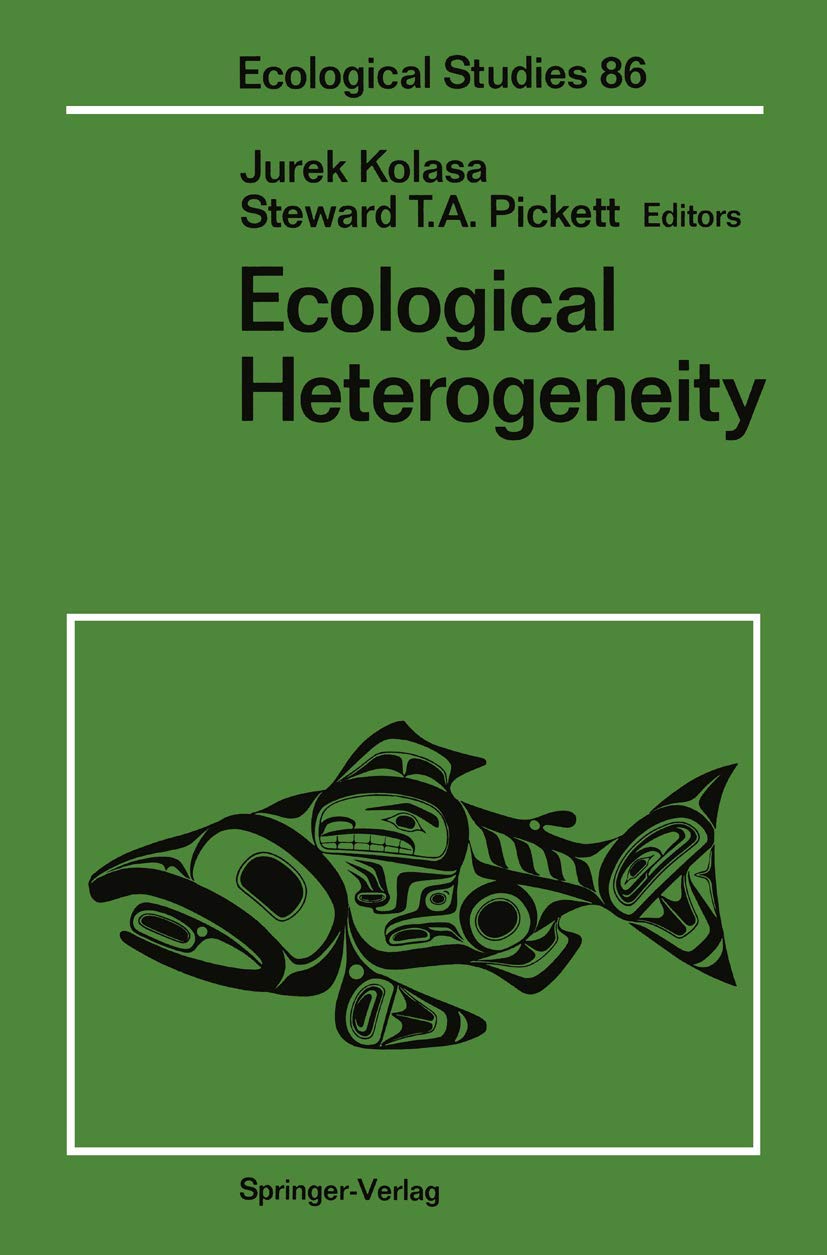
Title
Ecological Heterogeneity (Ecological Studies, 86)
Sold by Ergodebooks, an authorized reseller.
Returns accepted within 30 days | support@ergodebooks.com
Shipping Information
- Free Standard Shipping — United States only
- Processing Time: 3–5 business days
- Estimated Delivery: 6–10 business days after dispatch
- Double-boxed, fully insured & discreetly packaged
- Tracking number sent via email once dispatched
Returns & Refund
Returns accepted within 30 days of delivery.
Damaged or Defective Item
Free return shipping + replacement or full refund
Wrong Item Received
Free return shipping + replacement or full refund
Change of Mind
Return shipping at customer's expense · 25% restocking fee applies
Payment Option

An Attractive, Promising, And Frustrating Feature Of Ecology Is Its Complex Ity, Both Conceptual And Observational. Increasing Acknowledgment Of The Importance Of Scale Testifies To The Shifting Focus In Large Areas Of Ecology. In The Rush To Explore Problems Of Scale, Another General Aspect Of Ecolog Ical Systems Has Been Given Less Attention. This Aspect, Equally Important, Is Heterogeneity. Its Importance Lies In The Ubiquity Of Heterogeneity As A Feature Of Ecological Systems And In The Number Of Questions It Raises Questions To Which Answers Are Not Readily Available. What Is Heterogeneity? Does It Differ From Complexity? What Dimensions Need Be Considered To Evaluate Heterogeneity Ade Quately? Can Heterogeneity Be Measured At Various Scales? Is Heterogeneity Apart Of Organization Of Ecological Systems? How Does It Change In Time And Space? What Are The Causes Of Heterogeneity And Causes Of Its Change? This Volume Attempts To Answer These Questions. It Is Devoted To Iden Tification Of The Meaning, Range Of Applications, Problems, And Methodol Ogy Associated With The Study Of Heterogeneity. The Coverage Is Thus Broad And Rich, And The Contributing Authors Have Been Encouraged To Range Widely In Discussions And Reflections. Vi Preface The Chapters Are Grouped Into Themes. The First Group Focuses On The Conceptual Foundations (Chapters 15). These Papers Exarnine The Meaning Of The Term, Historical Developments, And Relations To Scale. The Second Theme Is Modeling Population And Interspecific Interactions In Hetero Geneous Environments (Chapters 6 And 7).
⚠️ WARNING (California Proposition 65):
This product may contain chemicals known to the State of California to cause cancer, birth defects, or other reproductive harm.
For more information, please visit www.P65Warnings.ca.gov.
- Q: What is the main focus of 'Ecological Heterogeneity'? A: 'Ecological Heterogeneity' examines the concept of heterogeneity in ecological systems, exploring its importance, measurement, and its relationship to complexity and scale.
- Q: Who is the author of this book? A: The book is authored by Jurek Kolasa, who is known for his contributions to the field of ecology.
- Q: What type of binding does this book have? A: This book is a paperback edition, making it lightweight and easy to handle.
- Q: How many pages does 'Ecological Heterogeneity' have? A: The book contains a total of 343 pages.
- Q: When was 'Ecological Heterogeneity' published? A: The book was published on October 5, 2011.
- Q: What condition is the book in? A: The book is listed as 'Used Book in Good Condition', indicating it may show some signs of wear but is still suitable for reading.
- Q: What themes are covered in the book? A: The chapters are grouped into themes focusing on conceptual foundations, modeling population interactions, and the implications of heterogeneity in ecological studies.
- Q: Is this book suitable for beginners in ecology? A: While it addresses complex topics, the book offers foundational concepts that can help beginners understand the significance of heterogeneity in ecology.
- Q: What edition is this book? A: This is a softcover reprint of the original first edition published in 1991.
- Q: Does the book provide practical applications of ecological heterogeneity? A: Yes, the book discusses a range of applications, methodologies, and problems associated with studying heterogeneity in ecological systems.