
Title
Ecological Imperialism: The Biological Expansion Of Europe, 9001900 (Studies In Environment And History)
Sold by Ergodebooks, an authorized reseller.
Returns accepted within 30 days | support@ergodebooks.com
Shipping Information
- Free Standard Shipping — United States only
- Processing Time: 3–5 business days
- Estimated Delivery: 6–10 business days after dispatch
- Double-boxed, fully insured & discreetly packaged
- Tracking number sent via email once dispatched
Returns & Refund
Returns accepted within 30 days of delivery.
Damaged or Defective Item
Free return shipping + replacement or full refund
Wrong Item Received
Free return shipping + replacement or full refund
Change of Mind
Return shipping at customer's expense · 25% restocking fee applies
Payment Option

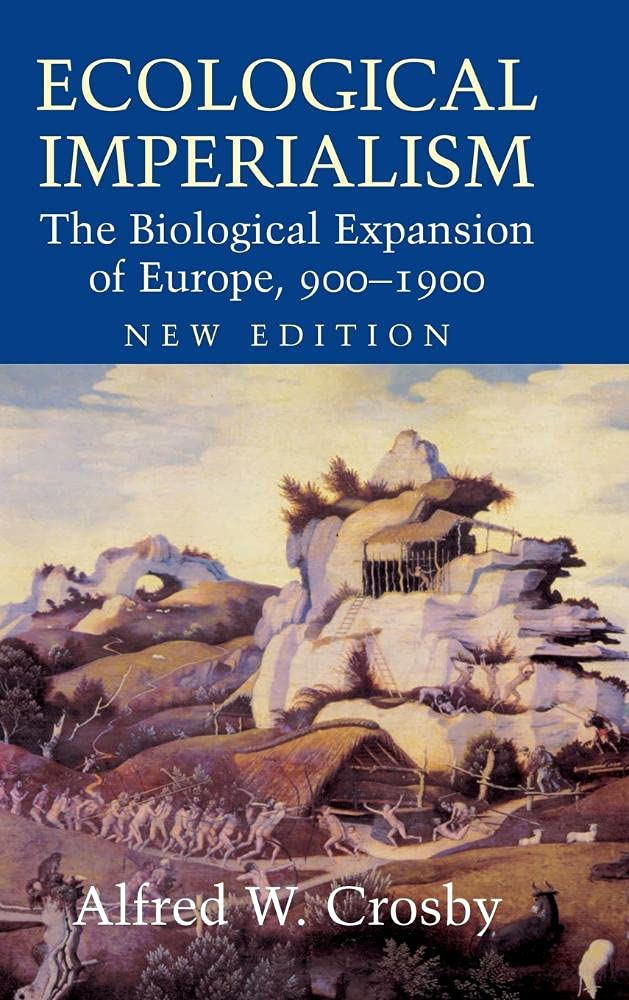
People Of European Descent Form The Bulk Of The Population In Most Of The Temperate Zones Of The Worldnorth America, Australia And New Zealand. The Military Successes Of European Imperialism Are Easy To Explain Because In Many Cases They Were Achieved By Using Firearms Against Spears. Alfred Crosby, However, Explains That The Europeans' Displacement And Replacement Of The Native Peoples In The Temperate Zones Was More A Matter Of Biology Than Of Military Conquest. Now In A New Edition With A New Preface, Crosby Revisits His Classic Work And Again Evaluates The Ecological Reasons For European Expansion. Alfred W. Crosby Is The Author Of The Widely Popular And Groundbreaking Books,The Measure Of Reality (Cambridge, 1996), And America'S Forgotten Pandemic (Cambridge, 1990). His Books Have Received The Ralph Waldo Emerson Prize, The Medical Writers Association Prize And Been Named By The Los Angeles Times As Among The Best Books Of The Year. He Taught At The University Of Texas, Austin For Over 20 Years. First Edition Hb (1986): 0521320097 First Edition Pb (1987): 0521336139
⚠️ WARNING (California Proposition 65):
This product may contain chemicals known to the State of California to cause cancer, birth defects, or other reproductive harm.
For more information, please visit www.P65Warnings.ca.gov.
- Q: What is the page count of the book? A: This book has four hundred eight pages. It provides an in-depth exploration of ecological imperialism and its historical context.
- Q: What is the binding type of this book? A: The book is a hardcover edition. This binding is durable and ideal for long-term use.
- Q: Who is the author of this book? A: The author is Alfred W. Crosby. He is known for his significant contributions to environmental history.
- Q: What topics does the book cover? A: The book explores ecological expansion and biological factors in European imperialism. It analyzes historical events from nine hundred to nineteen hundred.
- Q: What is the size of the book? A: The book measures five point ninety-eight inches in length, one point twenty-six inches in width, and nine point zero two inches in height.
- Q: How do I read this book? A: Simply open the book and begin with the introduction. The content is structured to guide readers through complex historical narratives.
- Q: Is this book suitable for beginners in history? A: Yes, it is suitable for beginners. The author presents complex ideas in an accessible manner, making it a great starting point.
- Q: What is the recommended age group for readers? A: This book is generally suitable for adults and older teens. Its academic subjects may be challenging for younger readers.
- Q: How should I store this book? A: Store the book upright on a shelf away from direct sunlight. This will help preserve the binding and pages over time.
- Q: Can I keep this book in a damp environment? A: No, it is not recommended. Damp conditions can damage the pages and binding of the book.
- Q: What should I do if the book arrives damaged? A: Contact the seller immediately for a return or exchange. Most sellers provide a satisfaction guarantee for damaged items.
- Q: Is there a warranty on this book? A: Typically, books do not come with a warranty. Check with the seller for their specific return policy.
- Q: What if I need to return the book? A: Follow the seller's return policy guidelines, which are usually provided at the time of purchase.
- Q: Are there any similar books by the author? A: Yes, Alfred W. Crosby has written other notable works, such as 'The Measure of Reality' and 'America's Forgotten Pandemic'.
- Q: How does this book compare to other historical books? A: This book uniquely combines ecological and historical analysis, distinguishing it from other works that may focus solely on military history.
- Q: What is the main theme of the book? A: The main theme is the biological expansion of Europe and its ecological impacts on native populations during imperialism.