
Title
Ecological Modeling in Risk Assessment: Chemical Effects on Populations, Ecosystems, and Landscapes,Used
Sold by Ergodebooks, an authorized reseller.
Returns accepted within 30 days | support@ergodebooks.com
Shipping Information
- Free Standard Shipping — United States only
- Processing Time: 3–5 business days
- Estimated Delivery: 6–10 business days after dispatch
- Double-boxed, fully insured & discreetly packaged
- Tracking number sent via email once dispatched
Returns & Refund
Returns accepted within 30 days of delivery.
Damaged or Defective Item
Free return shipping + replacement or full refund
Wrong Item Received
Free return shipping + replacement or full refund
Change of Mind
Return shipping at customer's expense · 25% restocking fee applies
Payment Option

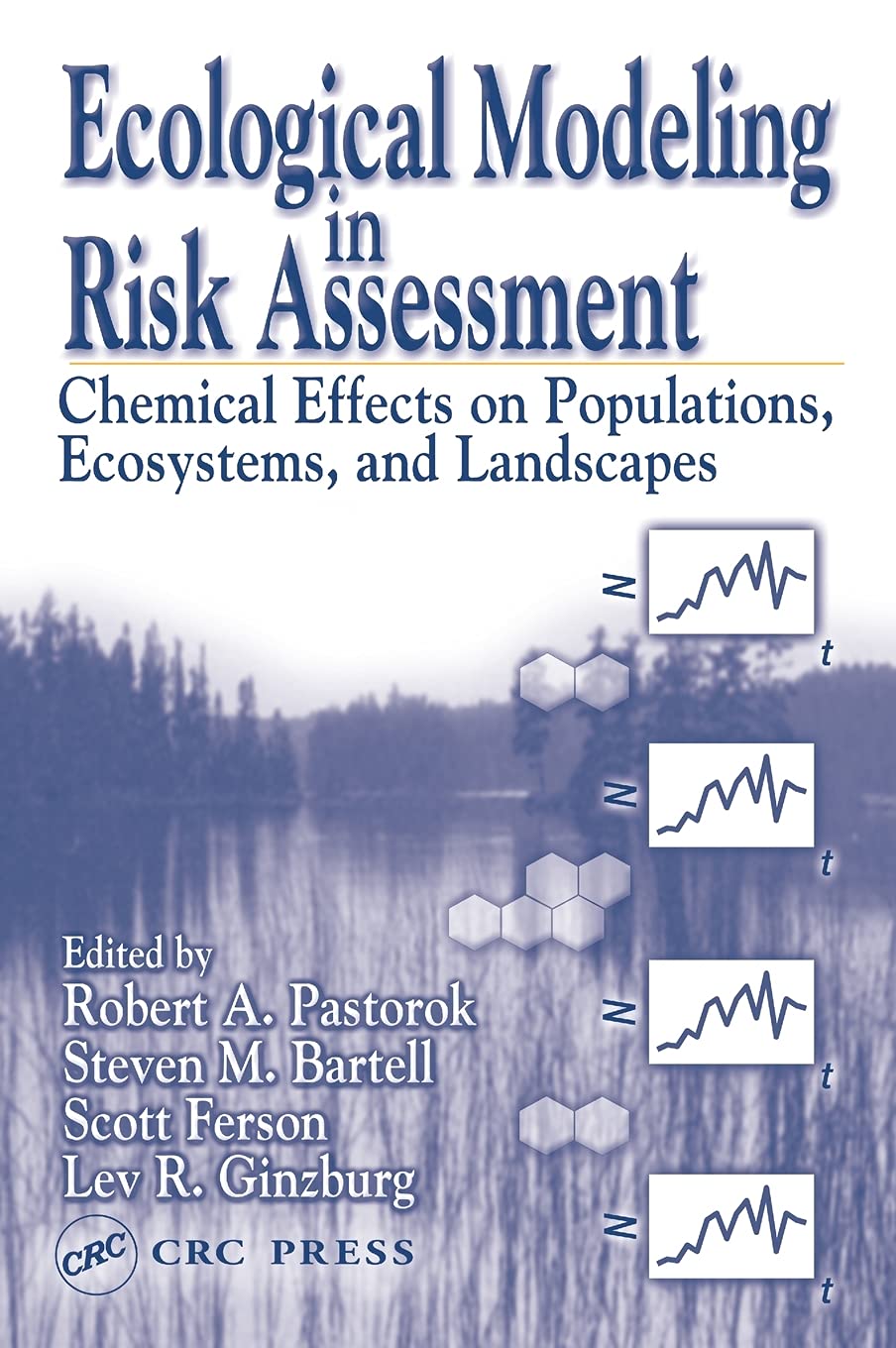
Toxic chemicals can exert effects on all levels of the biological hierarchy, from cells to organs to organisms to populations to entire ecosystems. However, most risk assessment models express their results in terms of effects on individual organisms, without corresponding information on how populations, groups of species, or whole ecosystems may respond to chemical stressors. Ecological Modeling in Risk Assessment: Chemical Effects on Populations, Ecosystems, and Landscapes takes a new approach by compiling and evaluating models that can be used in assessing risk at the population, ecosystem, and landscape levels.The authors give an overview of the current process of ecological risk assessment for toxic chemicals and of how modeling of populations, ecosystems, and landscapes could improve the status quo. They present a classification of ecological models and explain the differences between population, ecosystem, landscape, and toxicityextrapolation models. The authors describe the model evaluation process and define evaluation criteria. Finally, the results of the model evaluations are presented in a concise format with recommendations on modeling approaches to use now and develop further.The authors present and evaluate various models on the basis of their realism and complexity, prediction of relevant assessment endpoints, treatment of uncertainty, regulatory acceptance, resource efficiency, and other criteria. They provide models that will improve the ecological relevance of risk assessments and make data collection more costeffective. Ecological Modeling in Risk Assessment serves as a reference for selecting and applying the best models when performing a risk assessment.
⚠️ WARNING (California Proposition 65):
This product may contain chemicals known to the State of California to cause cancer, birth defects, or other reproductive harm.
For more information, please visit www.P65Warnings.ca.gov.