
Title
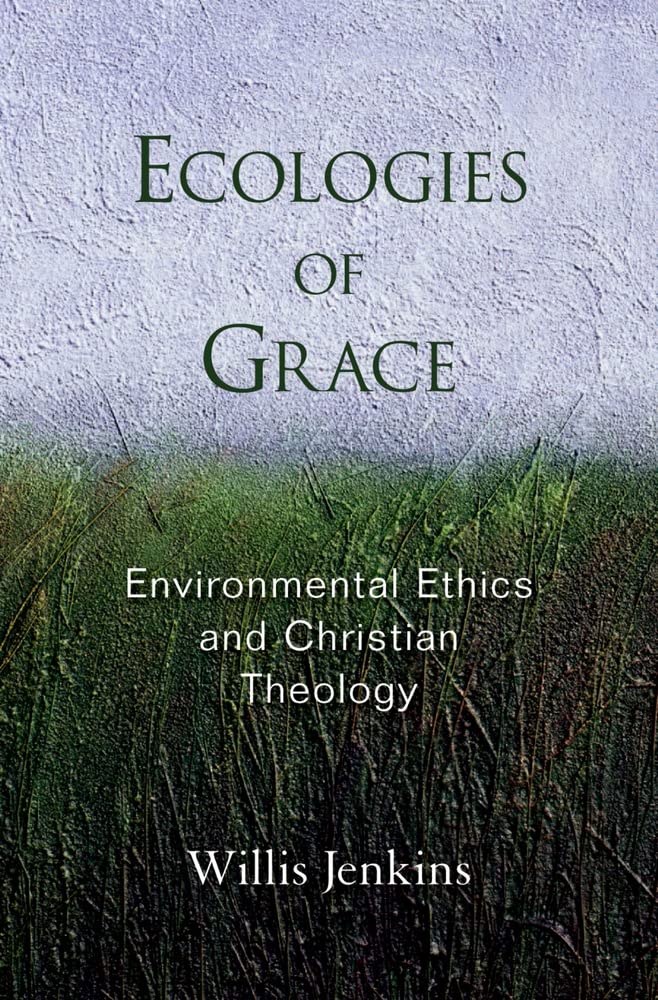
Ecologies of Grace: Environmental Ethics and Christian Theology,Used
Sold by Ergodebooks, an authorized reseller.
Returns accepted within 30 days | support@ergodebooks.com
Shipping Information
- Free Standard Shipping — United States only
- Processing Time: 3–5 business days
- Estimated Delivery: 6–10 business days after dispatch
- Double-boxed, fully insured & discreetly packaged
- Tracking number sent via email once dispatched
Returns & Refund
Returns accepted within 30 days of delivery.
Damaged or Defective Item
Free return shipping + replacement or full refund
Wrong Item Received
Free return shipping + replacement or full refund
Change of Mind
Return shipping at customer's expense · 25% restocking fee applies
Payment Option

Christianity struggles to show how living on earth matters for living with God. While people of faith increasingly seek practical ways to respond to the environmental crisis, theology has had difficulty contextualizing the crisis and interpreting the responses.In Ecologies of Grace, Willis Jenkins presents a fieldshaping introduction to Christian environmental ethics that offers resources for renewing theology. Observing how religious environmental practices often draw on concepts of grace, Jenkins maps the way Christian environmental strategies draw from traditions of salvation as they engage the problems of environmental ethics. He then uses this new map to explore afresh the ecological dimensions of Christian theology.Jenkins first shows how Christian ethics uniquely frames environmental issues, and then how those approaches both challenge and reinhabit theological traditions. He identifies three major strategies for making environmental problems intelligible to Christian moral experience. Each one draws on a distinct pattern of grace as it adapts a secular approach to environmental ethics. The strategies of ecojustice, stewardship, and ecological spirituality make environments matter for Christian experience by drawing on patterns of sanctification, redemption, and deification.He then confronts the problems of each of these strategies through critical reappraisals of Thomas Aquinas, Karl Barth, and Sergei Bulgakov. Each represents a soteriological tradition which Jenkins explores as an ecology of grace, letting environmental questions guide investigation into how nature becomes significant for Christian experience.By being particularly sensitive to the ways in which environmental problems are made intelligible to Christian moral experience, Jenkins guides his readers toward a fuller understanding of Christianity and ecology. He not only makes sense of the variety of Christian environmental ethics, but by showing how environmental issues come to the heart of Christian experience, prepares fertile ground for theological renewal.
⚠️ WARNING (California Proposition 65):
This product may contain chemicals known to the State of California to cause cancer, birth defects, or other reproductive harm.
For more information, please visit www.P65Warnings.ca.gov.