If you have any questions, you are always welcome to contact us. We'll get back to you as soon as possible, withing 24 hours on weekdays.
Customer service
All questions about your order, return and delivery must be sent to our customer service team by e-mail at yourstore@yourdomain.com
Sale & Press
If you are interested in selling our products, need more information about our brand or wish to make a collaboration, please contact us at press@yourdomain.com
Help
If you have any questions, you are always welcome to contact us. We'll get back to you as soon as possible, withing 24 hours on weekdays.
Customer service
All questions about your order, return and delivery must be sent to our customer service team by e-mail at yourstore@yourdomain.com
Sale & Press
If you are interested in selling our products, need more information about our brand or wish to make a collaboration, please contact us at press@yourdomain.com
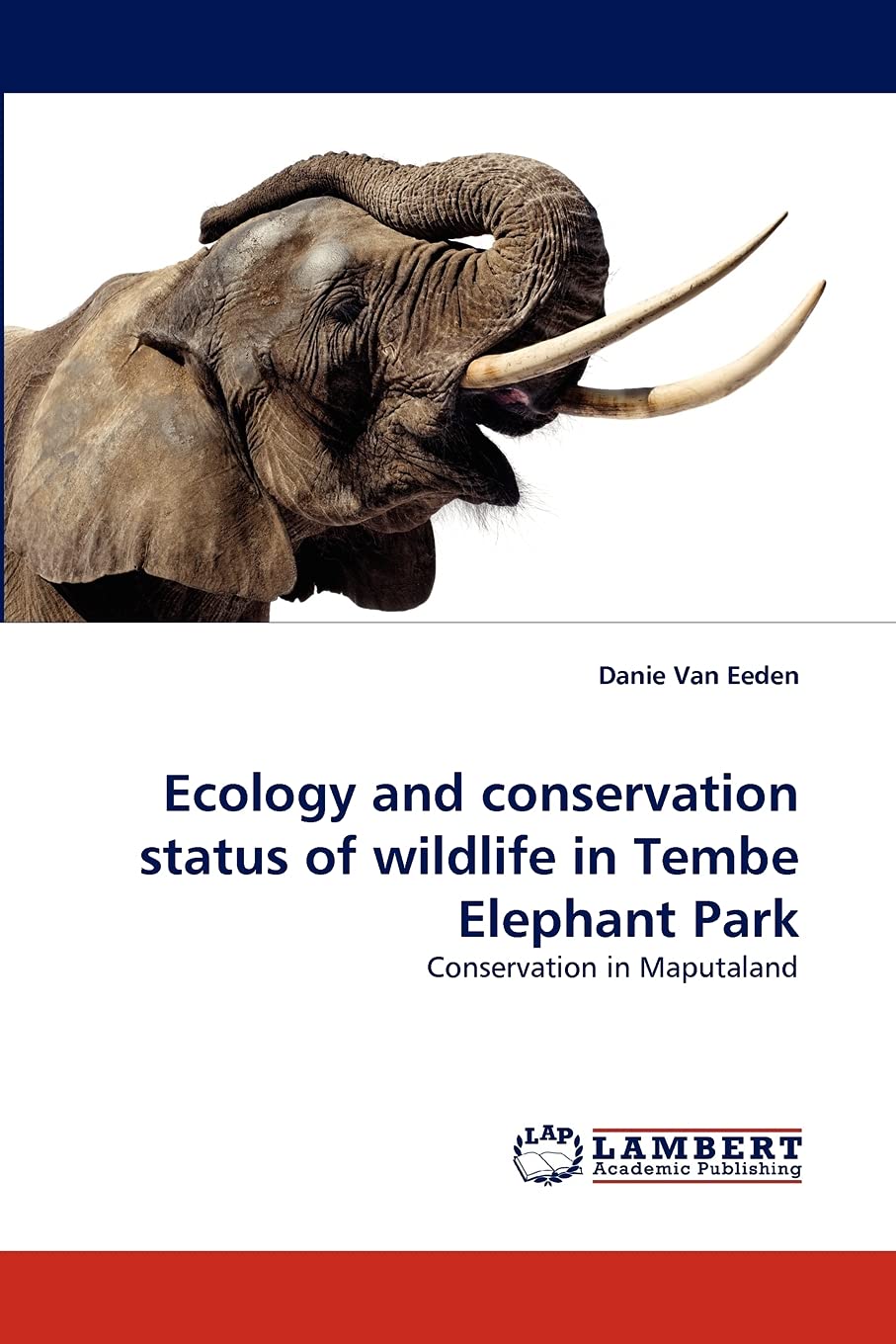
The present study compared Sand Forest bird assemblages found in a communal land area with that of the Tembe Elephant Park, and determined the habitat preference and status of selected herbivore species within the Tembe Elephant Park in KwaZuluNatal, South Africa. The main purpose of the study was to compare Sand Forest bird assemblages found in the Tshanini Community Conservation Area, which is characterised by low levels of human utilisation, with that of the Tembe Elephant Park, which is characterised by wildlife utilisation. This approach was used to determine the biological importance of this communal land area in contributing towards the conservation of the rare Sand Forest habitat. The second purpose of the study was to identify possible competition between selected herbivore species within the Tembe Elephant Park and/or a decrease in numbers of rare species. It is important to protect a viable portion of the preferred habitat of every target species within a reserve, and to keep competition with rare species to a minimum for the longterm survival of the regional biodiversity.
⚠️ WARNING (California Proposition 65):
This product may contain chemicals known to the State of California to cause cancer,
birth defects, or other reproductive harm.
For MAP (Minimum Advertised Price) violations and Intellectual Property (IP) or Trademark concerns, please contact:
support@ergodebooks.com
⚠️ California Proposition 65 Warning: Some products sold on this website may expose you to chemicals known to the State of California to cause cancer, birth defects, or other reproductive harm. For more information, visit www.P65Warnings.ca.gov.