
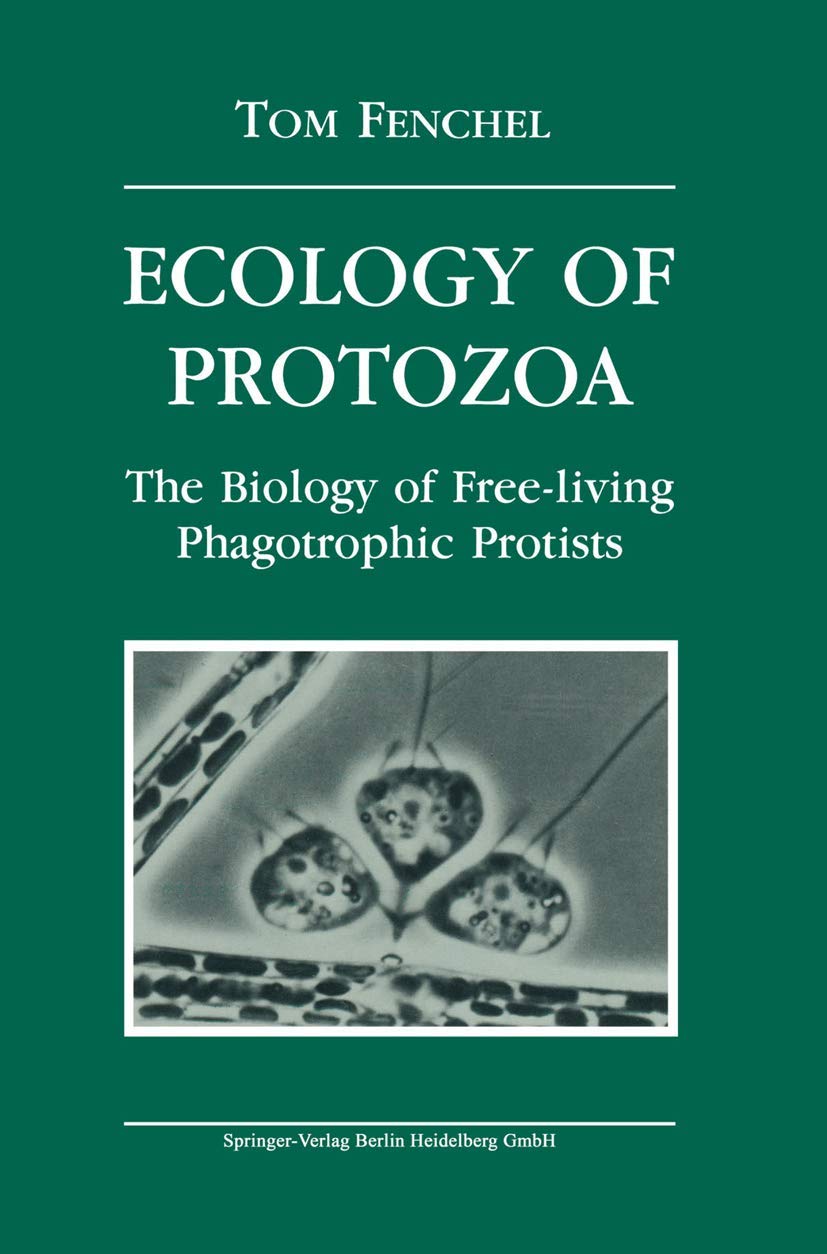
Title
Ecology Of Protozoa: The Biology Of Freeliving Phagotropic Protists (Brock Springer Series In Contemporary Bioscience) (German
Sold by Ergodebooks, an authorized reseller.
Returns accepted within 30 days | support@ergodebooks.com
Shipping Information
- Free Standard Shipping — United States only
- Processing Time: 3–5 business days
- Estimated Delivery: 6–10 business days after dispatch
- Double-boxed, fully insured & discreetly packaged
- Tracking number sent via email once dispatched
Returns & Refund
Returns accepted within 30 days of delivery.
Damaged or Defective Item
Free return shipping + replacement or full refund
Wrong Item Received
Free return shipping + replacement or full refund
Change of Mind
Return shipping at customer's expense · 25% restocking fee applies
Payment Option

This Book Is Written For Ecologists And Protozoologists. Ecologists Who Study Environments And Biotic Communities In Which Protozoa Are Im Ponant Should Find This Book Especially Useful. During The Last Decade It Has Become Clear That Protozoa Play Important Roles In Natural Eco Systems, But Few Ecologists Have A Feeling For The Functional Properties And The Diversity Of These Organisms. Protozoa Pose Or Exemplify Many General Problems Of Population And Community Ecology, And Of Evo Lutionary Biology. In Most Respects The General Ecological Propenies Of Protozoa Are Not Fundamentally Different From Those Of Larger Organisms; Yet, Due To Their Small Size, Short Generation Times, And Ubiquitous Oc Currence They Often Present Ecological Phenomena In A New And Dif Ferent Light. To This Should Be Added That Protozoa Are Wellsuited For Experimental Work. Despite These Advantages, The Study Of Protozoa Has Played A Relatively Modest Role In The Development Of Ecology And Ev Olutionary Biology, Primarily, I Believe, Because Most Ecologists Are Unfamiliar With These Organisms. I Hope This Book Will Attract More Attention To These Favorable Characteristics Of Protozoa. I Also Hope That This Book May Make Protozoologists Aware Of New Aspects Of Their Pet Organisms. For A Long Time (That Is, Until The Fun Damental Distinction Between Prokaryotic And Eukaryotic Cells Was Rec Ognized) Protozoa Were Believed To Represent The Simplest Form Of Life. They Were Therefore Extensively Used For The Experimental Study Of Basic Questions Of Cell Biology.
⚠️ WARNING (California Proposition 65):
This product may contain chemicals known to the State of California to cause cancer, birth defects, or other reproductive harm.
For more information, please visit www.P65Warnings.ca.gov.
- Q: What is the page count of this book? A: This book contains two hundred seven pages. It provides an in-depth exploration of protozoa and their ecological significance.
- Q: What is the binding type of this book? A: This book is available in paperback binding. This makes it lightweight and portable for easy reading.
- Q: What are the dimensions of this book? A: The book measures six point one inches in length, zero point four seven inches in width, and nine point two five inches in height. These dimensions make it a convenient size for shelves and carrying.
- Q: Who is the author of this book? A: The author of this book is Tom Fenchel. He has expertise in ecology and protozoology, contributing significant knowledge to the field.
- Q: What is the main subject of this book? A: This book focuses on the ecology of protozoa. It discusses their roles in ecosystems and their functional properties.
- Q: Is this book suitable for beginners? A: Yes, this book is suitable for both beginners and experienced ecologists. It aims to familiarize readers with the importance of protozoa in ecological studies.
- Q: How can I use this book for research? A: You can use this book as a reference for understanding protozoa's ecological roles. It offers insights into experimental methods and ecological concepts.
- Q: Is this book appropriate for students? A: Yes, this book is appropriate for students studying ecology or microbiology. It provides valuable information that can aid in their academic pursuits.
- Q: How should I store this book? A: Store this book in a cool, dry place, away from direct sunlight. This will help preserve its condition and prevent fading.
- Q: Is there any special care needed for this book? A: No special care is needed for this book. However, handling it gently can prevent wear and tear.
- Q: What if the book arrives damaged? A: If the book arrives damaged, you should contact customer support for a replacement. Most retailers have a return policy for damaged items.
- Q: Can I return this book if I don't like it? A: Yes, you can typically return this book if it is in new condition. Be sure to check the specific return policy of the retailer.
- Q: Is this book available in other formats? A: Currently, this book is only available in paperback format. There may be digital versions available depending on the publisher.
- Q: How does this book compare to others in microbiology? A: This book offers a unique focus on protozoa within microbiology. It emphasizes their ecological importance, setting it apart from more general microbiology texts.
- Q: Does this book cover experimental methods? A: Yes, the book discusses experimental methods suitable for studying protozoa. This information is beneficial for researchers and students alike.
- Q: What makes this book a valuable resource? A: This book provides comprehensive insights into protozoa's ecological functions. It fills a gap in ecological literature, enhancing understanding of these organisms.