If you have any questions, you are always welcome to contact us. We'll get back to you as soon as possible, withing 24 hours on weekdays.
Customer service
All questions about your order, return and delivery must be sent to our customer service team by e-mail at yourstore@yourdomain.com
Sale & Press
If you are interested in selling our products, need more information about our brand or wish to make a collaboration, please contact us at press@yourdomain.com
Help
If you have any questions, you are always welcome to contact us. We'll get back to you as soon as possible, withing 24 hours on weekdays.
Customer service
All questions about your order, return and delivery must be sent to our customer service team by e-mail at yourstore@yourdomain.com
Sale & Press
If you are interested in selling our products, need more information about our brand or wish to make a collaboration, please contact us at press@yourdomain.com
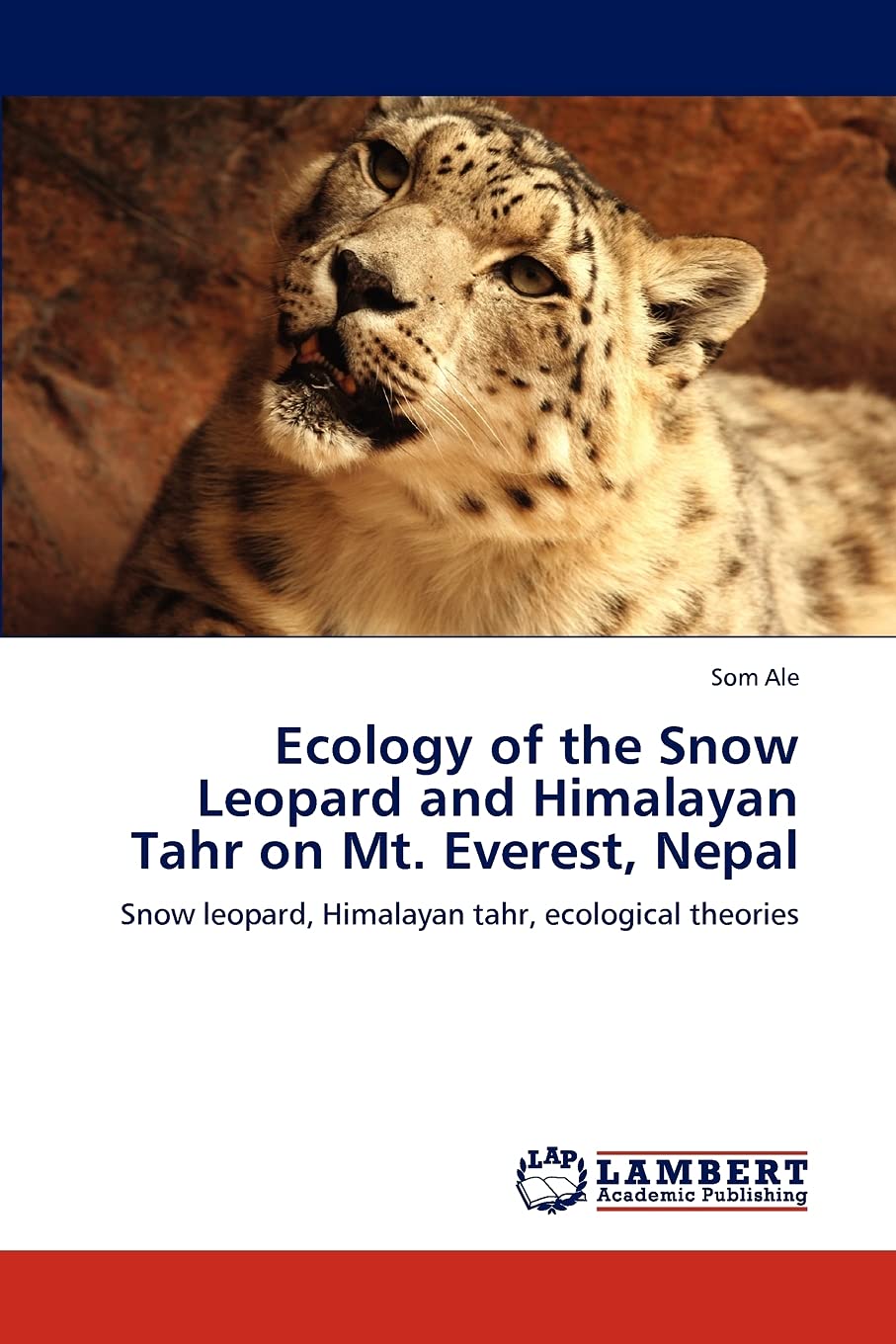
Foraging theory, the confluence of the ecology and evolution, strives to understand ecological patterns and processes. I use concepts of foraging theory in combination with mudandboots field biology to report the distribution and abundance of the endangered snow leopard and the Himalayan tahr on Mt. Everest of Nepal. I use the vigilance behavior of tahr to infer the status of their predator, the snow leopard, and confirm that snow leopards have returned to Mt. Everest following their disappearance some 40 years ago. I model how animals should select their habitats under predationrisk and partition time between competing fitness enhancing activities. In the former, I examine the consequence of animals habitat selection under the threat of predation as an additional factor. In the later, I develop a game theory model, and suggest that group size effect on vigilance behavior is contingent upon the strength of interacting effects of many eyes, dilution and predator attraction effects. In examining ecological theories, I track how top predators may structure biological communities. Furthermore, I examine a few major ecological paradigms in light of biodiversity conservation.
⚠️ WARNING (California Proposition 65):
This product may contain chemicals known to the State of California to cause cancer,
birth defects, or other reproductive harm.
For MAP (Minimum Advertised Price) violations and Intellectual Property (IP) or Trademark concerns, please contact:
support@ergodebooks.com
⚠️ California Proposition 65 Warning: Some products sold on this website may expose you to chemicals known to the State of California to cause cancer, birth defects, or other reproductive harm. For more information, visit www.P65Warnings.ca.gov.