If you have any questions, you are always welcome to contact us. We'll get back to you as soon as possible, withing 24 hours on weekdays.
Customer service
All questions about your order, return and delivery must be sent to our customer service team by e-mail at yourstore@yourdomain.com
Sale & Press
If you are interested in selling our products, need more information about our brand or wish to make a collaboration, please contact us at press@yourdomain.com
Help
If you have any questions, you are always welcome to contact us. We'll get back to you as soon as possible, withing 24 hours on weekdays.
Customer service
All questions about your order, return and delivery must be sent to our customer service team by e-mail at yourstore@yourdomain.com
Sale & Press
If you are interested in selling our products, need more information about our brand or wish to make a collaboration, please contact us at press@yourdomain.com
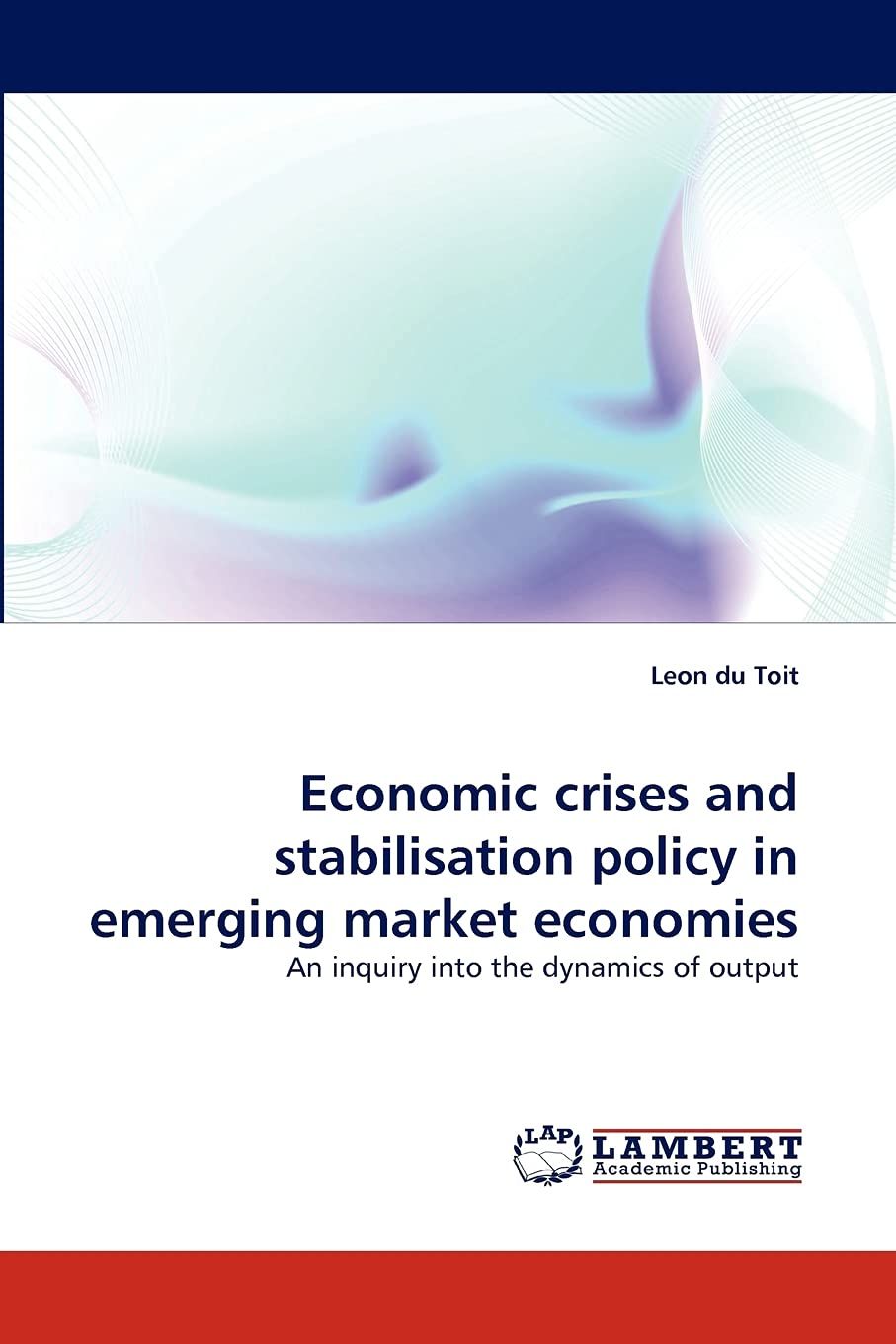
The recent macroeconomic history of emerging market economies is coloured with economic crises of all kinds, ranging from debtcrises, through hyperinflationary periods to currency crises to name but a few. This, along with the peculiar exposure of emerging markets to international economic shocks have resulted in volatile business cycles in these countries. This work explores the role that stabilisation policy has played in dampening the volatility of these crisis and shockrelated business fluctuations. Fiscal and monetary interventions, working mainly through the demandside of the economy, have been mildly succesful in mitigating the negative economic effects associated with economic crises. The dominance of supply shocks and the institutional origin of economic crises imply that stabilisation policy in emerging markets can only become more effective if appropriate structural changes are encouraged.
⚠️ WARNING (California Proposition 65):
This product may contain chemicals known to the State of California to cause cancer,
birth defects, or other reproductive harm.
For MAP (Minimum Advertised Price) violations and Intellectual Property (IP) or Trademark concerns, please contact:
support@ergodebooks.com
⚠️ California Proposition 65 Warning: Some products sold on this website may expose you to chemicals known to the State of California to cause cancer, birth defects, or other reproductive harm. For more information, visit www.P65Warnings.ca.gov.