If you have any questions, you are always welcome to contact us. We'll get back to you as soon as possible, withing 24 hours on weekdays.
Customer service
All questions about your order, return and delivery must be sent to our customer service team by e-mail at yourstore@yourdomain.com
Sale & Press
If you are interested in selling our products, need more information about our brand or wish to make a collaboration, please contact us at press@yourdomain.com
Help
If you have any questions, you are always welcome to contact us. We'll get back to you as soon as possible, withing 24 hours on weekdays.
Customer service
All questions about your order, return and delivery must be sent to our customer service team by e-mail at yourstore@yourdomain.com
Sale & Press
If you are interested in selling our products, need more information about our brand or wish to make a collaboration, please contact us at press@yourdomain.com
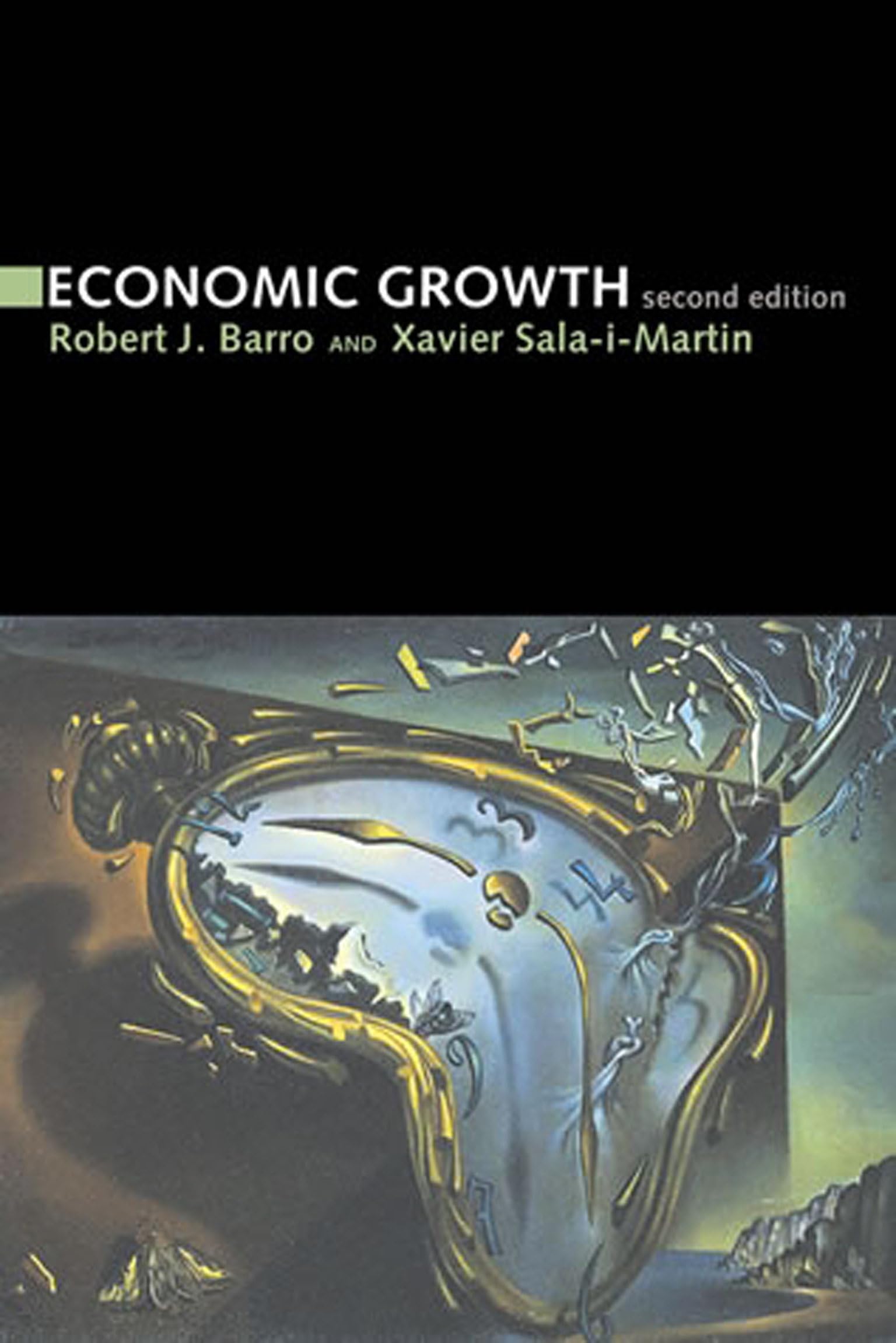
The longawaited second edition of an important textbook on economic growtha major revision incorporating the most recent work on the subject.This graduate level text on economic growth surveys neoclassical and more recent growth theories, stressing their empirical implications and the relation of theory to data and evidence. The authors have undertaken a major revision for the longawaited second edition of this widely used text, the first modern textbook devoted to growth theory. The book has been expanded in many areas and incorporates the latest research. After an introductory discussion of economic growth, the book examines neoclassical growth theories, from SolowSwan in the 1950s and CassKoopmans in the 1960s to more recent refinements; this is followed by a discussion of extensions to the model, with expanded treatment in this edition of heterogenity of households. The book then turns to endogenous growth theory, discussing, among other topics, models of endogenous technological progress (with an expanded discussion in this edition of the role of outside competition in the growth process), technological diffusion, and an endogenous determination of labor supply and population. The authors then explain the essentials of growth accounting and apply this framework to endogenous growth models. The final chapters cover empirical analysis of regions and empirical evidence on economic growth for a broad panel of countries from 1960 to 2000. The updated treatment of crosscountry growth regressions for this edition uses the new SummersHeston data set on world income distribution compiled through 2000.
⚠️ WARNING (California Proposition 65):
This product may contain chemicals known to the State of California to cause cancer,
birth defects, or other reproductive harm.
For MAP (Minimum Advertised Price) violations and Intellectual Property (IP) or Trademark concerns, please contact:
support@ergodebooks.com
⚠️ California Proposition 65 Warning: Some products sold on this website may expose you to chemicals known to the State of California to cause cancer, birth defects, or other reproductive harm. For more information, visit www.P65Warnings.ca.gov.