
Title
Economic Policy Reforms And The Indian Economy
Sold by Ergodebooks, an authorized reseller.
Returns accepted within 30 days | support@ergodebooks.com
Shipping Information
- Free Standard Shipping — United States only
- Processing Time: 3–5 business days
- Estimated Delivery: 6–10 business days after dispatch
- Double-boxed, fully insured & discreetly packaged
- Tracking number sent via email once dispatched
Returns & Refund
Returns accepted within 30 days of delivery.
Damaged or Defective Item
Free return shipping + replacement or full refund
Wrong Item Received
Free return shipping + replacement or full refund
Change of Mind
Return shipping at customer's expense · 25% restocking fee applies
Payment Option

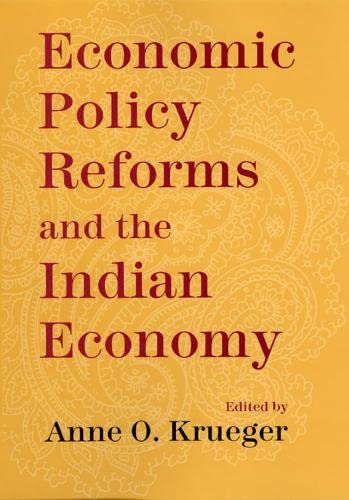
Product Description India is the second most populous country in the world and also one of the poorest. From the late 1940s to 1980, India's per capita income grew at an average annual rate of only two percent. Expansionist economic reforms during the 1980s boosted economic growth but also unfortunately resulted in high inflation and a balance of payments crisis. As a consequence, in 1991 the government announced sweeping new changes in economic policies.Economic Policy Reforms and the Indian Economy evaluates the effects of those changes and identifies areas of the Indian economy still in urgent need of reform. After an overview of Indian economic policies and development since independence, papers focus on the country's fiscal situation, the environment for private economic activity, education, the reservation of certain activities for smallscale industry, and determinants of differentials in rates of growth across the different Indian states. Contributors include respected academic specialists on India and policy reform, highlevel Indian administrators, and present and past policymakers. From the Back Cover India is the second most populous country in the world. It is also one of the poorest: from the 1940s to 1980, India's per capita income grew at an average annual rate of only 2 percent. Expansionist economic reforms during the 1980s boosted growth, but also resulted in high inflation and a balance of payments crisis. As a consequence, 1991 saw the announcement of sweeping new changes in economic policy.This volume evaluates the effects of those changes and identifies areas of the Indian economy still in urgent need of reform. After an overview of Indian economic policies and development since independence, papers focus on the country's fiscal situation, the environment for private economic activity, education, the reservation of certain activities for smallscale industry, and determinants of differentials in rates of growth across the different Indian states. Contributors include respected academic specialists on both India and policy reform, highlevel Indian administrators, and present and past policymakers.As former Secretary of State George P. Schulz writes in his introduction, 'The entire world economy will benefit from an open, successful Indian economy'not least the quarter of Indians who live in poverty, and the nation's burgeoning middle class. This volume offers not only an examination of the progress that has been made, but also a sense of the problems still to be confronted, with much insight into how to address them. About the Author Anne O. Krueger is the first deputy managing director of the International Monetary Fund. Excerpt. Reprinted by permission. All rights reserved. Economic Policy Reforms and the Indian EconomyBy Center for Research on Economic Development and Policy Reform Stanford University.University of Chicago PressCopyright 2002Center for Research on Economic Development and Policy Reform Stanford University.All right reserved.ISBN: 0226454525The Indian Economy in Global Context Anne O. Krueger and Sajjid Chinoy Since Indian independence, a great deal of economic progress has taken place. By any measureslife expectancies, infant mortality rates, nutritional standards, literacy and educational attainments, or real per capita incomesthe Indian people are considerably better off than they were a halfcentury ago. Yet there is a certain impatience and uneasiness: For all of the many achievements, there is a strong sense that more rapid improvements in these and other indicators of wellbeing are quite possible. Moreover, if they are possible through realignment of existing policies, per capita incomes for many Indians are still so low that more rapid growth is manifestly desirable. It is the purpose of this chapter to provide an overview of the strengths and weaknesses of Indian economic policy and performance to date, in
⚠️ WARNING (California Proposition 65):
This product may contain chemicals known to the State of California to cause cancer, birth defects, or other reproductive harm.
For more information, please visit www.P65Warnings.ca.gov.