If you have any questions, you are always welcome to contact us. We'll get back to you as soon as possible, withing 24 hours on weekdays.
Customer service
All questions about your order, return and delivery must be sent to our customer service team by e-mail at yourstore@yourdomain.com
Sale & Press
If you are interested in selling our products, need more information about our brand or wish to make a collaboration, please contact us at press@yourdomain.com
Help
If you have any questions, you are always welcome to contact us. We'll get back to you as soon as possible, withing 24 hours on weekdays.
Customer service
All questions about your order, return and delivery must be sent to our customer service team by e-mail at yourstore@yourdomain.com
Sale & Press
If you are interested in selling our products, need more information about our brand or wish to make a collaboration, please contact us at press@yourdomain.com
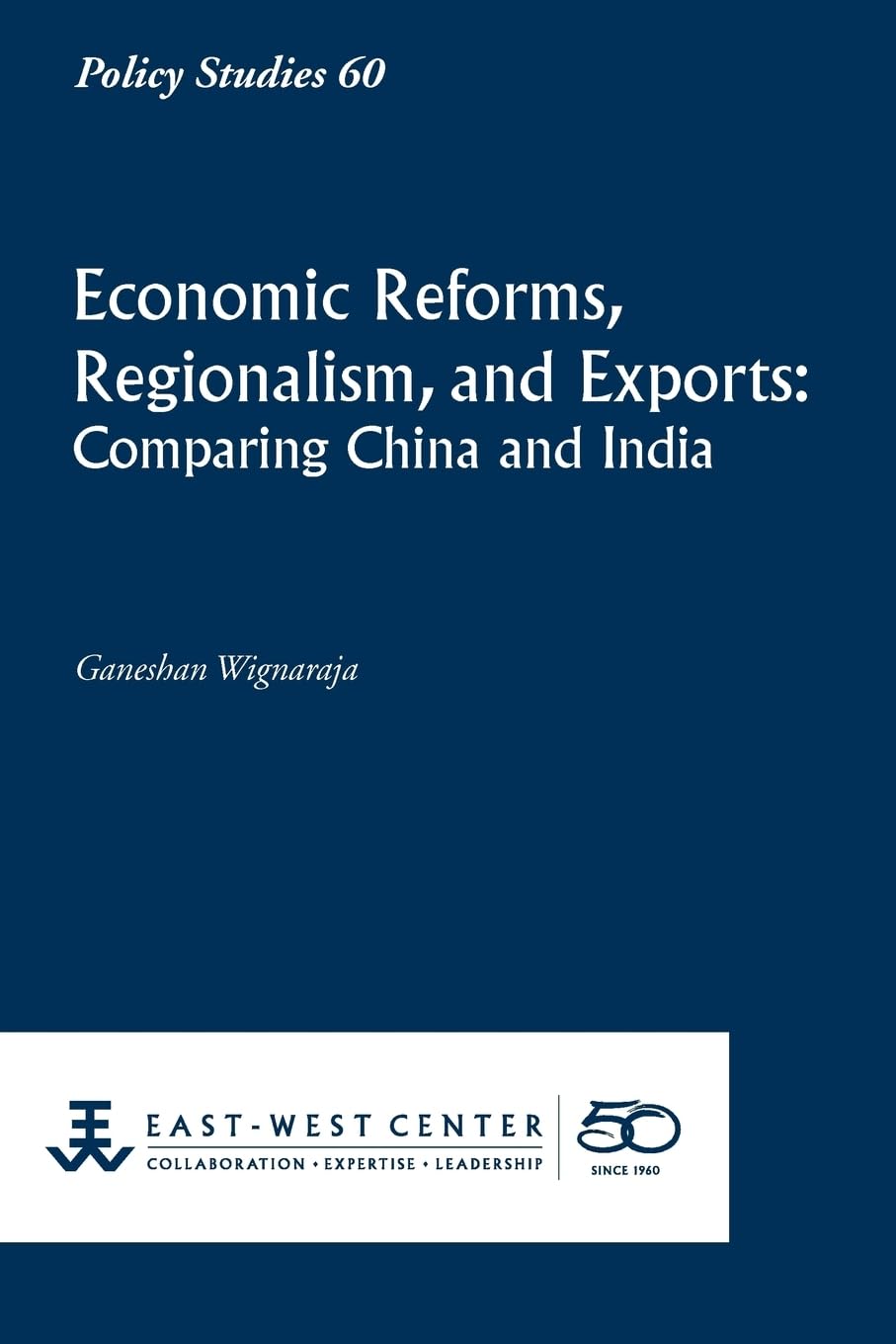
This paper undertakes a comparative empirical assessment of economic reforms and exports in the rising Asian giants, China and India. It explores the past record and future challenges. In recent years, China has surged ahead of India to dominate world manufactured exports, but India has acquired competitive capabilities in skillintensive services. Favorable initial conditions (e.g., large markets and lowcost productive labor) shaped the giants' success. While the gradual switch to marketoriented reforms in the late1970s drove tradeled growth in the giants, China was swifter and more coordinated. It introduced an open door policy towards foreign direct investment (FDI), actively facilitated technological upgrading of FDI, steadily liberalized a controlled import regime, ensured a competitive exchange rate, and concluded more comprehensive free trade agreements (FTAs) with Asian developing economies. India has attempted to enact economic reforms since 1991, particularly to attract FDI and liberalize imports. Therefore, one might expect the gap in trade performance between China and India to narrow over time. However, both giants face an uncertain world economy after the global financial crisis, and future success will depend on evolving reforms. Critical areas are how the giants respond to integrating with production networks, promote technology development, manage real exchange rates, and mitigate the risk of protectionism.
⚠️ WARNING (California Proposition 65):
This product may contain chemicals known to the State of California to cause cancer,
birth defects, or other reproductive harm.
For MAP (Minimum Advertised Price) violations and Intellectual Property (IP) or Trademark concerns, please contact:
support@ergodebooks.com
⚠️ California Proposition 65 Warning: Some products sold on this website may expose you to chemicals known to the State of California to cause cancer, birth defects, or other reproductive harm. For more information, visit www.P65Warnings.ca.gov.