
Title
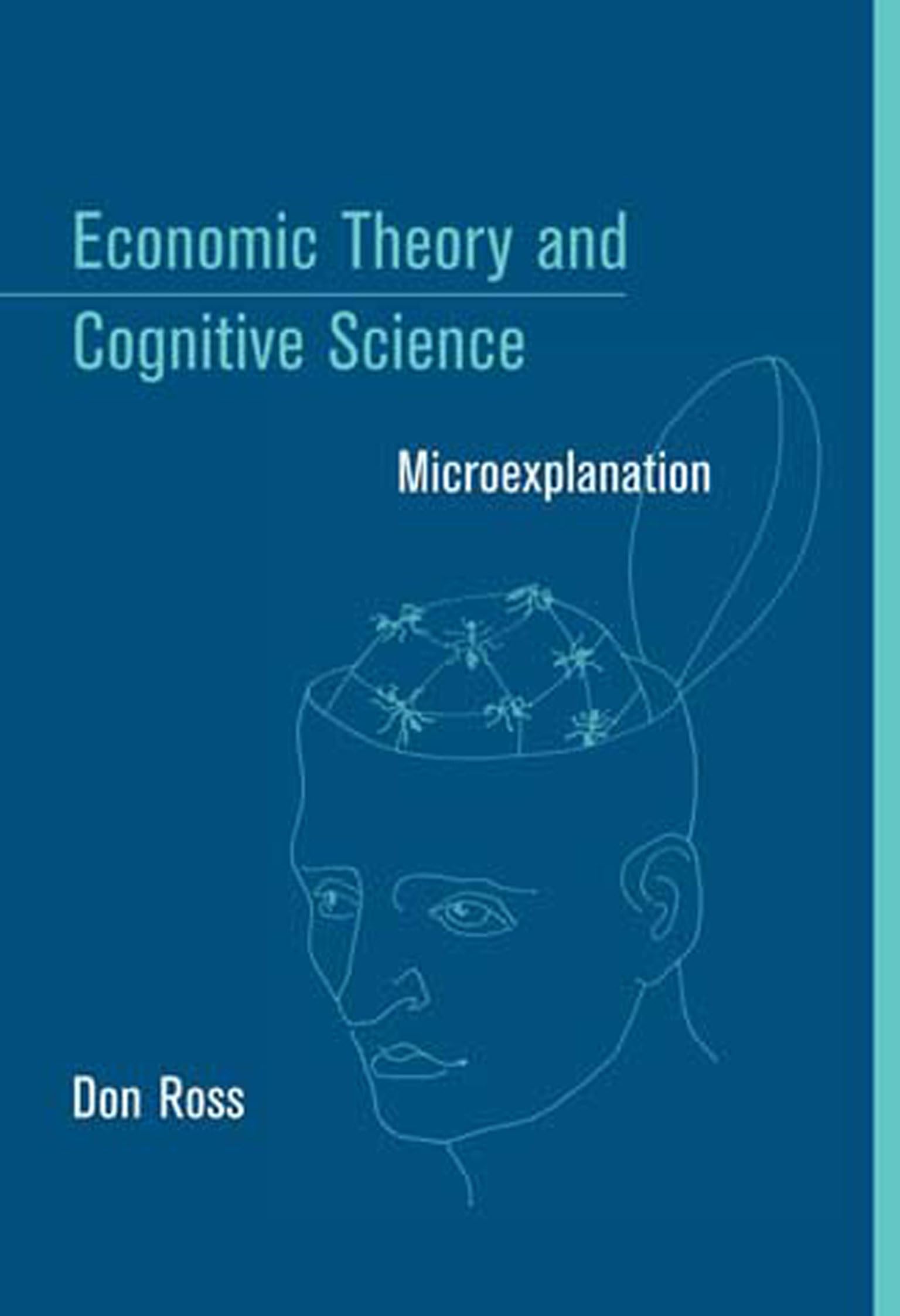
Economic Theory and Cognitive Science: Microexplanation (Bradford Books),Used
Sold by Ergodebooks, an authorized reseller.
Returns accepted within 30 days | support@ergodebooks.com
Shipping Information
- Free Standard Shipping — United States only
- Processing Time: 3–5 business days
- Estimated Delivery: 6–10 business days after dispatch
- Double-boxed, fully insured & discreetly packaged
- Tracking number sent via email once dispatched
Returns & Refund
Returns accepted within 30 days of delivery.
Damaged or Defective Item
Free return shipping + replacement or full refund
Wrong Item Received
Free return shipping + replacement or full refund
Change of Mind
Return shipping at customer's expense · 25% restocking fee applies
Payment Option

In this study, Don Ross explores the relationship of economics to other branches of behavioral science, asking, in the course of his analysis, under what interpretation economics is a sound empirical science. The book explores the relationships between economic theory and the theoretical foundations of related disciplines that are relevant to the daytoday work of economicsthe cognitive and behavioral sciences. It asks whether the increasingly sophisticated techniques of microeconomic analysis have revealed any deep empirical regularitieswhether technical improvement represents improvement in any other sense. Casting Daniel Dennett and Kenneth Binmore as its intellectual heroes, the book proposes a comprehensive model of economic theory that, Ross argues, does not supplant, but recovers the core neoclassical insights, and counters the caricaturish conception of neoclassicism so derided by advocates of behavioral or evolutionary economics.Because he approaches his topic from the viewpoint of the philosophy of science, Ross devotes one chapter to the philosophical theory and terminology on which his argument depends and another to related philosophical issues. Two chapters provide the theoretical background in economics, one covering developments in neoclassical microeconomics and the other treating behavioral and experimental economics and evolutionary game theory. The three chapters at the heart of the argument then apply theses from the philosophy of cognitive science to foundational problems for economic theory. In these chapters, economists will find a genuinely new way of thinking about the implications of cognitive science for economics, and cognitive scientists will find in economic behavior, a new testing site for the explanations of cognitive science.
⚠️ WARNING (California Proposition 65):
This product may contain chemicals known to the State of California to cause cancer, birth defects, or other reproductive harm.
For more information, please visit www.P65Warnings.ca.gov.