
Title
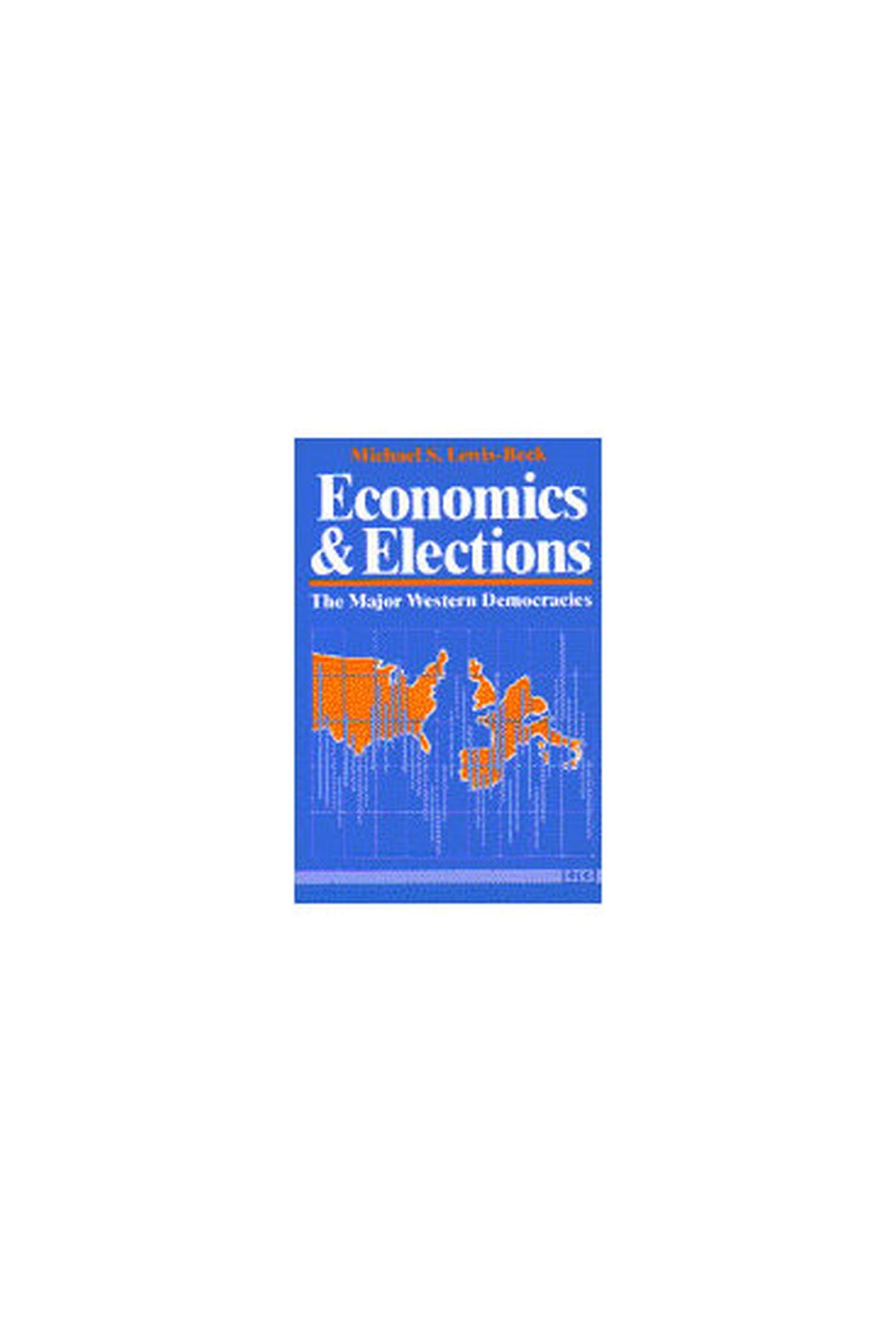
Economics And Elections: The Major Western Democracies,New
Sold by Ergodebooks, an authorized reseller.
Returns accepted within 30 days | support@ergodebooks.com
Shipping Information
- Free Standard Shipping — United States only
- Processing Time: 3–5 business days
- Estimated Delivery: 6–10 business days after dispatch
- Double-boxed, fully insured & discreetly packaged
- Tracking number sent via email once dispatched
Returns & Refund
Returns accepted within 30 days of delivery.
Damaged or Defective Item
Free return shipping + replacement or full refund
Wrong Item Received
Free return shipping + replacement or full refund
Change of Mind
Return shipping at customer's expense · 25% restocking fee applies
Payment Option

Does A Governments Fate At The Ballot Box Hinge On The State Of The Economy? Is It Inflation, Unemployment, Or Income That Makes The Difference? What Triggers Economic Voting For Or Against The Incumbent Do Voters Look At Their Pocketbooks, Or At The National Accounts? Do Economic Voters Punish Rulers For Bad Times, But Fail To Reward Them For The Good Times? Are Voters Judgments Based On Past Economic Performance Or Future Policy Promises? These Are Some Of The Questions Considered By Michael Lewisbeck In This Major Crossnational Study Of The Effect Of Economic Conditions On Voting Behavior In The Western European Democracies And The United States.
⚠️ WARNING (California Proposition 65):
This product may contain chemicals known to the State of California to cause cancer, birth defects, or other reproductive harm.
For more information, please visit www.P65Warnings.ca.gov.
- Q: How many pages does this book have? A: This book has two hundred four pages. It provides an in-depth analysis of economic voting behavior.
- Q: What is the binding type of this book? A: The binding type is paperback. This makes it lightweight and easy to carry.
- Q: What are the dimensions of this book? A: The book measures five point nine eight inches in length, one point three inches in width, and nine point zero two inches in height. These dimensions make it convenient for reading.
- Q: Who is the author of this book? A: The author is Michael S. Lewis-Beck. He is known for his contributions to political science and economics.
- Q: What is the main topic of this book? A: The main topic is the relationship between economic conditions and voting behavior. It explores how voters' perceptions of the economy influence their electoral decisions.
- Q: Is this book suitable for students? A: Yes, this book is suitable for students studying economics or political science. It provides critical insights into economic voting.
- Q: What is the intended audience for this book? A: The intended audience includes scholars, students, and anyone interested in political behavior and economic policy. It offers valuable perspectives on democracy.
- Q: Can this book be used as a reference for research? A: Yes, this book can be used as a reference for research. It includes comprehensive studies on economic impact on elections.
- Q: What is the main argument of the book? A: The main argument is that economic conditions significantly influence voter behavior. It discusses how voters react to economic performance.
- Q: Is there a specific methodology used in this book? A: Yes, the book employs a cross-national study methodology. It analyzes data from Western European democracies and the United States.
- Q: How can I access this book? A: You can access this book through various online retailers or your local library. It is widely available.
- Q: Does the book cover historical elections? A: Yes, the book covers historical elections and their relationship with economic conditions. It provides context for contemporary issues.
- Q: Are there any case studies included in the book? A: Yes, there are case studies included. They illustrate the effects of economic factors on voting outcomes.
- Q: What makes this book unique? A: This book is unique due to its comprehensive analysis of economic voting across multiple democracies. It combines theory with empirical research.
- Q: Is this book part of a series? A: No, this book is not part of a series. It stands alone as a significant contribution to the field of political science.
- Q: Does the author provide solutions to economic voting issues? A: Yes, the author discusses potential solutions and implications for policymakers. It suggests ways to engage voters economically.