
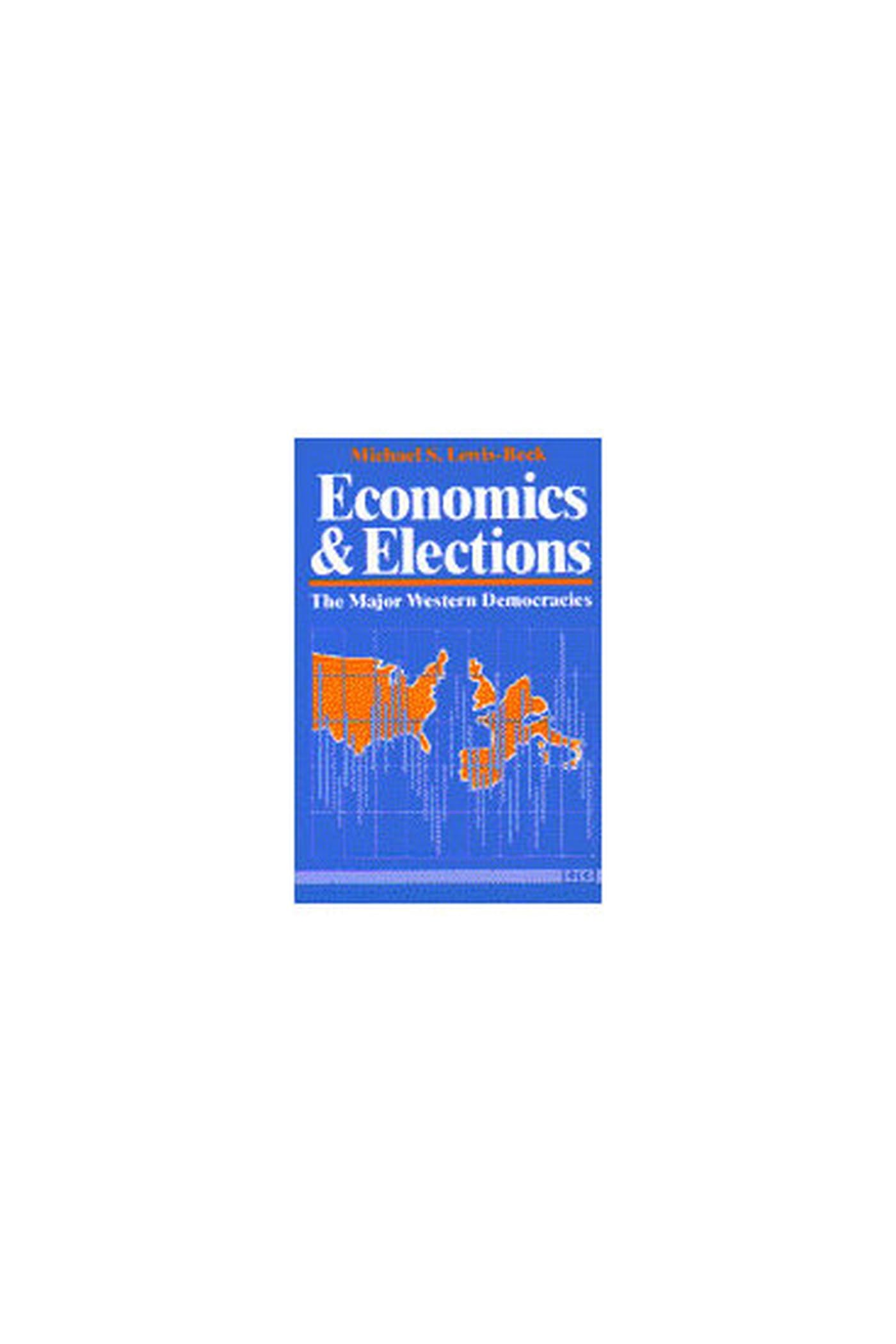
Title
Economics and Elections: The Major Western Democracies,Used
Sold by Ergodebooks, an authorized reseller.
Returns accepted within 30 days | support@ergodebooks.com
Shipping Information
- Free Standard Shipping — United States only
- Processing Time: 3–5 business days
- Estimated Delivery: 6–10 business days after dispatch
- Double-boxed, fully insured & discreetly packaged
- Tracking number sent via email once dispatched
Returns & Refund
Returns accepted within 30 days of delivery.
Damaged or Defective Item
Free return shipping + replacement or full refund
Wrong Item Received
Free return shipping + replacement or full refund
Change of Mind
Return shipping at customer's expense · 25% restocking fee applies
Payment Option

Does a governments fate at the ballot box hinge on the state of the economy? Is it inflation, unemployment, or income that makes the difference? What triggers economic voting for or against the incumbent do voters look at their pocketbooks, or at the national accounts? Do economic voters punish rulers for bad times, but fail to reward them for the good times? Are voters judgments based on past economic performance or future policy promises? These are some of the questions considered by Michael LewisBeck in this major crossnational study of the effect of economic conditions on voting behavior in the Western European democracies and the United States.
⚠️ WARNING (California Proposition 65):
This product may contain chemicals known to the State of California to cause cancer, birth defects, or other reproductive harm.
For more information, please visit www.P65Warnings.ca.gov.
- Q: What is the main topic of 'Economics and Elections: The Major Western Democracies'? A: The book explores the relationship between government electoral outcomes and economic conditions, focusing on how factors like inflation, unemployment, and income influence voting behavior in Western democracies.
- Q: Who is the author of the book? A: The author of 'Economics and Elections' is Michael S. Lewis-Beck.
- Q: When was this book published? A: The book was published on October 31, 1990.
- Q: How many pages does the book have? A: The book contains 204 pages.
- Q: What type of binding does this book have? A: The book is available in paperback binding.
- Q: What are some key questions addressed in the book? A: The book addresses questions such as how economic conditions affect voter behavior, whether voters reward or punish incumbents based on economic performance, and if voters prioritize past performance or future promises.
- Q: Is this book suitable for someone studying political science? A: Yes, the book is suitable for students and scholars interested in political science, particularly those studying the intersections of economics and electoral behavior.
- Q: Does the book include case studies or examples? A: Yes, the book includes cross-national studies that analyze voting behavior in various Western European democracies and the United States.
- Q: What is the significance of economic voting discussed in the book? A: The book highlights the significance of economic voting as a critical factor influencing election outcomes, offering insights into how economic issues shape public opinion and electoral decisions.
- Q: Can this book help in understanding current electoral trends? A: Yes, while the book focuses on past elections, its insights into economic voting can help readers understand current trends and voter behavior in relation to economic conditions.