
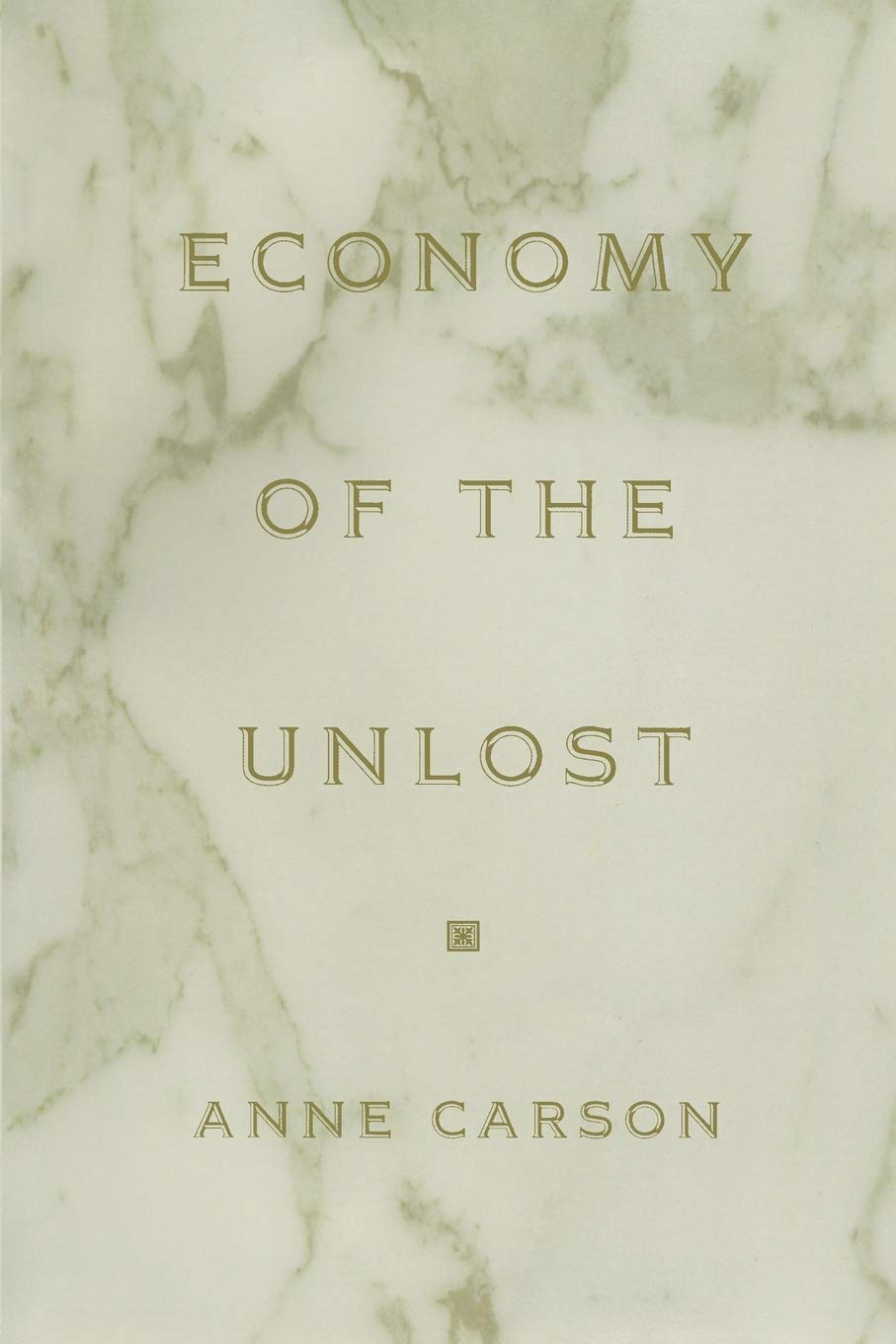
Title
Economy Of The Unlost: (Reading Simonides Of Keos With Paul Celan) (Martin Classical Lectures)
Sold by Ergodebooks, an authorized reseller.
Returns accepted within 30 days | support@ergodebooks.com
Shipping Information
- Free Standard Shipping — United States only
- Processing Time: 3–5 business days
- Estimated Delivery: 6–10 business days after dispatch
- Double-boxed, fully insured & discreetly packaged
- Tracking number sent via email once dispatched
Returns & Refund
Returns accepted within 30 days of delivery.
Damaged or Defective Item
Free return shipping + replacement or full refund
Wrong Item Received
Free return shipping + replacement or full refund
Change of Mind
Return shipping at customer's expense · 25% restocking fee applies
Payment Option

The Ancient Greek Lyric Poet Simonides Of Keos Was The First Poet In The Western Tradition To Take Money For Poetic Composition. From This Starting Point, Anne Carson Launches An Exploration, Poetic In Its Own Right, Of The Idea Of Poetic Economy. She Offers A Reading Of Certain Of Simonides' Texts And Aligns These With Writings Of The Modern Romanian Poet Paul Celan, A Jew And Survivor Of The Holocaust, Whose Economies Of Language Are Notorious. Asking Such Questions As, What Is Lost When Words Are Wasted? And Who Profits When Words Are Saved? Carson Reveals The Two Poets' Striking Commonalities.In Carson'S View Simonides And Celan Share A Similar Mentality Or Disposition Toward The World, Language And The Work Of The Poet. Economy Of The Unlost Begins By Showing How Each Of The Two Poets Stands In A State Of Alienation Between Two Worlds. In Simonides' Case, The Gift Economy Of Fifthcentury B.C. Greece Was Giving Way To One Based On Money And Commodities, While Celan'S Life Spanned Pre And Postholocaust Worlds, And He Himself, Writing In German, Became Estranged From His Native Language. Carson Goes On To Consider Various Aspects Of The Two Poets' Techniques For Coming To Grips With The Invisible Through The Visible World. A Focus On The Genre Of The Epitaph Grants Insights Into The Kinds Of Exchange The Poets Envision Between The Living And The Dead. Assessing The Impact On Simonidean Composition Of The Material Fact Of Inscription On Stone, Carson Suggests That A Need For Brevity Influenced The Exactitude And Clarity Of Simonides' Style, And Proposes A Comparison With Celan'S Interest In The Negative Design Of Printmaking: Both Poets, Though In Different Ways, Employ A Kind Of Negative Image Making, Cutting Away All That Is Superfluous. This Book'S Juxtaposition Of The Two Poets Illuminates Their Differencessimonides' Fundamental Faith In The Power Of The Word, Celan'S Ultimate Despairas Well As Their Similarities; It Provides Fertile Ground For The Virtuosic Interplay Of Carson'S Scholarship And Her Poetic Sensibility.
⚠️ WARNING (California Proposition 65):
This product may contain chemicals known to the State of California to cause cancer, birth defects, or other reproductive harm.
For more information, please visit www.P65Warnings.ca.gov.
- Q: What is the page count of this book? A: This book has one hundred sixty pages. It provides a detailed exploration of poetic economy through the lenses of two significant poets.
- Q: What are the dimensions of 'Economy of the Unlost'? A: The book measures six point one inches in length, zero point three nine inches in width, and nine point zero two inches in height. These dimensions make it a convenient size for reading.
- Q: What is the binding type of this book? A: The book is bound in paperback. This makes it lightweight and easy to handle for readers.
- Q: Who is the author of 'Economy of the Unlost'? A: The author is Anne Carson. She is known for her insightful explorations into poetry and language.
- Q: What category does this book fall under? A: This book is categorized under Criticism and Theory. It focuses on literary analysis and philosophical exploration.
- Q: Is this book suitable for academic study? A: Yes, this book is suitable for academic study. It offers deep insights into the works of Simonides and Celan, making it valuable for literary scholars.
- Q: How do I read 'Economy of the Unlost' effectively? A: To read this book effectively, engage with the texts of Simonides and Celan alongside Carson's interpretations. This will enhance your understanding of poetic economy.
- Q: Is there a specific age group for readers of this book? A: This book is best suited for adult readers and university students. Its themes and analyses require a mature understanding of literature.
- Q: How should I store this book to keep it in good condition? A: Store this book in a cool, dry place away from direct sunlight. This will help preserve its condition over time.
- Q: Can I clean the book if it gets dirty? A: Yes, you can clean the book by gently wiping the cover with a soft, dry cloth. Avoid using any liquids that might damage the pages.
- Q: What if the book arrives damaged? A: If the book arrives damaged, you should contact the seller for a return or exchange. Most sellers have policies in place for such issues.
- Q: Is this book a good choice for someone new to poetry? A: While it may be challenging, this book can be a good choice for someone new to poetry who is willing to engage with complex themes.
- Q: How does this book compare to other literary analyses? A: This book offers a unique comparison between ancient and modern poets, highlighting their shared themes of economy in language, which is distinct from other literary analyses.
- Q: What insights does Anne Carson provide in this book? A: Anne Carson provides insights into the poetic techniques of Simonides and Celan, exploring their approaches to language and the concept of loss.
- Q: Is there any specific focus in the book's content? A: Yes, the book focuses on the genre of the epitaph and the exchange between the living and the dead, which is central to both poets' works.