
Title
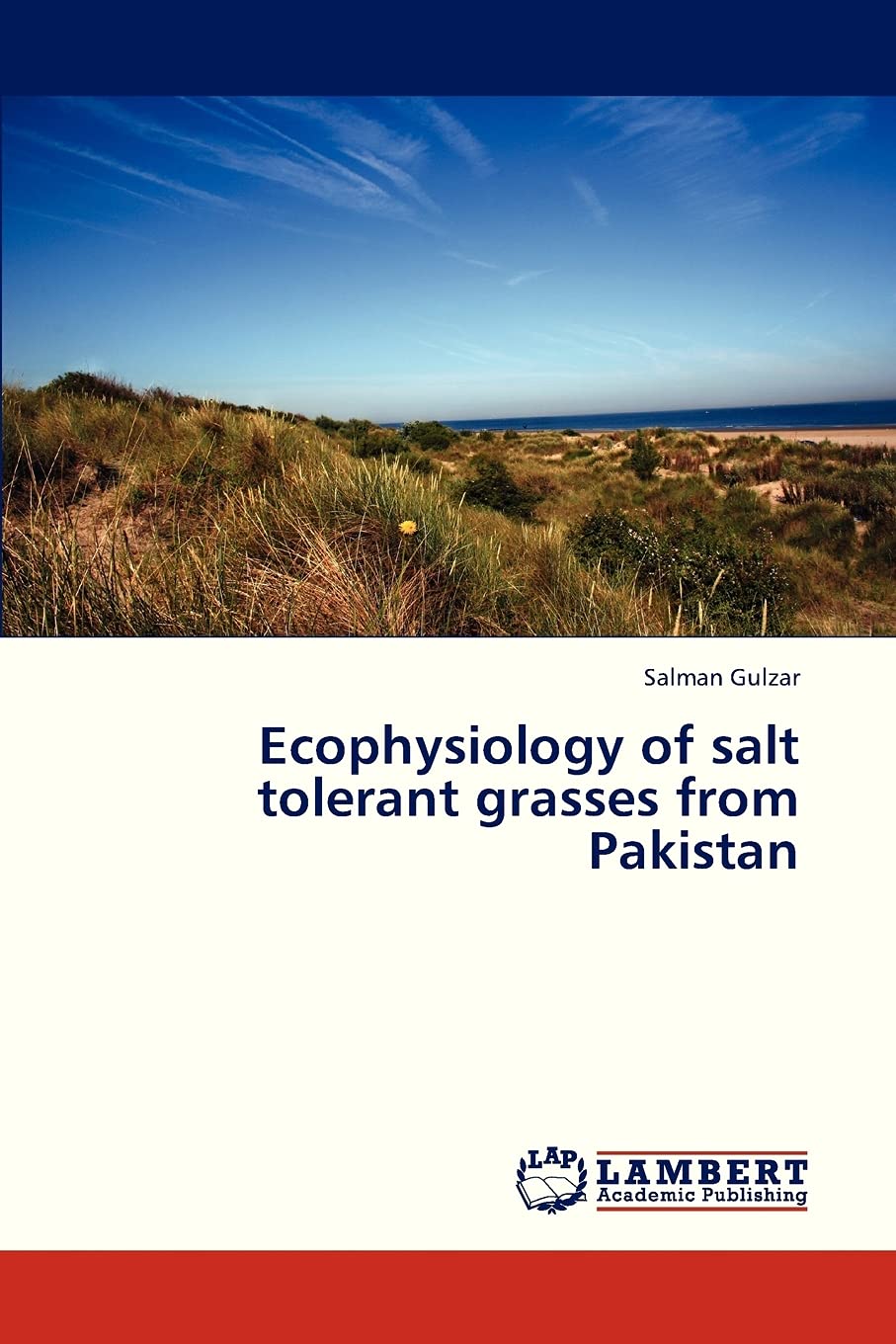
Ecophysiology of salt tolerant grasses from Pakistan,Used
Sold by Ergodebooks, an authorized reseller.
Returns accepted within 30 days | support@ergodebooks.com
Shipping Information
- Free Standard Shipping — United States only
- Processing Time: 3–5 business days
- Estimated Delivery: 6–10 business days after dispatch
- Double-boxed, fully insured & discreetly packaged
- Tracking number sent via email once dispatched
Returns & Refund
Returns accepted within 30 days of delivery.
Damaged or Defective Item
Free return shipping + replacement or full refund
Wrong Item Received
Free return shipping + replacement or full refund
Change of Mind
Return shipping at customer's expense · 25% restocking fee applies
Payment Option

Halophytic grasses occur naturally along coastal and inland salt marsh and salt desert ecosystems around the world and have numerous benefits as fodder, turf grass or landscaping. Major limiting factors in salty ecosystems include reduced soil water availability and excessive salt levels. Plants vary in tolerance and in the exact suite of mechanisms to survive under these conditions. Early seed germination determines the ability of plants to colonize saline soils. Most commonly found grasses from Pakistani coast also vary in their ability to tolerate salinity at various stages of their life cycle. Seeds of Aeluropus lagopoides and Urochondra setulosa are highly salt tolerant both during storage in the soil and at growth, but are moderately salt tolerant during germination. Both are good candidates for landscape management along the Pakistani coast. Sporobolus ioclados is relatively less tolerant to salinity and could be ideal for dune stabilization and as a forage grass.
⚠️ WARNING (California Proposition 65):
This product may contain chemicals known to the State of California to cause cancer, birth defects, or other reproductive harm.
For more information, please visit www.P65Warnings.ca.gov.