
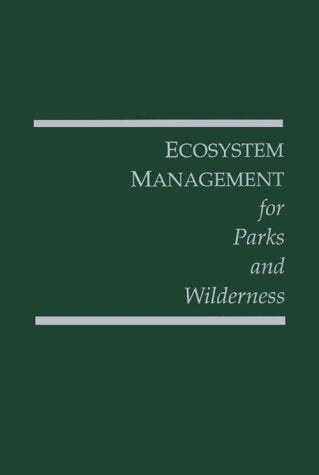
Title
Ecosystem Management For Parks And Wilderness (Contribution)
Sold by Ergodebooks, an authorized reseller.
Returns accepted within 30 days | support@ergodebooks.com
Shipping Information
- Free Standard Shipping — United States only
- Processing Time: 3–5 business days
- Estimated Delivery: 6–10 business days after dispatch
- Double-boxed, fully insured & discreetly packaged
- Tracking number sent via email once dispatched
Returns & Refund
Returns accepted within 30 days of delivery.
Damaged or Defective Item
Free return shipping + replacement or full refund
Wrong Item Received
Free return shipping + replacement or full refund
Change of Mind
Return shipping at customer's expense · 25% restocking fee applies
Payment Option

The need for cooperation among government agencies as well as an interdisciplinary approach to the increasingly challenging and complicated problem of managing park and wilderness areas prompted the University of Washington College of Forest Resources, the National Park Service, and the Forest Service to sponsor an ecosystem management workshop for scientists, planners, and managers.To develop an improved conceptual approach to managing change in ecosystems crossing natural and political boundaries, the workshop focused on defining terms, uncovering areas of misunderstanding and barriers to cooperation, and developing methods to determine the most important problems and issues.Three needs emerged from the prioritization process: a precise definition of the management objectives for park and wilderness lands and how to integrate them with objectives for surrounding lands, nationally as well as sitespecific; more information about physical, biological, and social components of park and wilderness ecosystems from both sides of political boundaries; and key indicators of ecosystem condition as well as methods for evaluating management effectiveness. All of these common themes point to a need for more precise direction in management goal setting and more accurate assessment of progress toward goals.The book includes an introductory chapter by the editors and summary in which they outline a direction for ecosystem management in the next critical decades. The other chapters by individual contributors include studies on laws governing park and wilderness lands, paleoecological records that reveal the historic effects of climatic variations on vegetation change, succession and natural disturbance in relation to the problems of what can and should be preserved, managing ecosystems for large populations of vertebrates, the management of large carnivores, effects of air pollution, lake acidification, human ecology and environmental management, the role of economics, cooperation in ecosystem management, and management challenges in Yellowstone National Park.
⚠️ WARNING (California Proposition 65):
This product may contain chemicals known to the State of California to cause cancer, birth defects, or other reproductive harm.
For more information, please visit www.P65Warnings.ca.gov.