
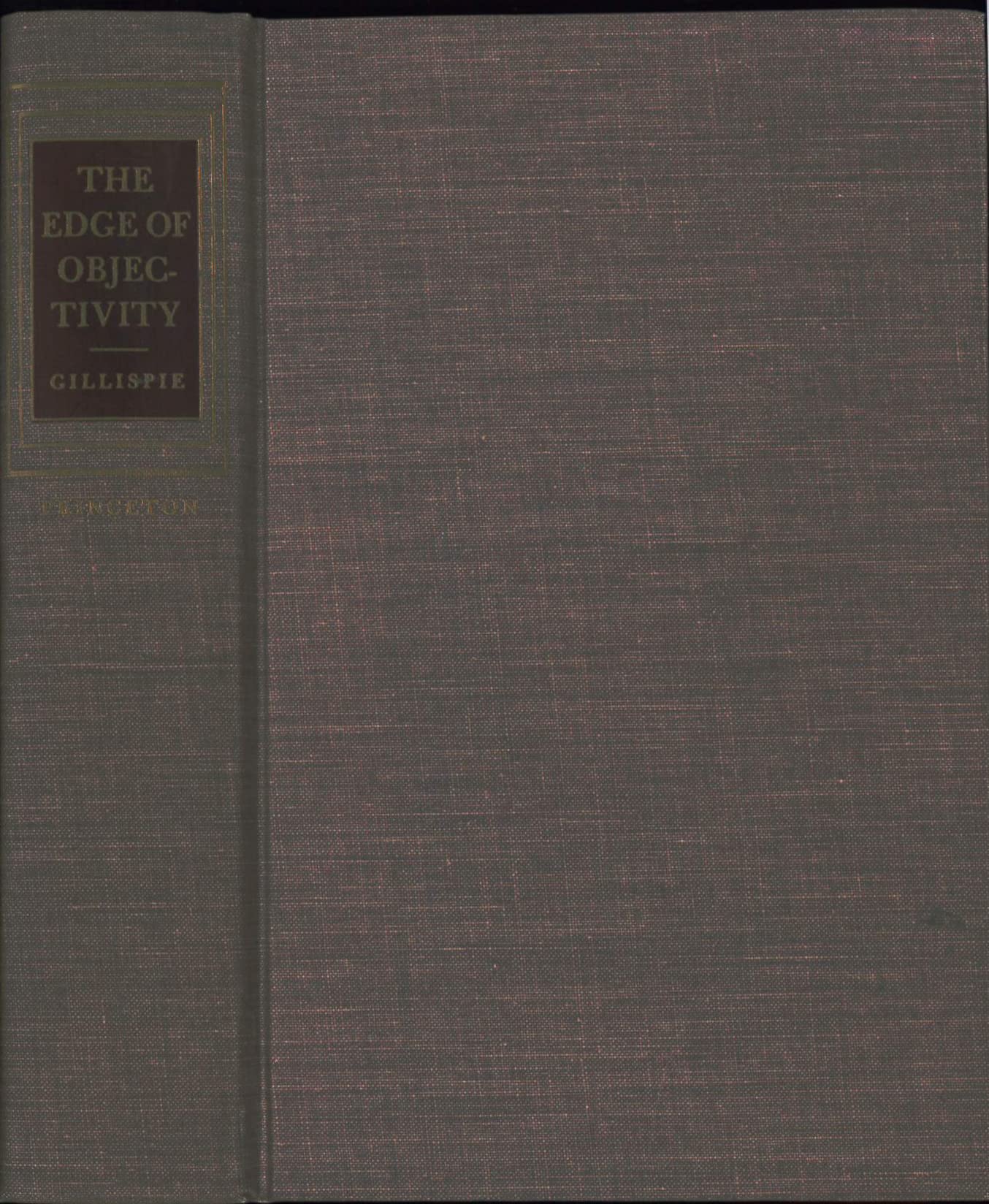
Title
Edge of Objectivity: An Essay in the History of Scientific Ideas,New
Sold by Ergodebooks, an authorized reseller.
Returns accepted within 30 days | support@ergodebooks.com
Shipping Information
- Free Standard Shipping — United States only
- Processing Time: 3–5 business days
- Estimated Delivery: 6–10 business days after dispatch
- Double-boxed, fully insured & discreetly packaged
- Tracking number sent via email once dispatched
Returns & Refund
Returns accepted within 30 days of delivery.
Damaged or Defective Item
Free return shipping + replacement or full refund
Wrong Item Received
Free return shipping + replacement or full refund
Change of Mind
Return shipping at customer's expense · 25% restocking fee applies
Payment Option

From Galileo's analysis of motion to the theories of evolution and relativity, Charles Gillispie takes us on a masterly tour of the world of scientific ideas. The history of modern science is portrayed here as the development of objectivity through the study of nature.In the mid1950s, a young professor at Princeton named Charles Gillispie began teaching Humanities 304, one of the first undergraduate courses offered anywhere in the world on the history of science. From start to finishGalileo to EinsteinGillispie introduced the students to the key ideas and individuals in science. The Edge of Objectivity arose out of this course.It must have been a lively class. The Edge of Objectivity is pointed, opinionated, and selective. Even at six hundred pages, the book is, as the title suggests, an essay. Gillispie is unafraid to rate Mendel higher than Darwin, Maxwell above Faraday. Full of wry turns of phrase, the book effectively captures people and places. And throughout the book, Gillispie pushes an argument. He views science as the progressive development of more objective, detached, mathematical ways of viewing the world, and he orchestrates his characters and ideas around this theme.In the fortyfive years since the publication of The Edge of Objectivity, historians of science have established a fullfledged discipline. They have focused increasingly on the social context of science rather than its internal dynamics, and they have frequently viewed science more as a threatening instance of power than as an accumulation of knowledge. Nevertheless, Gillispie's book remains a sophisticated, fastmoving, idiosyncratic account of the development of scientific ideas over four hundred years, by one of the founding intellects in the history of science.
⚠️ WARNING (California Proposition 65):
This product may contain chemicals known to the State of California to cause cancer, birth defects, or other reproductive harm.
For more information, please visit www.P65Warnings.ca.gov.