
Title

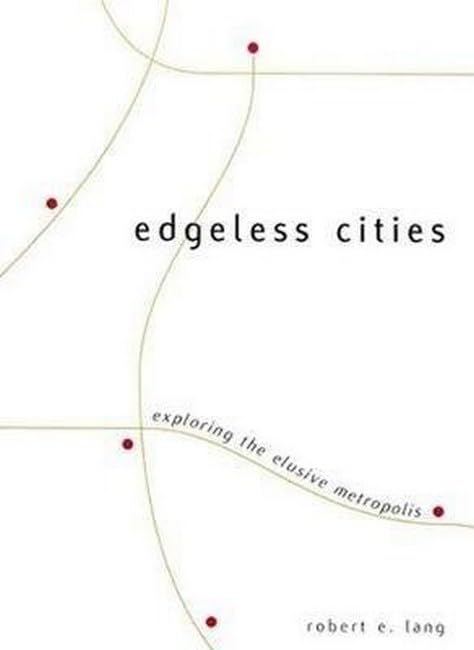
Edgeless Cities: Exploring the Elusive Metropolis (James A. Johnson Metro Series),Used
Sold by Ergodebooks, an authorized reseller.
Returns accepted within 30 days | support@ergodebooks.com
Shipping Information
- Free Standard Shipping — United States only
- Processing Time: 3–5 business days
- Estimated Delivery: 6–10 business days after dispatch
- Double-boxed, fully insured & discreetly packaged
- Tracking number sent via email once dispatched
Returns & Refund
Returns accepted within 30 days of delivery.
Damaged or Defective Item
Free return shipping + replacement or full refund
Wrong Item Received
Free return shipping + replacement or full refund
Change of Mind
Return shipping at customer's expense · 25% restocking fee applies
Payment Option

"Edgeless cities are a sprawling form of development that accounts for the bulk of office space found outside of downtowns. Every major metropolitan area has them: vast swaths of isolated buildings that are neither pedestrian friendly, nor easily accessible by public transit, and do not lend themselves to mixed use. While critics of urban sprawl tend to focus on the social impact of ""edge cities""developments that combine largescale office parks with major retail and housingedgeless cities, despite their ubiquity, are difficult to define or even locate. While they stay under the radar of critics, they represent a significant departure in the way American cities are built and are very likely the harbingers of a suburban future almost no one has anticipated. Edgeless Cities explores America's new metropolitan form by examining the growth and spatial structure of suburban office space across the nation. Inspired by Myron Orfield's groundbreaking Metropolitics (Brookings, 1997), Robert Lang uses data, illustrations, maps, and photos to delineate between two types of suburban office developmentbounded and edgeless. The book covers the evolving geography of rental office space in thirteen of the country's largest markets, which together contain more than 2.6 billion square feet of office space and 26,000 buildings: Atlanta, Boston, Chicago, Dallas, Denver, Detroit, Houston, Los Angeles, Miami, New York, Philadelphia, San Francisco, and Washington. Lang discusses how edgeless cities differ from traditional office areas. He also provides an overview of national, regional, and metropolitan office markets, covers ways to map and measure them, and discusses the challenges urban policymakers and practitioners will face as this new suburban form continues to spread. Until now, edgeless cities have been the unstudied phenomena of the new metropolis. Lang's conceptual approach reframes the current thinking on suburban sprawl and provides a valuable resource for future policy discussions surrounding smart growth issues."
⚠️ WARNING (California Proposition 65):
This product may contain chemicals known to the State of California to cause cancer, birth defects, or other reproductive harm.
For more information, please visit www.P65Warnings.ca.gov.