
Title
Edmund Husserl'S 'Origin Of Geometry': An Introduction,Used
Sold by Ergodebooks, an authorized reseller.
Returns accepted within 30 days | support@ergodebooks.com
Shipping Information
- Free Standard Shipping — United States only
- Processing Time: 3–5 business days
- Estimated Delivery: 6–10 business days after dispatch
- Double-boxed, fully insured & discreetly packaged
- Tracking number sent via email once dispatched
Returns & Refund
Returns accepted within 30 days of delivery.
Damaged or Defective Item
Free return shipping + replacement or full refund
Wrong Item Received
Free return shipping + replacement or full refund
Change of Mind
Return shipping at customer's expense · 25% restocking fee applies
Payment Option

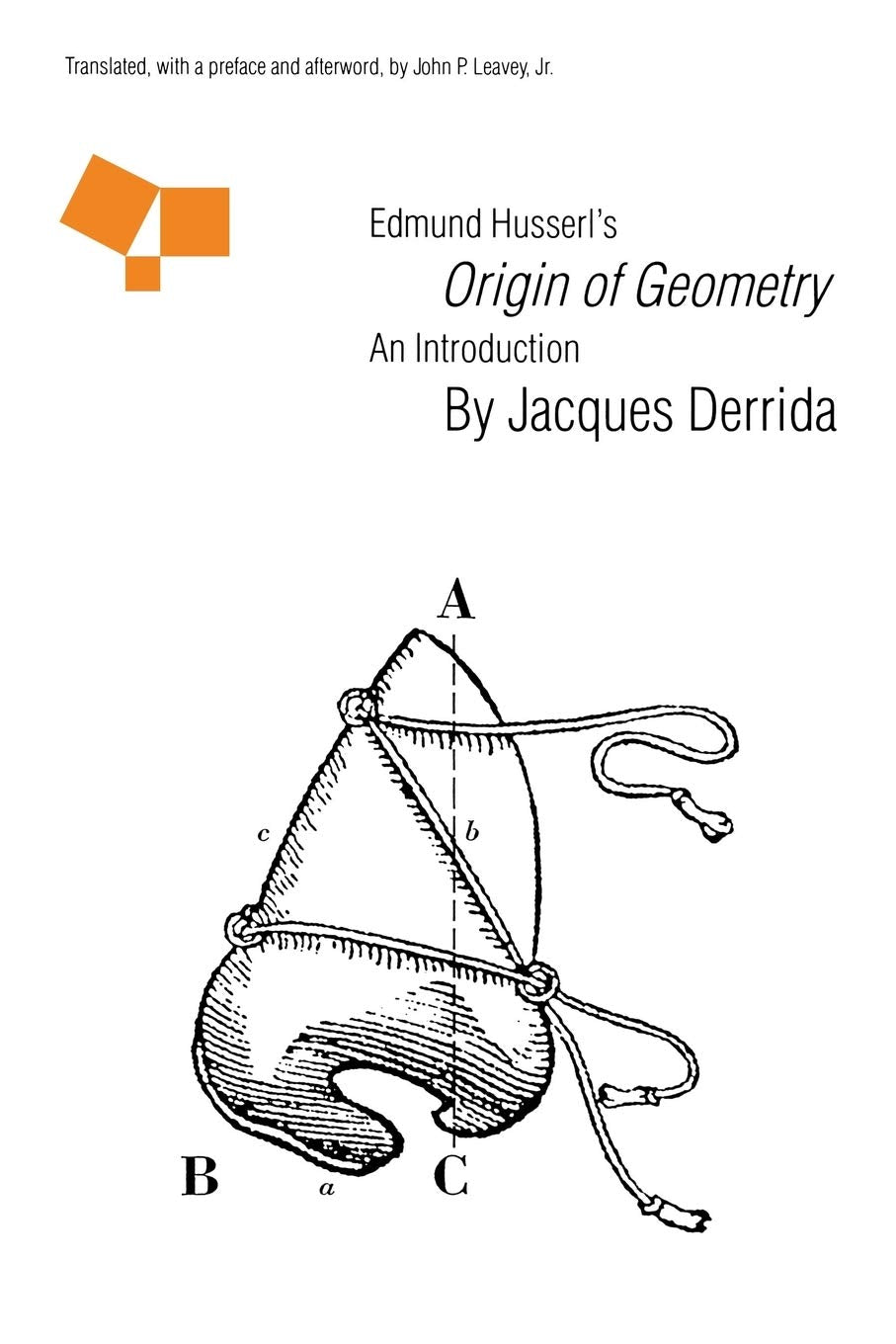
Edmund Husserl's Origin of Geometry': An Introduction (1962) is Jacques Derrida's earliest published work. In this commentaryinterpretation of the famous appendix to Husserl's The Crisis of European Sciences and Transcendental Phenomenology, Derrida relates writing to such key concepts as differing, consciousness, presence, and historicity. Starting from Husserl's method of historical investigation, Derrida gradually unravels a deconstructive critique of phenomenology itself, which forms the foundation for his later criticism of Western metaphysics as a metaphysics of presence. The complete text of Husserl's Origin of Geometry is included.
⚠️ WARNING (California Proposition 65):
This product may contain chemicals known to the State of California to cause cancer, birth defects, or other reproductive harm.
For more information, please visit www.P65Warnings.ca.gov.
- Q: What is the page count of this book? A: This book has two hundred fourteen pages. It provides a comprehensive commentary on Husserl's philosophical concepts.
- Q: What binding type does this book have? A: This book is available in paperback binding. It is designed for easy handling and portability.
- Q: What are the dimensions of this book? A: The dimensions of this book are six point two six inches in length, zero point seven five inches in width, and nine point zero two inches in height. These measurements make it convenient for reading.
- Q: How do I read and understand this book? A: To read this book, approach it with an interest in philosophy and critical theory. It serves as an introduction to complex themes related to phenomenology and deconstruction.
- Q: Is this book suitable for beginners in philosophy? A: Yes, this book is suitable for beginners. It presents key philosophical ideas in an accessible manner, making it a good starting point.
- Q: What themes are covered in this book? A: This book covers themes such as consciousness, presence, and historicity. It effectively connects these concepts to Husserl's work.
- Q: How do I keep this book in good condition? A: To keep this book in good condition, store it in a dry place away from direct sunlight. Avoid bending the spine to prevent damage.
- Q: What should I do if the book arrives damaged? A: If the book arrives damaged, you should contact the seller for a return or exchange. They typically have policies in place for such issues.
- Q: Is there a warranty for this book? A: No, there is generally no warranty for books. However, you can check the return policy provided by the seller.
- Q: Can I gift this book to a philosophy enthusiast? A: Yes, this book makes an excellent gift for philosophy enthusiasts. It provides deep insights into foundational philosophical concepts.
- Q: How does this book compare to other works by Derrida? A: This book serves as an introduction to Derrida's thought, differing from his later works which are more complex. It's a foundational text for understanding his ideas.
- Q: What audience is this book intended for? A: This book is intended for both students and general readers interested in philosophy. Its content is approachable for various audiences.
- Q: Are there any notable authors referenced in this book? A: Yes, the book primarily focuses on the works of Edmund Husserl, along with Jacques Derrida's interpretations. It highlights their philosophical significance.
- Q: Does this book include any additional materials? A: Yes, the complete text of Husserl's 'Origin of Geometry' is included. This allows readers to engage directly with the original philosophical work.
- Q: Is this book relevant for current philosophical discussions? A: Yes, this book remains relevant as it addresses enduring themes in philosophy. It contributes to ongoing discussions in phenomenology and deconstruction.