
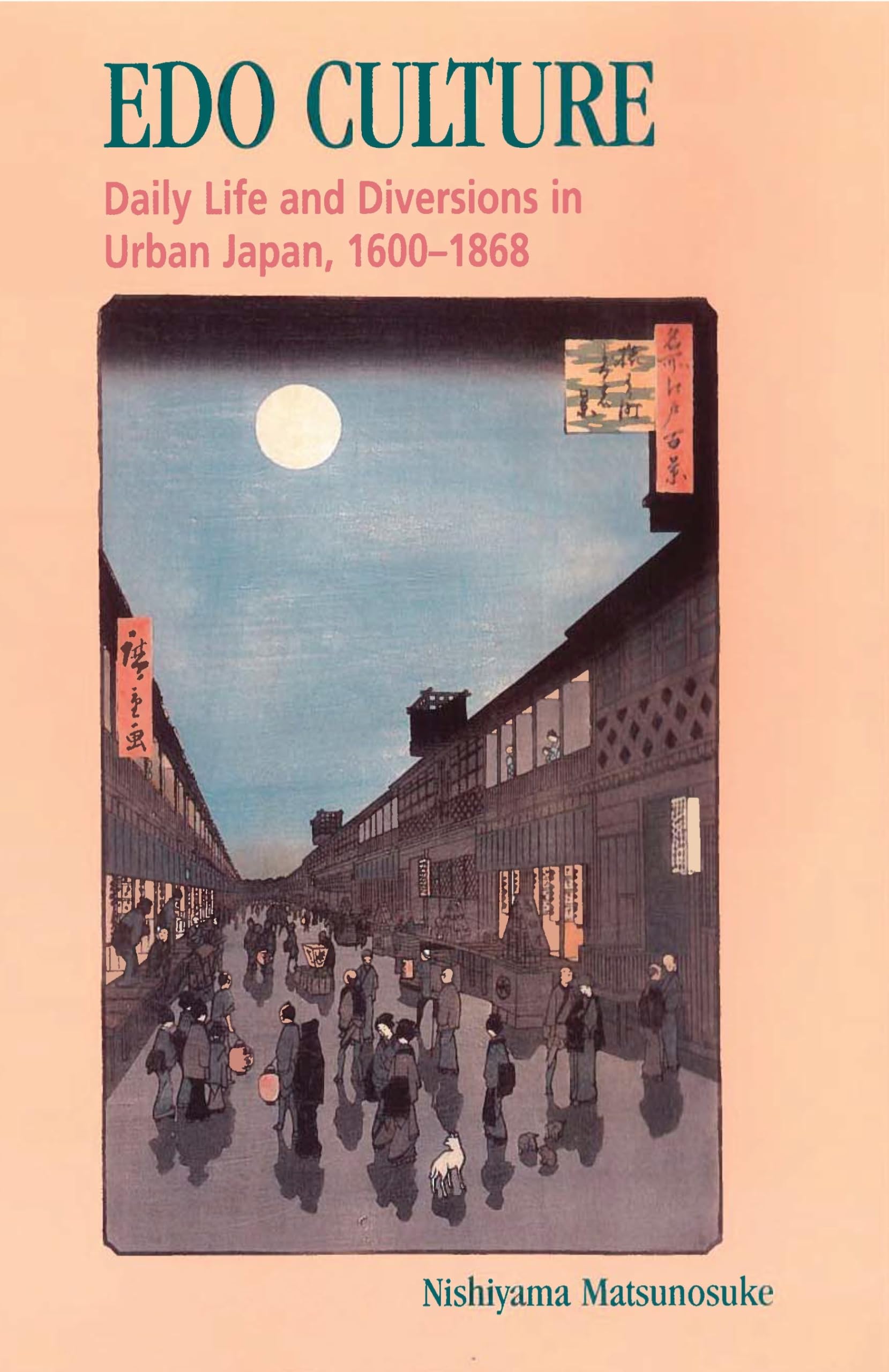
Title
Edo Culture: Daily Life And Diversions In Urban Japan, 16001868,Used
Sold by Ergodebooks, an authorized reseller.
Returns accepted within 30 days | support@ergodebooks.com
Shipping Information
- Free Standard Shipping — United States only
- Processing Time: 3–5 business days
- Estimated Delivery: 6–10 business days after dispatch
- Double-boxed, fully insured & discreetly packaged
- Tracking number sent via email once dispatched
Returns & Refund
Returns accepted within 30 days of delivery.
Damaged or Defective Item
Free return shipping + replacement or full refund
Wrong Item Received
Free return shipping + replacement or full refund
Change of Mind
Return shipping at customer's expense · 25% restocking fee applies
Payment Option

Nishiyama Matsunosuke Is One Of The Most Important Historians Of Tokugawa (Edo) Popular Culture, Yet Until Now His Work Has Never Been Translated Into A Western Language. Edo Culture Presents A Selection Of Nishiyamas Writings That Serves Not Only To Provide An Excellent Introduction To Tokugawa Cultural History But Also To Fill Many Gaps In Our Knowledge Of The Daily Life And Diversions Of The Urban Populace Of The Time. Many Essays Focus On The Most Important Theme Of Nishiyamas Work: The Seventeenth To Nineteenth Centuries As A Time Of Appropriation And Development Of Japans Culture By Its Urban Commoners.In The First Of Three Main Sections, Nishiyama Outlines The History Of Edo (Tokyo) During The Citys Formative Years, Showing How It Was Shaped By The Constant Interaction Between Its Warrior And Commoner Classes. Next, He Discusses The Spirit And Aesthetic Of The Edo Native And Traces The Woodblock Prints Known As Ukiyoe To The Communal Activities Of The Citys Commoners. Section Two Focuses On The Interaction Of Urban And Rural Culture During The Nineteenth Century And On The Unprecedented Cultural Diffusion That Occurred With The Help Of Itinerant Performers, Pilgrims, And Touring Actors. Among The Essays Is A Delightful And Detailed Discourse On Tokugawa Cuisine. The Third Section Is Dedicated To Music And Theatre, Beginning With A Study Of No, Which Was Patronized Mainly By The Aristocracy But Surprisingly By Commoners As Well. In Separate Chapters, Nishiyama Analyzes The Relation Of Social Classes To Musical Genres And The Aesthetics Of Kabuki. The Final Chapter Focuses On Vaudeville Houses Supported By The Urban Masses.
⚠️ WARNING (California Proposition 65):
This product may contain chemicals known to the State of California to cause cancer, birth defects, or other reproductive harm.
For more information, please visit www.P65Warnings.ca.gov.
- Q: What is the page count of this book? A: This book has three hundred twenty pages. It provides an in-depth exploration of Edo culture and daily life.
- Q: What are the dimensions of this book? A: The book measures six point three inches in length, zero point seventy-one inches in width, and nine point twenty-seven inches in height.
- Q: What type of binding does this book have? A: This book is available in paperback binding. This makes it lightweight and portable for reading.
- Q: Who is the author of this book? A: The author of this book is Nishiyama Kazuo. He is a renowned historian of Tokugawa popular culture.
- Q: What is the genre of this book? A: This book falls under the genre of historical non-fiction. It focuses on cultural history during the Edo period.
- Q: How can I use this book for research? A: You can use this book as a primary resource for understanding Edo culture. It offers essays that explore various aspects of daily life in urban Japan.
- Q: Is this book suitable for beginners? A: Yes, this book is suitable for beginners interested in Japanese history. It serves as an excellent introduction to Tokugawa cultural history.
- Q: What themes does this book cover? A: This book covers themes of daily life, cultural diffusion, and the interaction between social classes in Edo Japan.
- Q: Is this book appropriate for academic use? A: Yes, this book is appropriate for academic use. It provides valuable insights and primary sources for students studying Japanese history.
- Q: How should I store this book to keep it in good condition? A: Store this book in a cool, dry place away from direct sunlight. This will help preserve the quality of the pages and binding.
- Q: Can this book be cleaned if it gets dirty? A: Yes, you can gently wipe the cover with a soft, dry cloth. Avoid using water or cleaning solutions on the pages.
- Q: What if the book arrives damaged? A: If the book arrives damaged, you can contact the seller for a return or exchange. Make sure to keep the original packaging for a smoother process.
- Q: Is there a warranty for this book? A: Typically, books do not come with a warranty. However, check with the retailer for their return policy.
- Q: How can I find more books like this one? A: You can find more books like this one by searching for titles under Japanese history or Tokugawa culture. Look for works published by the University of Hawaii Press.
- Q: What makes this book unique? A: This book is unique because it translates the work of Nishiyama Matsunosuke, providing insights into Edo popular culture that were previously unavailable in English.