
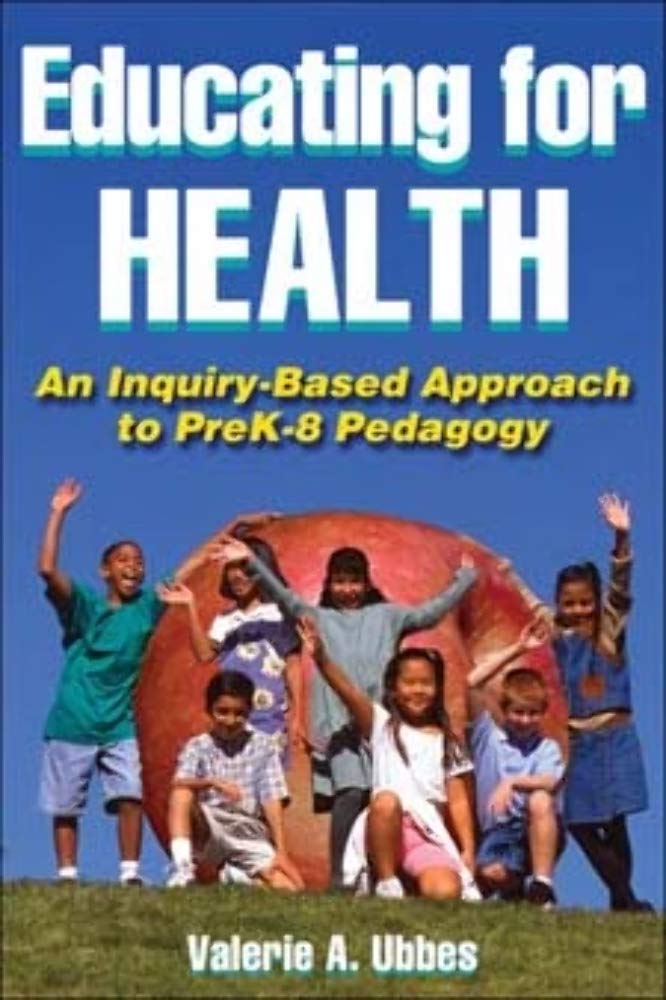
Title
Educating For Health: An Inquirybased Approach To Prek8 Pedagogy
Sold by Ergodebooks, an authorized reseller.
Returns accepted within 30 days | support@ergodebooks.com
Shipping Information
- Free Standard Shipping — United States only
- Processing Time: 3–5 business days
- Estimated Delivery: 6–10 business days after dispatch
- Double-boxed, fully insured & discreetly packaged
- Tracking number sent via email once dispatched
Returns & Refund
Returns accepted within 30 days of delivery.
Damaged or Defective Item
Free return shipping + replacement or full refund
Wrong Item Received
Free return shipping + replacement or full refund
Change of Mind
Return shipping at customer's expense · 25% restocking fee applies
Payment Option

Using A Curricular Approach Called Personal Practical Knowledge, Valerie Ubbes Takes You On A Transformational Journey That Will Help You Become A Master Teacher Of Health Education For Children In Grades Prek Through 8. That Journey Begins With An Indepth Exploration Of Your Uniqueness As A Professional Who Will Educate For Health. Dr. Ubbes Helps You Turn Your Personal Narrative Into Your Professional Identity And Then Guides You Toward An Understanding Of Children'S Learning Styles And The Practical Knowledge You Will Use To Shape A Relational Pedagogy With Your Learners.Educating For Health Explores Pedagogical Strategies That Will Help You Bridge Your Understanding Of Health Issues With Your Teaching. This Book Will Help You Translate Education And Health Theories Into Practice As Youfocus On The Acquisition Of Cognitivebehavioral Health Habits In Your Students,Adapt Your Instruction And Assessment Options Based On Individual Learning Styles,Structure Relationships And Environments That Are Optimal For Learning,Examine Nine Evidencebased Instructional Strategies That You Can Use As Tools In Educating For Health, Andstudy Design As An Inquirybased Process For Teaching And Learningdr. Ubbes Also Applies The Ecological Model Of Public Health And Gardner'S Theory Of Multiple Intelligences In A New Way And Shows How To Help Children Develop Through A Sensorymotor, Cognitivebehavioral Approach To Health And Wellbeing.Each Chapter Features Several Tools That Will Aid Your Understanding Of The Content:Principles Of Practice Provide Key Point Summaries.Professional Voices Showcase Realworld Teacher Experiences As They Relate To The Chapter'S Content And Are Ideal For Professional Discussion And Dialogue.Seeds Of Growth: Signs, Symbols, And Patterns Of Living And Learning Provide Student Learning Activities.Web Links For Living And Learning Offer Additional Student Activities Using The Internet.Books For Living And Learning Supply Activities Related To Children'S Books.Educating For Health Will Help You Reflect On Your Professional Identity And Abilities As A Teacher And Give You The Information You Need For Fostering The Growth And Development Of Your Students.
⚠️ WARNING (California Proposition 65):
This product may contain chemicals known to the State of California to cause cancer, birth defects, or other reproductive harm.
For more information, please visit www.P65Warnings.ca.gov.
- Q: What is the page count of 'Educating for Health'? A: This book contains two hundred forty-eight pages. It provides comprehensive insights into health education for children.
- Q: What is the binding type of this book? A: The binding type is paperback. This makes it lightweight and easy to handle for classroom use.
- Q: Who is the author of 'Educating for Health'? A: The author is Valerie A. Ubbes. She specializes in health education and pedagogical strategies for young learners.
- Q: What age group is this book suitable for? A: This book is suitable for educators teaching children in pre-kindergarten through eighth grade. It focuses on health education for this age range.
- Q: How can I use this book effectively in my teaching? A: You can use this book to enhance your health education curriculum. It provides strategies to adapt instruction to various learning styles.
- Q: Are there specific teaching strategies included in the book? A: Yes, the book examines nine evidence-based instructional strategies. These are designed to support health education for young students.
- Q: What care is needed to maintain this book? A: To maintain this book, keep it in a dry place and avoid exposure to direct sunlight. This will help preserve the quality of the pages.
- Q: Is this book safe for children? A: Yes, the content is appropriate for children. It focuses on health education, promoting well-being in young learners.
- Q: How should I store this book? A: Store this book upright on a shelf to prevent bending. Ensure it’s placed in a clean, dry environment for longevity.
- Q: How does this book compare to others in the field? A: This book uniquely combines personal practical knowledge with pedagogical strategies. It's ideal for educators focused on health education.
- Q: Is this book suitable for beginner teachers? A: Yes, this book is suitable for beginner teachers. It provides foundational knowledge and practical strategies for teaching health.
- Q: What if I receive a damaged copy of the book? A: If you receive a damaged copy, contact the seller for a return or replacement. Most sellers have policies for such issues.
- Q: Can I find additional resources related to the book's content? A: Yes, the book includes web links for further activities. These resources support the learning themes presented in the book.
- Q: Is there a focus on children's learning styles in this book? A: Yes, the book emphasizes understanding children's learning styles. It encourages adapting teaching methods accordingly.
- Q: Does the book offer real-world teacher experiences? A: Yes, it features 'Professional Voices' that showcase real-world teacher experiences. This enhances practical understanding of the content.
- Q: What additional activities does the book provide for students? A: The book includes activities such as 'Seeds of Growth' and 'Books for Living and Learning'. These activities engage students in health education.