
Title
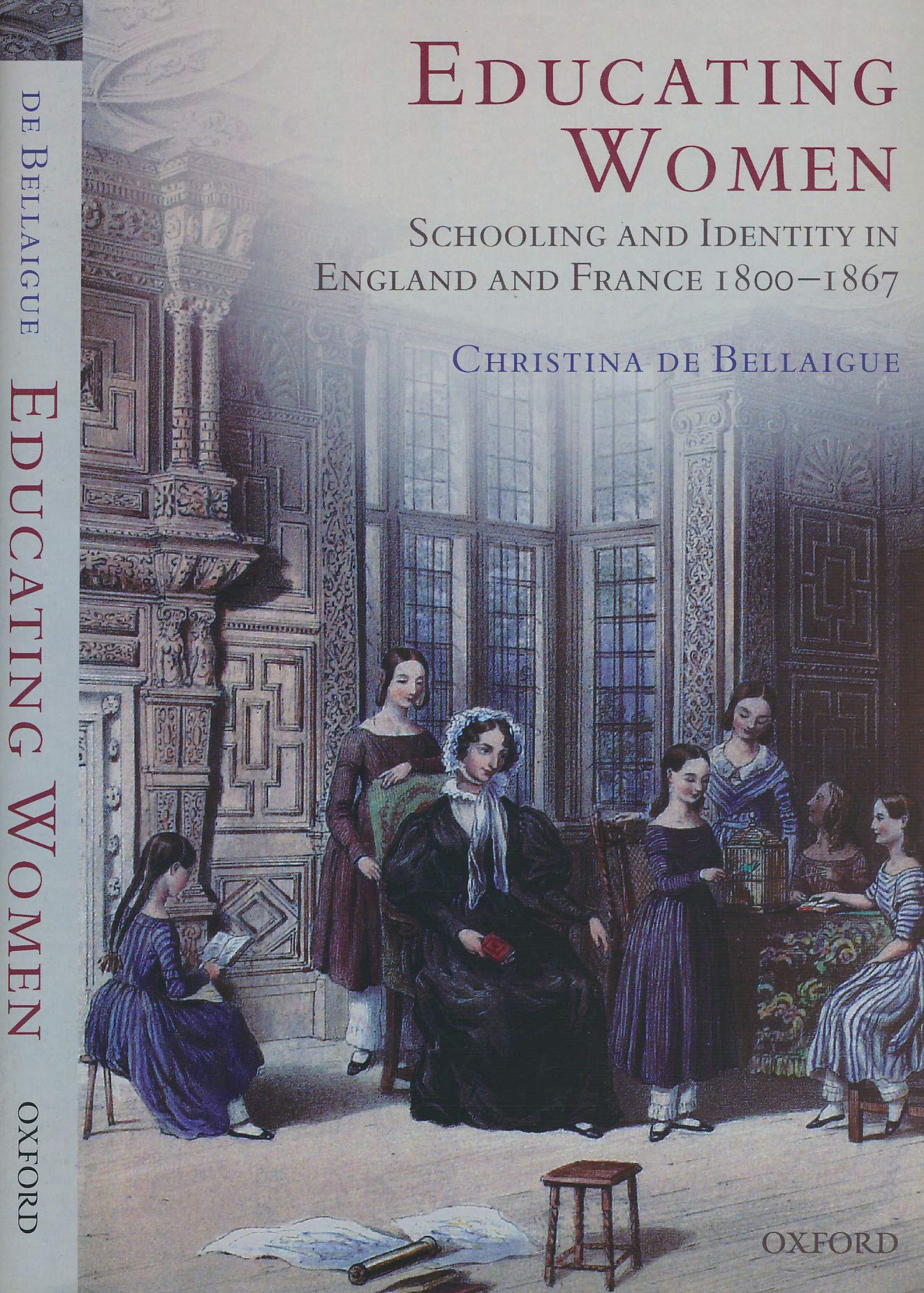
Educating Women: Schooling And Identity In England And France, 18001867
Sold by Ergodebooks, an authorized reseller.
Returns accepted within 30 days | support@ergodebooks.com
Shipping Information
- Free Standard Shipping — United States only
- Processing Time: 3–5 business days
- Estimated Delivery: 6–10 business days after dispatch
- Double-boxed, fully insured & discreetly packaged
- Tracking number sent via email once dispatched
Returns & Refund
Returns accepted within 30 days of delivery.
Damaged or Defective Item
Free return shipping + replacement or full refund
Wrong Item Received
Free return shipping + replacement or full refund
Change of Mind
Return shipping at customer's expense · 25% restocking fee applies
Payment Option

An increasing number of middle class families were taking the education of their daughters seriously in the first part of the nineteenth century, and boardingschools were multiplying on both sides of the Channel. Schoolmistresses rarely, in fact, the 'reduced gentlewomen' of nineteenth century fiction were not only often successful entrepreneurs, but also played an important part they played in the development of the teaching profession, and in the expansion of secondary education. Uncovering their careers and the experiences of their pupils reveals the possibilities and constraints of the lives of middle class women in England and France in the period 18001867.Yet those who crossed the Channel in the nineteenth century often commented on the differences they discovered between the experiences of French and English women. Women in France seemed to participate more fully in social and cultural life than their counterparts in England. On the other hand, English girls were felt to enjoy considerably more freedom than young French women. Using the development of schooling for girls as a lens through which to examine the lives of women on either side of the Channel, Educating Women explores such contrasts. It reveals that the differences observed by contemporaries were rooted in the complex interaction of differing conceptions of the role of women with patterns of educational provision, with religion, with the state, and with differing rhythms of economic growth. Illuminating a neglected area of the history of education, it reveals new findings on the history of the professions, on the history of women and on the relationship between gender and national identity in the nineteenth century.
⚠️ WARNING (California Proposition 65):
This product may contain chemicals known to the State of California to cause cancer, birth defects, or other reproductive harm.
For more information, please visit www.P65Warnings.ca.gov.