If you have any questions, you are always welcome to contact us. We'll get back to you as soon as possible, withing 24 hours on weekdays.
Customer service
All questions about your order, return and delivery must be sent to our customer service team by e-mail at yourstore@yourdomain.com
Sale & Press
If you are interested in selling our products, need more information about our brand or wish to make a collaboration, please contact us at press@yourdomain.com
Help
If you have any questions, you are always welcome to contact us. We'll get back to you as soon as possible, withing 24 hours on weekdays.
Customer service
All questions about your order, return and delivery must be sent to our customer service team by e-mail at yourstore@yourdomain.com
Sale & Press
If you are interested in selling our products, need more information about our brand or wish to make a collaboration, please contact us at press@yourdomain.com
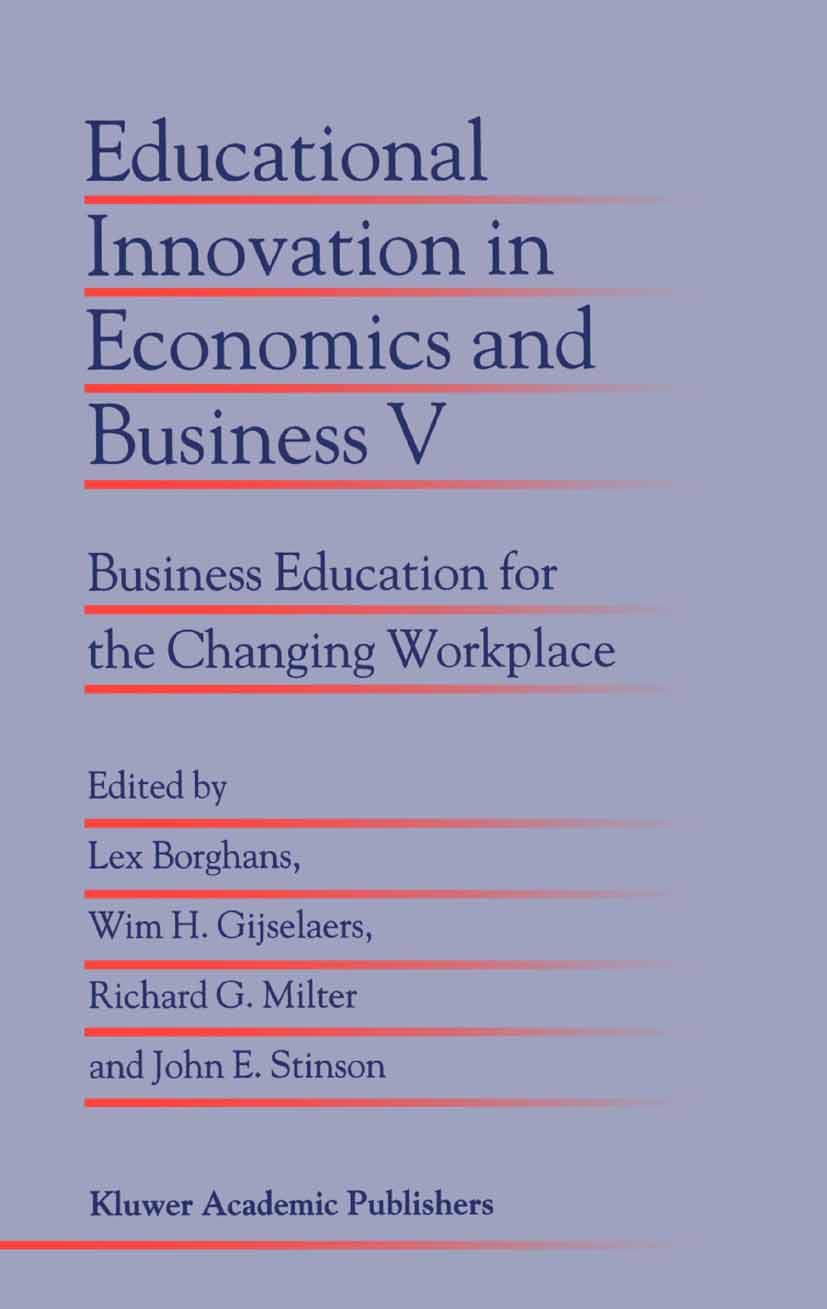
The workplace is changing drastically these days. As a consequence of the Information and Communication Technology (ICT) revolution, new economic activities emerge, the production process changes, people use different communication tools, and organizational structures are adjusted. All these changes relate to the heart of business and economics, and there is no doubt that they will also influence education in these areas. Of course ICT provides new technologies to facilitate learning, but a changing workplace also requires a renewed focus within the curriculum of economics and business education. If ICT is leading to profound change in the workplace, is innovation then only a matter of introducing more technology in education? Unfortunately, this is not necessarily true. The translation of changes in the workplace into an improved curriculum requires serious analysis of the essence of the changes at the work place, and the way technology may enable student learning. For example, relevant knowledge is changing faster and faster. Does this mean that we have to adopt the curriculum faster and faster? Perhaps not, as students will have a labor market career of 30 or 40 years. Focusing on todays knowledge even if it is very uptodate loses more and more value if the life cycle of knowledge becomes shorter. Increased speed of change also implies a decrease in the value of knowing all these things.
⚠️ WARNING (California Proposition 65):
This product may contain chemicals known to the State of California to cause cancer,
birth defects, or other reproductive harm.
For MAP (Minimum Advertised Price) violations and Intellectual Property (IP) or Trademark concerns, please contact:
support@ergodebooks.com
⚠️ California Proposition 65 Warning: Some products sold on this website may expose you to chemicals known to the State of California to cause cancer, birth defects, or other reproductive harm. For more information, visit www.P65Warnings.ca.gov.