If you have any questions, you are always welcome to contact us. We'll get back to you as soon as possible, withing 24 hours on weekdays.
Customer service
All questions about your order, return and delivery must be sent to our customer service team by e-mail at yourstore@yourdomain.com
Sale & Press
If you are interested in selling our products, need more information about our brand or wish to make a collaboration, please contact us at press@yourdomain.com
Help
If you have any questions, you are always welcome to contact us. We'll get back to you as soon as possible, withing 24 hours on weekdays.
Customer service
All questions about your order, return and delivery must be sent to our customer service team by e-mail at yourstore@yourdomain.com
Sale & Press
If you are interested in selling our products, need more information about our brand or wish to make a collaboration, please contact us at press@yourdomain.com
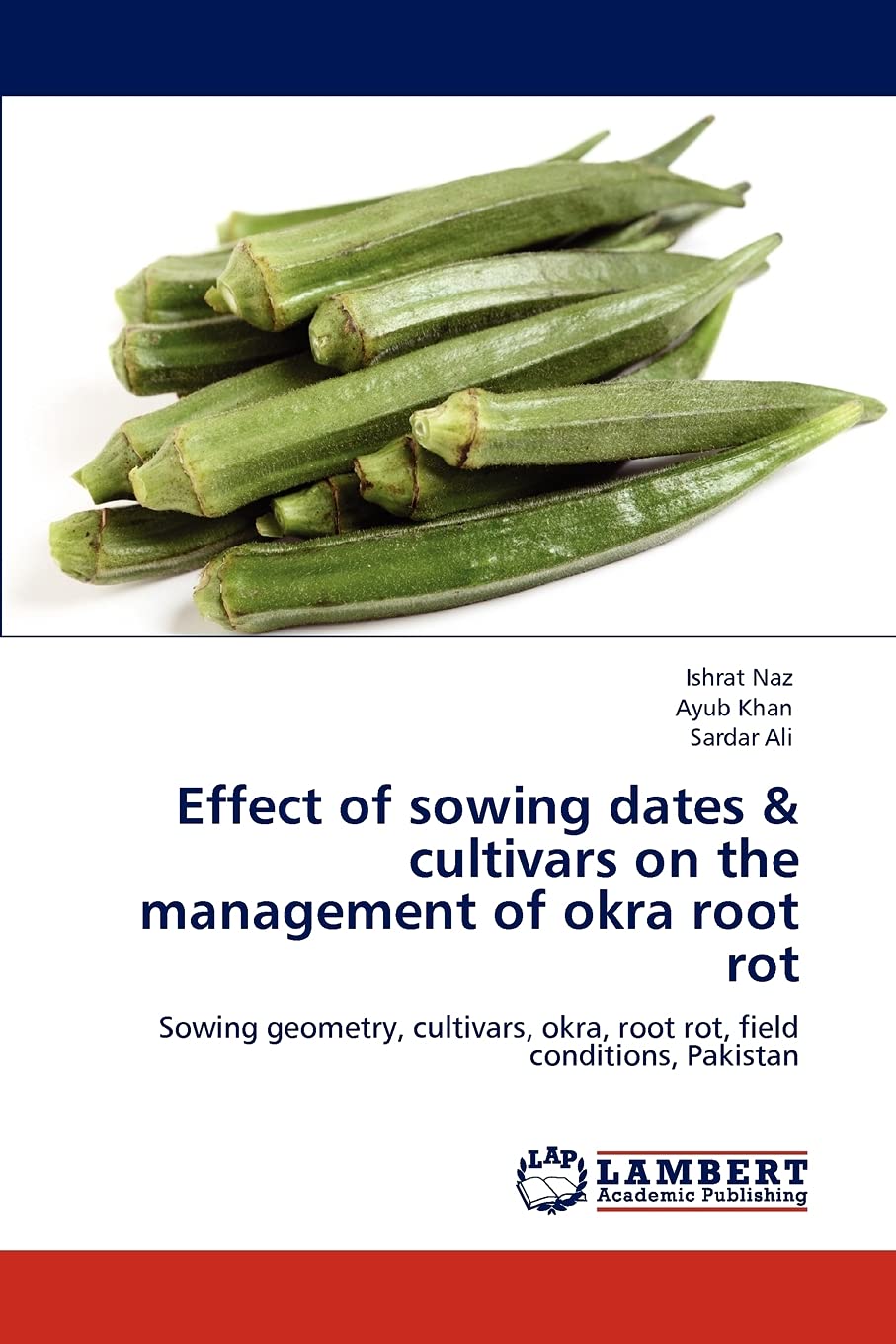
Okra is considered one of the best vegetable and always fetchs high prices in the market due to its taste and edible constituents. But it is susceptible to various fungal diseases such as Fusarium solani, Macrophomina phaseolina, Rhizoctonia bataticola, R. solani, Pythium butleri, Phytophthora palmivora, Cercospora abelmoschii and Erysiphe cichoracearum. Okra root rot is caused by the fungus Fusarium solani (Mart) Sacc. According to reports the root rot is one of the most destructive diseases. Its incidence ranged between 1080%, with a maximum (5580%) in the crop grown on small scale as kitchen /home gardening and minimum (1045%) in the crop sown on large scale under field conditions. The book in hand can furnish valuable information on varieties Vs. sowing geometry and can be usual for researchers, vegetable growers and agriculturist.
⚠️ WARNING (California Proposition 65):
This product may contain chemicals known to the State of California to cause cancer,
birth defects, or other reproductive harm.
For MAP (Minimum Advertised Price) violations and Intellectual Property (IP) or Trademark concerns, please contact:
support@ergodebooks.com
⚠️ California Proposition 65 Warning: Some products sold on this website may expose you to chemicals known to the State of California to cause cancer, birth defects, or other reproductive harm. For more information, visit www.P65Warnings.ca.gov.