
Title
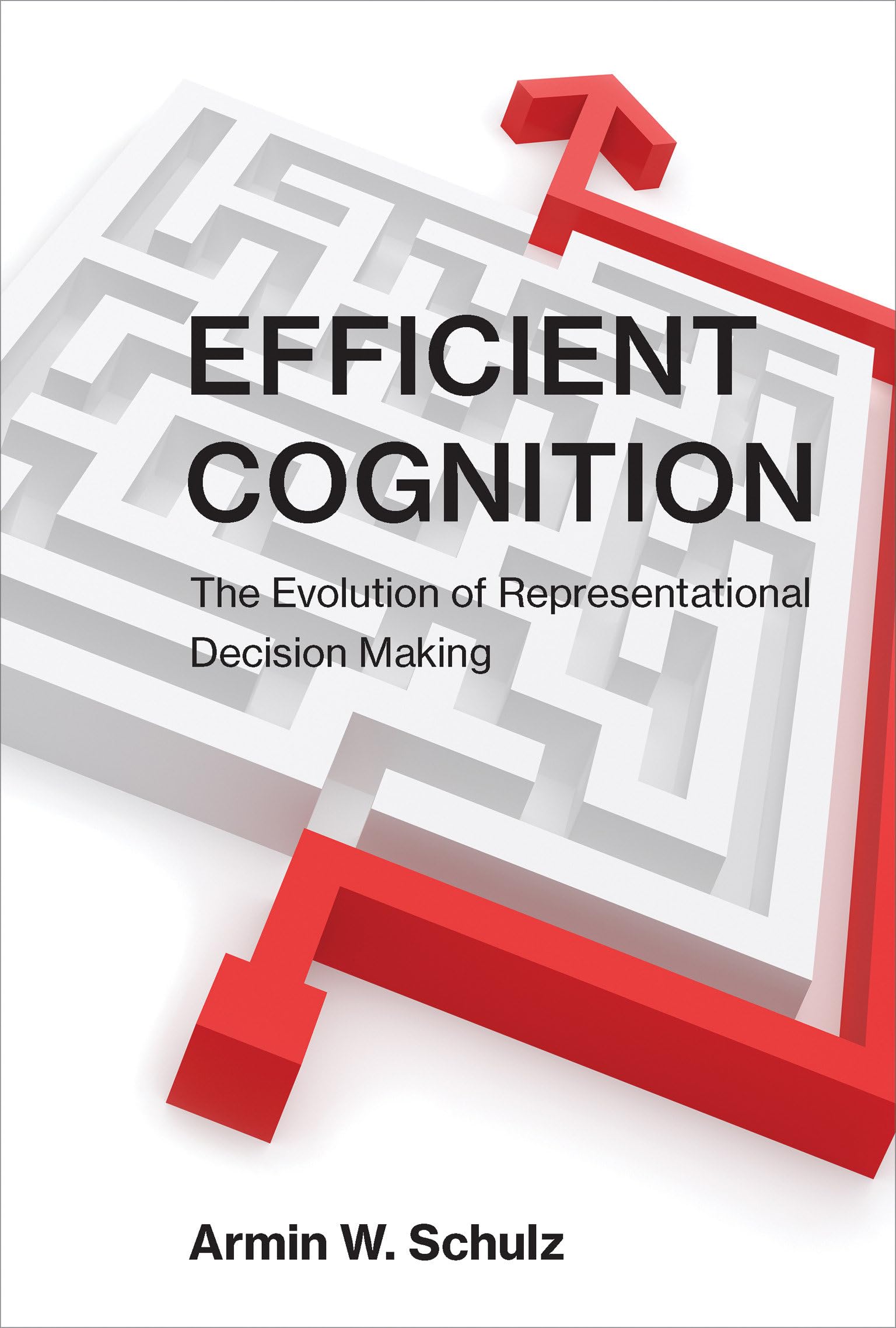
Efficient Cognition: The Evolution of Representational Decision Making,Used
Sold by Ergodebooks, an authorized reseller.
Returns accepted within 30 days | support@ergodebooks.com
Shipping Information
- Free Standard Shipping — United States only
- Processing Time: 3–5 business days
- Estimated Delivery: 6–10 business days after dispatch
- Double-boxed, fully insured & discreetly packaged
- Tracking number sent via email once dispatched
Returns & Refund
Returns accepted within 30 days of delivery.
Damaged or Defective Item
Free return shipping + replacement or full refund
Wrong Item Received
Free return shipping + replacement or full refund
Change of Mind
Return shipping at customer's expense · 25% restocking fee applies
Payment Option

An argument that representational decision making is more cognitively efficient, allowing an organism to adjust more easily to changes in the environment.Many organisms (including humans) make decisions by relying on mental representations. Not simply a reaction triggered by perception, representational decision making employs highlevel, nonperceptual mental states with content to manage interactions with the environment. A person making a decision based on mental representations, for example, takes a step back from her perceptions at the time to assess the nature of the world she lives in. But why would organisms rely on representational decision making, and what evolutionary benefits does this reliance provide to the decision maker? In Efficient Cognition, Armin Schulz argues that representational decision making can be more cognitively efficient than nonrepresentational decision making. Specifically, he shows that a key driver in the evolution of representational decision making is that mental representations can enable an organism to save cognitive resources and adjust more efficiently to changed environments.After laying out the foundations of his argumentclarifying the central questions, the characterization of representational decision making, and the relevance of an evidential form of evolutionary psychologySchulz presents his account of the evolution of representational decision making and critically considers some of the existing accounts of the subject. He then applies his account to three open questions concerning the nature of representational decision making: the extendedness of decision making, and when we should expect cognition to extend into the environment; the specialization of decision making and the use of simple heuristics; and the psychological sources of altruistic behaviors.
⚠️ WARNING (California Proposition 65):
This product may contain chemicals known to the State of California to cause cancer, birth defects, or other reproductive harm.
For more information, please visit www.P65Warnings.ca.gov.