
Title
Efficient Learning For The Poor: Insights From The Frontier Of Cognitive Neuroscience (Directions In Development),Used
Sold by Ergodebooks, an authorized reseller.
Returns accepted within 30 days | support@ergodebooks.com
Shipping Information
- Free Standard Shipping — United States only
- Processing Time: 3–5 business days
- Estimated Delivery: 6–10 business days after dispatch
- Double-boxed, fully insured & discreetly packaged
- Tracking number sent via email once dispatched
Returns & Refund
Returns accepted within 30 days of delivery.
Damaged or Defective Item
Free return shipping + replacement or full refund
Wrong Item Received
Free return shipping + replacement or full refund
Change of Mind
Return shipping at customer's expense · 25% restocking fee applies
Payment Option

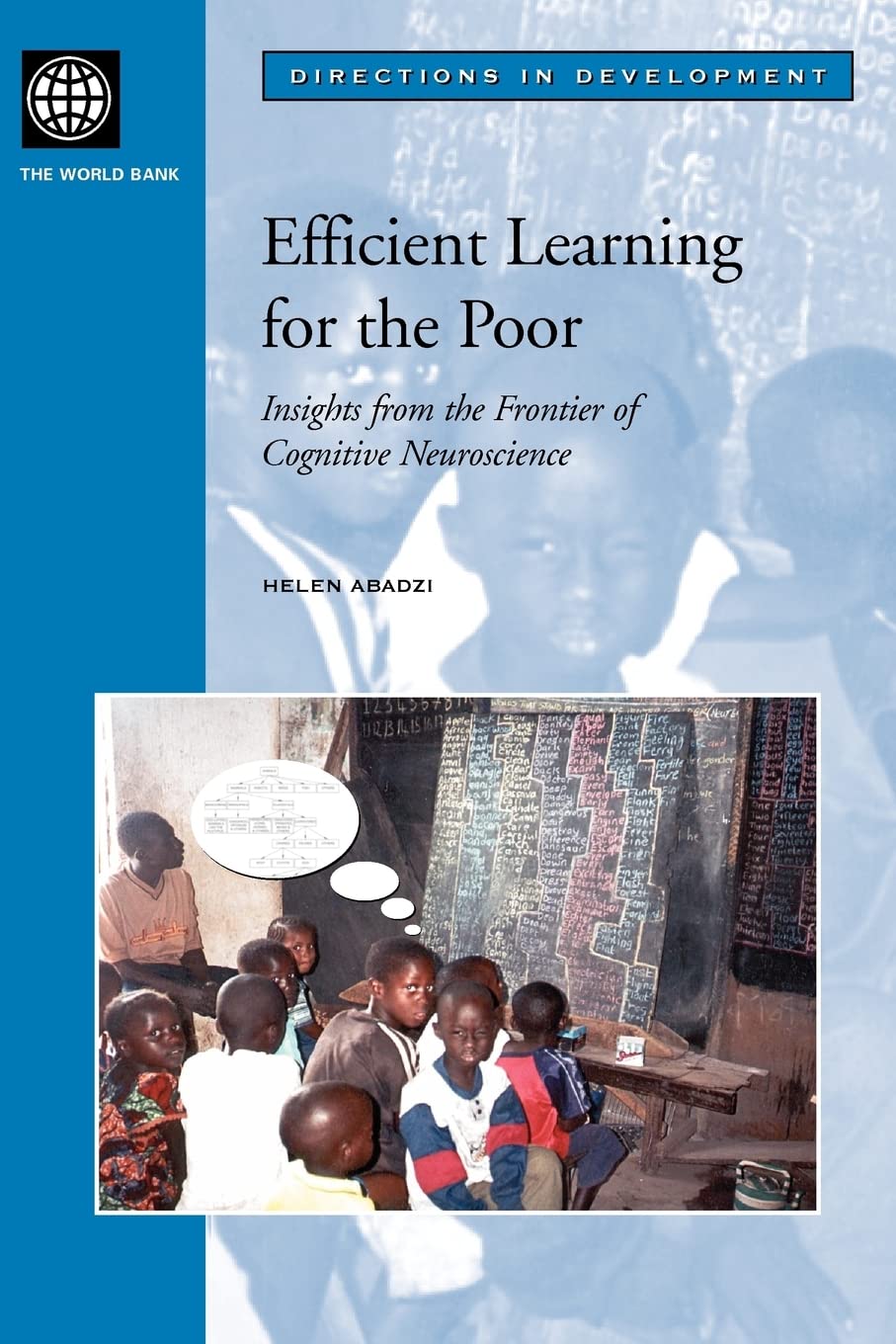
Largescale efforts have been made since the 1990s to ensure that all children of the world go to school. But mere enrollment is not sufficient, students must learn fluent reading and calculation by the end of grade 2. The digital age requires ability to process volumes of text quickly and use the information for decisions that may ultimately reduce poverty. Stateoftheart brain imaging and cognitive psychology research offer insights to help improve the basic skills of lowincome students. The book integrates this research into practical applications that extend from preschool brain development to the memory of adult educators.
⚠️ WARNING (California Proposition 65):
This product may contain chemicals known to the State of California to cause cancer, birth defects, or other reproductive harm.
For more information, please visit www.P65Warnings.ca.gov.
- Q: What is the page count of this book? A: This book has three hundred pages. It provides comprehensive insights into cognitive neuroscience and its applications in education.
- Q: What type of binding does this book have? A: This book is paperback bound. This makes it lightweight and easy to handle for reading and reference.
- Q: Who is the author of this book? A: The author is Helen Abadzi. She brings expertise in cognitive neuroscience and education to the content of this book.
- Q: How can I use this book effectively? A: You can use this book as a resource for understanding cognitive development in education. It is suitable for educators, policymakers, and students.
- Q: Is this book suitable for someone new to cognitive neuroscience? A: Yes, this book is beginner-friendly. It explains complex concepts in layman's terms, making it accessible to all readers.
- Q: What age group is this book appropriate for? A: This book is suitable for adults and university students. It addresses educational policies and cognitive development, which are relevant to these audiences.
- Q: How should I store this book to keep it in good condition? A: Store this book in a cool, dry place. Avoid exposing it to direct sunlight to prevent fading and damage to the pages.
- Q: Can this book be used as a textbook? A: Yes, this book can be used as a textbook. It includes valuable insights and research that are beneficial for academic studies.
- Q: Is this book safe to read for young adults? A: Yes, there are no adult themes in this book. It focuses on education and cognitive development, making it safe for young adult readers.
- Q: What topics are covered in this book? A: This book covers topics such as reading fluency, brain development, and effective teaching strategies. It integrates research with practical applications.
- Q: How do I care for my paperback book? A: To care for your paperback book, avoid bending the spine and keep it away from moisture. This will help maintain its condition.
- Q: What if I receive a damaged copy of this book? A: If you receive a damaged copy, you should contact the seller for a return or replacement. Most retailers have policies in place for such situations.
- Q: Is there a warranty for this book? A: No, books typically do not come with a warranty. However, check the retailer's return policy for options on damaged items.
- Q: How does this book compare to other educational texts? A: This book distinguishes itself by integrating cognitive neuroscience with practical education strategies. It provides unique insights not found in traditional textbooks.
- Q: What makes this book relevant for policymakers? A: This book is relevant for policymakers as it offers research-based insights into effective education strategies for low-income students.
- Q: Are there any specific strategies recommended in this book? A: Yes, the book recommends strategies such as teaching in the maternal language and using effective information presentation techniques.