
Title
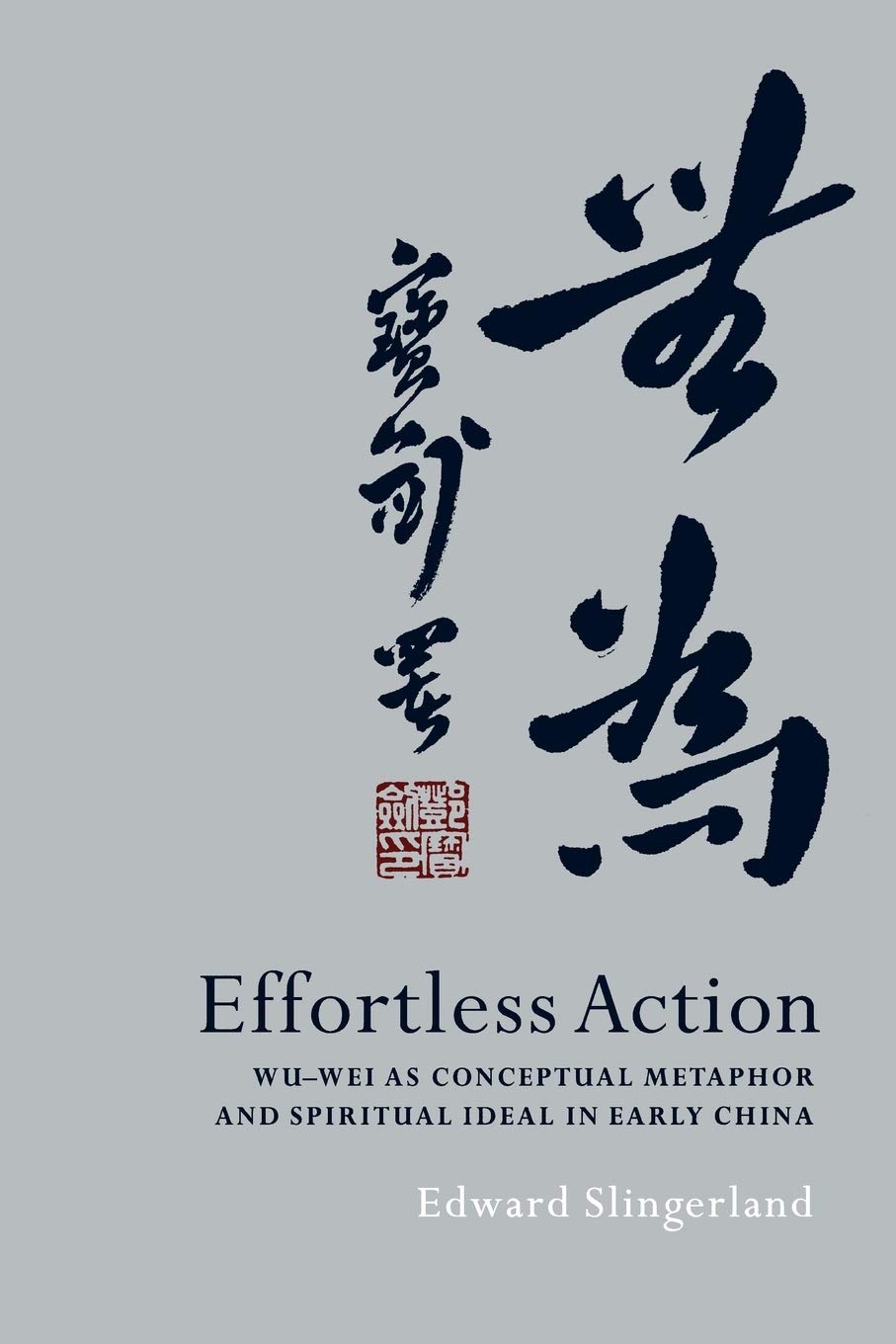
Effortless Action: Wuwei As Conceptual Metaphor and Spiritual Ideal in Early China,Used
Sold by Ergodebooks, an authorized reseller.
Returns accepted within 30 days | support@ergodebooks.com
Shipping Information
- Free Standard Shipping — United States only
- Processing Time: 3–5 business days
- Estimated Delivery: 6–10 business days after dispatch
- Double-boxed, fully insured & discreetly packaged
- Tracking number sent via email once dispatched
Returns & Refund
Returns accepted within 30 days of delivery.
Damaged or Defective Item
Free return shipping + replacement or full refund
Wrong Item Received
Free return shipping + replacement or full refund
Change of Mind
Return shipping at customer's expense · 25% restocking fee applies
Payment Option

This book presents a systematic account of the role of the personal spiritual ideal of wuweiliterally 'no doing,' but better rendered as 'effortless action'in early Chinese thought. Edward Slingerland's analysis shows that wuwei represents the most general of a set of conceptual metaphors having to do with a state of effortless ease and unselfconsciousness. This concept of effortlessness, he contends, serves as a common ideal for both Daoist and Confucian thinkers. He also argues that this concept contains within itself a conceptual tension that motivates the development of early Chinese thought: the socalled 'paradox of wuwei,' or the question of how one can consciously 'try not to try.'Methodologically, this book represents a preliminary attempt to apply the contemporary theory of conceptual metaphor to the study of early Chinese thought. Although the focus is upon early China, both the subject matter and methodology have wider implications. The subject of wuwei is relevant to anyone interested in later East Asian religious thought or in the socalled 'virtueethics' tradition in the West. Moreover, the technique of conceptual metaphor analysisalong with the principle of 'embodied realism' upon which it is basedprovides an exciting new theoretical framework and methodological tool for the study of comparative thought, comparative religion, intellectual history, and even the humanities in general. Part of the purpose of this work is thus to help introduce scholars in the humanities and social sciences to this methodology, and provide an example of how it may be applied to a particular subfield.
⚠️ WARNING (California Proposition 65):
This product may contain chemicals known to the State of California to cause cancer, birth defects, or other reproductive harm.
For more information, please visit www.P65Warnings.ca.gov.