If you have any questions, you are always welcome to contact us. We'll get back to you as soon as possible, withing 24 hours on weekdays.
Customer service
All questions about your order, return and delivery must be sent to our customer service team by e-mail at yourstore@yourdomain.com
Sale & Press
If you are interested in selling our products, need more information about our brand or wish to make a collaboration, please contact us at press@yourdomain.com
Help
If you have any questions, you are always welcome to contact us. We'll get back to you as soon as possible, withing 24 hours on weekdays.
Customer service
All questions about your order, return and delivery must be sent to our customer service team by e-mail at yourstore@yourdomain.com
Sale & Press
If you are interested in selling our products, need more information about our brand or wish to make a collaboration, please contact us at press@yourdomain.com
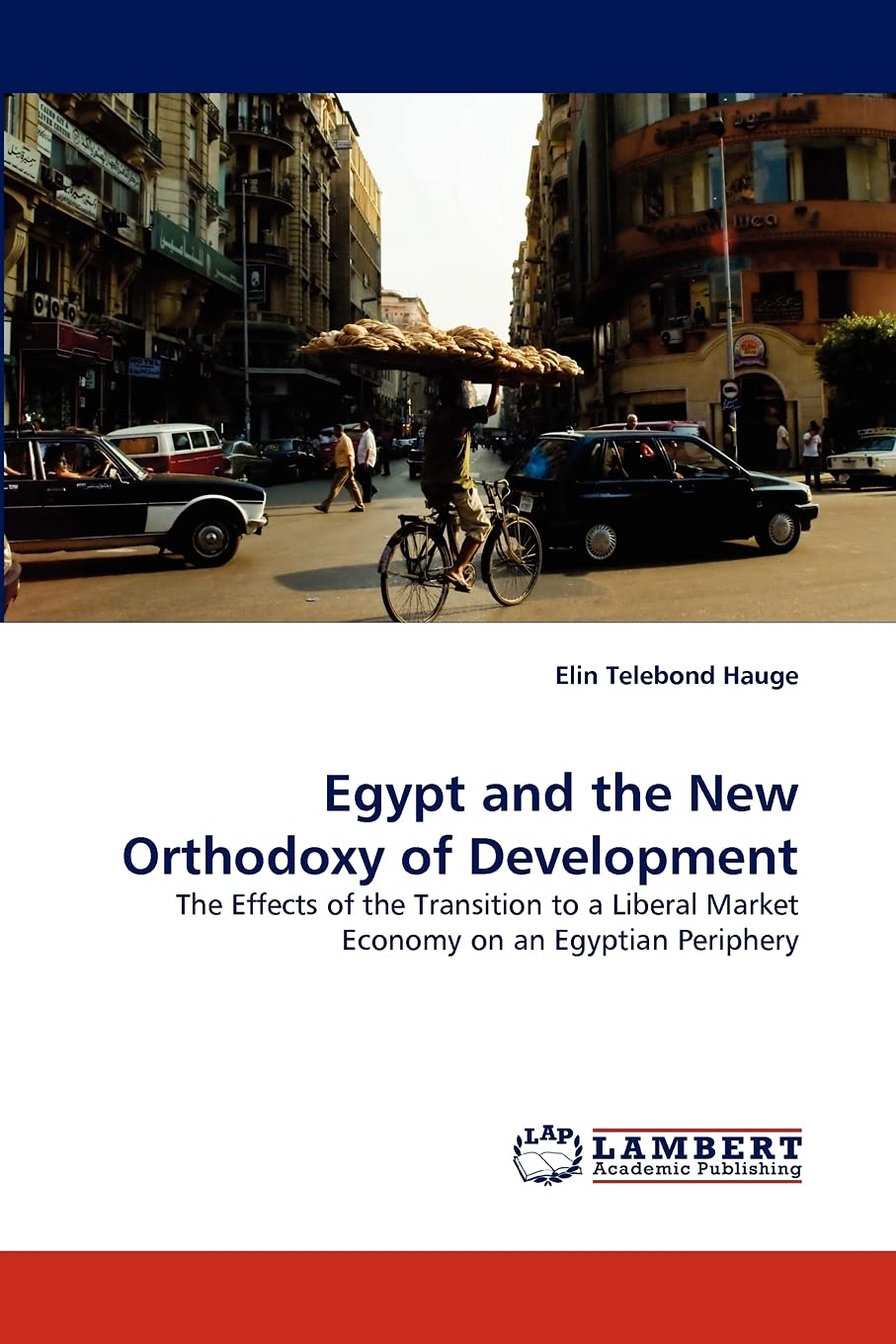
Egypt has shown good progress on a number of indicators for economic development in recent years. This progress, however, seems only to benefit the higher strata of society. Also, the Egyptian state apparatus is still strongly centralised. The governorate of Matruh on Egypt's northwest coast is situated far from the centralised power in Cairo. How easy is it for small and medium enterprises to develop their businesses there? And how can the case of Matruh shed light on the advantages and disadvantages of the current Egyptian economic model? Egypt officially shifted from a statecontrolled to a liberal market economy in the 1990s. Proclaimed objectives for the Egyptian government are to promote investment and the size of the private sector, encourage the growth of small and medium sized enterprises, and have all areas of the country take part in development on an equal footing through a comprehensive decentralisation process.
⚠️ WARNING (California Proposition 65):
This product may contain chemicals known to the State of California to cause cancer,
birth defects, or other reproductive harm.
For MAP (Minimum Advertised Price) violations and Intellectual Property (IP) or Trademark concerns, please contact:
support@ergodebooks.com
⚠️ California Proposition 65 Warning: Some products sold on this website may expose you to chemicals known to the State of California to cause cancer, birth defects, or other reproductive harm. For more information, visit www.P65Warnings.ca.gov.