
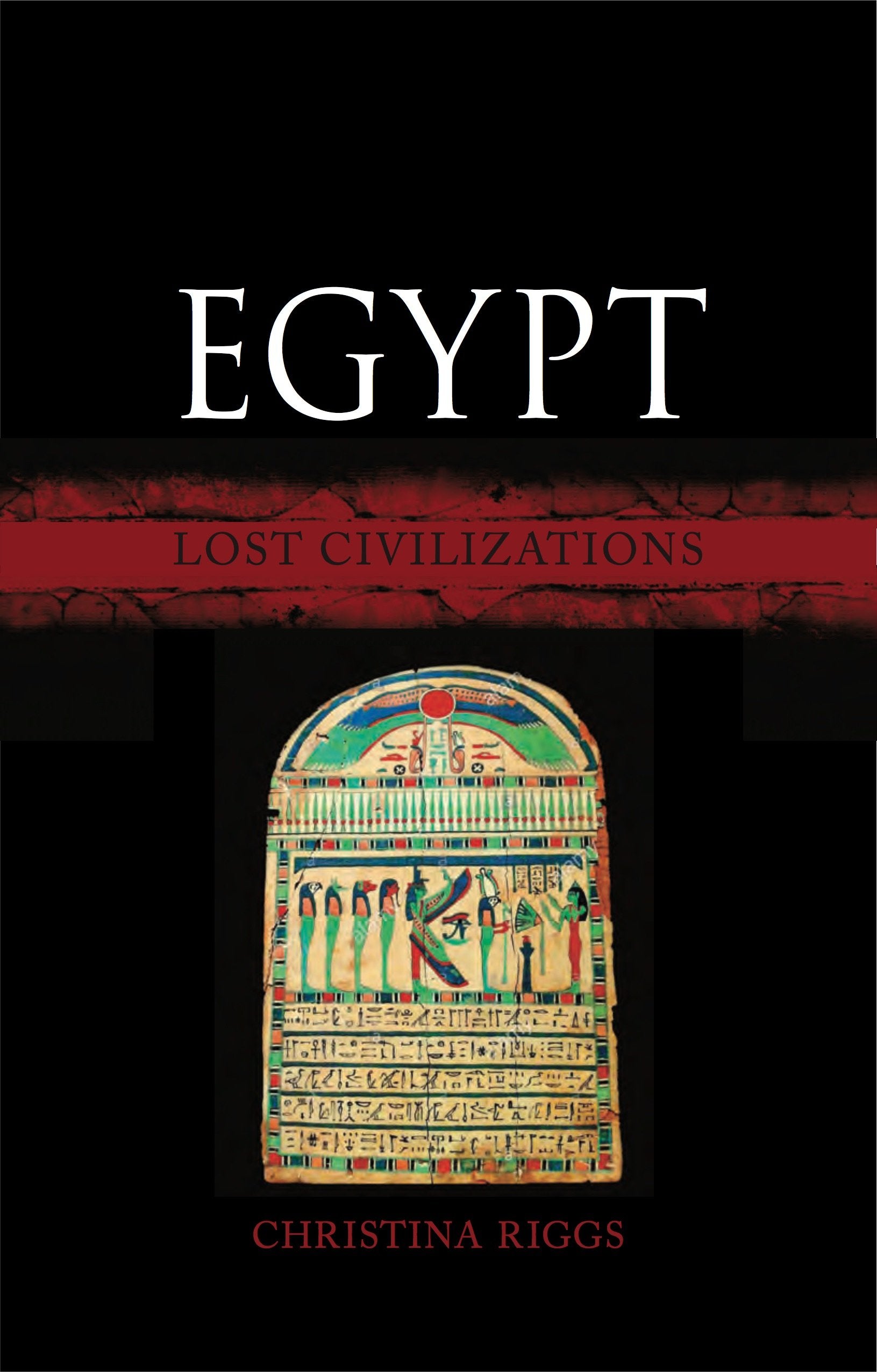
Title

Egypt: Lost Civilizations,Used
Sold by Ergodebooks, an authorized reseller.
Returns accepted within 30 days | support@ergodebooks.com
Shipping Information
- Free Standard Shipping — United States only
- Processing Time: 3–5 business days
- Estimated Delivery: 6–10 business days after dispatch
- Double-boxed, fully insured & discreetly packaged
- Tracking number sent via email once dispatched
Returns & Refund
Returns accepted within 30 days of delivery.
Damaged or Defective Item
Free return shipping + replacement or full refund
Wrong Item Received
Free return shipping + replacement or full refund
Change of Mind
Return shipping at customer's expense · 25% restocking fee applies
Payment Option

Examining the history, art, and religion of ancient Egypt, an illuminating look at why it has been so influential throughout the centuries.From Roman villas to Hollywood films, ancient Egypt has been a source of fascination and inspiration in many other cultures. But why, exactly, has this been the case? In this book, Christina Riggs examines the history, art, and religion of ancient Egypt to illuminate why it has been so influential throughout the centuries. In doing so, she shows how the ancient past has always been used to serve contemporary purposes.Often characterized as a lost civilization that was discovered by adventurers and archeologists, Egypt has meant many things to many different people. Ancient Greek and Roman writers admired ancient Egyptian philosophy, and this admiration would influence ideas about Egypt in Renaissance Europe as well as the Arabicspeaking world. By the eighteenth century, secret societies like the Freemasons looked to ancient Egypt as a source of wisdom, but as modern Egypt became the focus of Western military strategy and economic exploitation in the nineteenth and early twentieth centuries, its ancient remains came to be seen as exotic, primitive, or even dangerous, tangled in the politics of racial science and archaeology. The curse of the pharaohs or the seductiveness of Cleopatra were myths that took on new meanings in the colonial era, while ancient Egypt also inspired modernist, anticolonial movements in the arts, such as in the Harlem Renaissance and Egyptian Pharaonism. Today, ancient Egyptwhether through actual relics or through cultural homagecan be found from museum galleries to tattoo parlors. Riggs helps us understand why this lost civilization continues to be a touchpoint for definingand debatingwho we are today.
⚠️ WARNING (California Proposition 65):
This product may contain chemicals known to the State of California to cause cancer, birth defects, or other reproductive harm.
For more information, please visit www.P65Warnings.ca.gov.