
Title
Eight Words For The Study Of Expressive Culture
Sold by Ergodebooks, an authorized reseller.
Returns accepted within 30 days | support@ergodebooks.com
Shipping Information
- Free Standard Shipping — United States only
- Processing Time: 3–5 business days
- Estimated Delivery: 6–10 business days after dispatch
- Double-boxed, fully insured & discreetly packaged
- Tracking number sent via email once dispatched
Returns & Refund
Returns accepted within 30 days of delivery.
Damaged or Defective Item
Free return shipping + replacement or full refund
Wrong Item Received
Free return shipping + replacement or full refund
Change of Mind
Return shipping at customer's expense · 25% restocking fee applies
Payment Option

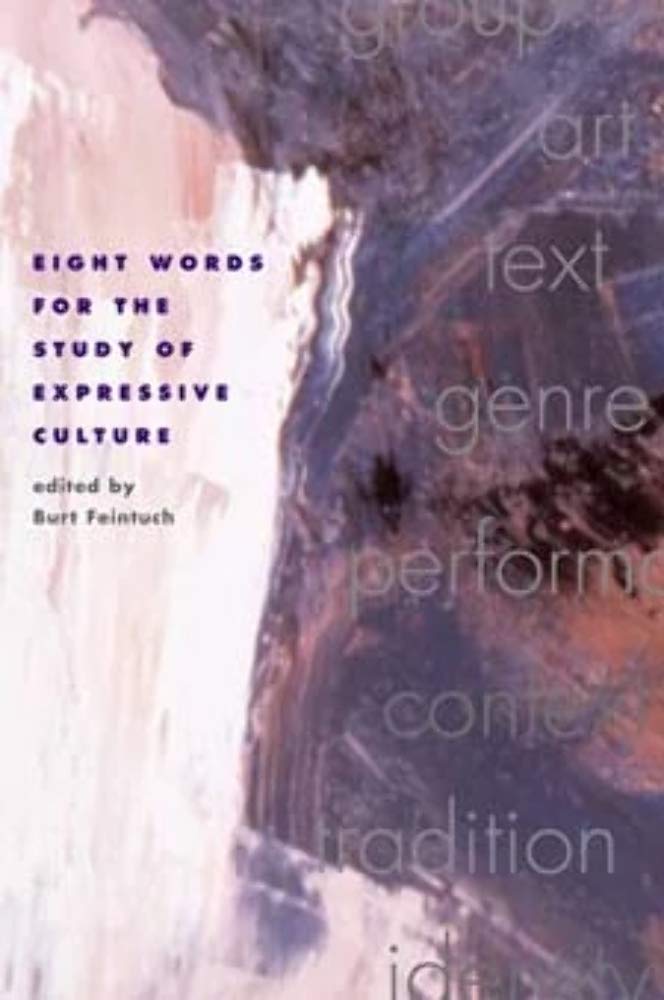
Group. Art. Text. Genre. Performance. Context. Tradition. Identity.No Matter Where We Arein Academic Institutions, In Cultural Agencies, At Home, Or In A Casual Conversationthese Are Words We Use When We Talk About Creative Expression In Its Cultural Contexts. Eight Words For The Study Of Expressive Culture Is A Thoughtful, Interdisciplinary Examination Of The Keywords That Are Integral To The Formulation Of Ideas About The Diversity Of Human Creativity, Presented As A Set Of Essays By Leading Folklorists.Many Of Us Use These Eight Words Every Day. We Think With Them. We Teach With Them. Much Of Contemporary Scholarship Rests On Their Meanings And Implications. They Form A Significant Part Of A Set Of Conversations Extending Through Centuries Of Thought About Creativity, Meaning, Beauty, Local Knowledge, Values, And Community. Their Natural Habitats Range Across Scholarly Disciplines From Anthropology And Folklore To Literary And Cultural Studies And Provide The Framework For Other Fields Of Practice And Performance As Well.Eight Words For The Study Of Expressive Culture Is A Muchneeded Study Of Keywords That Are Frequently Used But Not Easily Explained. Anchored By Burt Feintuchs Cogent Introduction, The Book Features Essays By Dorothy Noyes, Gerald L. Pocius, Jeff Todd Titon, Trudier Harris, Deborah A. Kapchan, Mary Hufford, Henry Glassie, And Roger D. Abrahams.
⚠️ WARNING (California Proposition 65):
This product may contain chemicals known to the State of California to cause cancer, birth defects, or other reproductive harm.
For more information, please visit www.P65Warnings.ca.gov.
- Q: What is the page count of this book? A: The book has two hundred forty-eight pages. It offers a comprehensive examination of expressive culture keywords.
- Q: What are the dimensions of this book? A: The book measures nine point thirteen inches in length, six point zero six inches in width, and zero point sixty-seven inches in height.
- Q: What type of binding does this book have? A: This book is available in paperback binding. This makes it lightweight and easy to handle.
- Q: Who is the author of 'Eight Words for the Study of Expressive Culture'? A: The author is Burt Feintuch. He provides a cogent introduction to the essays featured in the book.
- Q: What is the main subject of this book? A: The main subject is the study of expressive culture. It examines keywords that are integral to understanding human creativity.
- Q: Is this book suitable for academic use? A: Yes, it is suitable for academic use. The book includes essays by leading folklorists and is interdisciplinary in approach.
- Q: How can this book be used in teaching? A: This book can be used to facilitate discussions on creativity and culture. It provides a framework for teaching interdisciplinary concepts.
- Q: Is this book appropriate for casual readers? A: Yes, casual readers can appreciate it. Its engaging essays make complex ideas accessible to a broader audience.
- Q: How should I store this book to keep it in good condition? A: Store the book in a cool, dry place away from direct sunlight. This will help preserve its quality and prevent fading.
- Q: Are there any specific cleaning instructions for this book? A: No specific cleaning instructions are required. Simply keep it away from moisture and handle it with clean hands.
- Q: What if the book arrives damaged? A: If the book arrives damaged, contact the retailer for a return or replacement. Most retailers have a clear return policy.
- Q: Can this book be used for research purposes? A: Yes, it can be used for research purposes. The essays delve into key concepts in folklore and cultural studies.
- Q: Is there a glossary or index in this book? A: No, there is no specific glossary or index mentioned. The essays are structured to convey key ideas directly.
- Q: Who are some contributors to this book? A: Contributors include Dorothy Noyes, Gerald L. Pocius, and Trudier Harris, among others. Their expertise enriches the content.
- Q: What kind of themes does this book explore? A: The book explores themes of creativity, identity, tradition, and cultural contexts. It addresses the diversity of human expression.
- Q: Is this book suitable for younger audiences? A: It is primarily aimed at an adult audience. However, older teens interested in culture may find it valuable.